Suwon Hwaseong Fortress guide: King Jeongjo's legacy and travel tips 2026
Explore Suwon Hwaseong Fortress in 2026. A complete guide to the 5.7km wall, King Jeongjo's history, Flying Suwon costs (₩20,000), and famous Galbi spots.
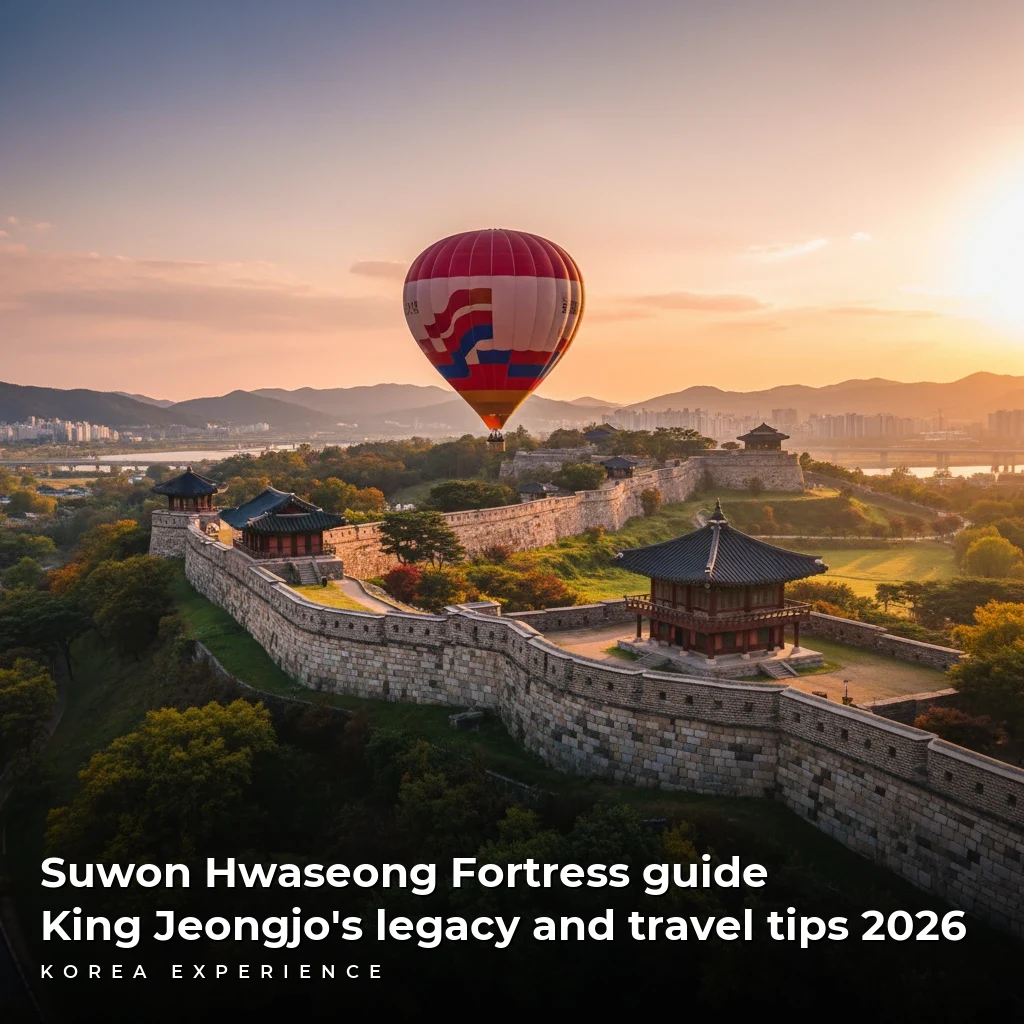
Suwon Hwaseong Fortress represents the pinnacle of 18th-century Joseon Dynasty military architecture and stands as a testament to King Jeongjo's filial piety and visionary leadership. Located just 30 kilometers south of Seoul, this UNESCO World Heritage site offers a 5.7-kilometer walking loop that seamlessly blends ancient history with the bustling urban life of modern Suwon. For travelers in 2026, it remains one of the most accessible and culturally rich day trips from the capital, offering everything from traditional archery experiences to trendy cafe streets in the renovated Haenggung-dong district.
The short answer: Suwon Hwaseong is a massive fortress city built in 1796 that takes about 2-3 hours to hike completely; it is famous for its stunning night views, the "Flying Suwon" helium balloon ride, and the specialized Suwon Galbi (ribs).
Key Takeaways
- 1The fortress wall is a 5.7km loop; allow 2.5 to 3 hours for the full hike
- 2Best access from Seoul is the KTX to Suwon Station (30 min) or Subway Line 1 (60 min)
- 3Don't miss the 'Flying Suwon' balloon ride at sunset for the best aerial photos
- 4Suwon is famous for Galbi (beef ribs) and Fried Chicken Street near Paldalmun Gate
The Historical Significance: King Jeongjo's Dream
To truly appreciate the stone walls you will walk along, you must understand the tragedy and ambition behind them. Hwaseong Fortress was not just a military installation; it was a planned city built between 1794 and 1796 by King Jeongjo, the 22nd ruler of the Joseon Dynasty.
King Jeongjo is often regarded as one of Korea's most enlightened monarchs. The construction was an act of deep filial piety toward his father, Prince Sado, who was tragically executed by being locked in a rice chest by his own father (Jeongjo's grandfather). Jeongjo moved his father's tomb to this auspicious site and built the fortress to guard it, intending to move the capital from Seoul to Suwon eventually.
What makes Hwaseong unique compared to other Korean fortresses is the influence of the Silhak (Practical Learning) movement. The fortress combined traditional Asian military methods with new scientific knowledge from the West. The brilliant scholar Jeong Yak-yong invented the Geojunggi (a type of crane using pulleys) specifically for this project, reducing the construction time to just over two years—a miraculous feat for the 18th century.
In 2026, the fortress stands not as a ruin, but as a living part of the city. Unlike the palaces in Seoul which are distinct compounds, the Hwaseong walls snake through neighborhoods, markets, and busy roads, making the history feel incredibly immediate and tangible.
Pro Tip: The Stamp Tour
Pick up a stamp rally map at any ticket office (approx ₩500-1,000). Collecting stamps at the major gates (Janganmun, Hwahongmun, Paldalmun, etc.) is a great way to motivate yourself to complete the full 5.7km circuit, and you get a small souvenir sticker or magnet upon completion at the tourist center.
Getting to Suwon from Seoul: 2026 Transport Update
Suwon is incredibly accessible, serving as a major transportation hub in Gyeonggi-do province. Depending on your budget and location in Seoul, you have three primary options.
1. The Subway (Cheapest)
Subway Line 1 connects central Seoul (City Hall, Seoul Station) directly to Suwon Station.
- Cost: Approx ₩2,000 (using T-Money card)
- Time: 60-75 minutes
- Pros: Very cheap, no reservation needed.
- Cons: Can be crowded during rush hour; it's a regular commuter train, not an express.
2. KTX / ITX-Saemaeul (Fastest)
You can take the high-speed train from Seoul Station or Yongsan Station to Suwon Station.
- Cost: ₩8,400 (KTX) / ₩4,800 (ITX)
- Time: ~30 minutes
- Pros: Guaranteed seat, very fast, comfortable.
- Cons: More expensive, requires booking in advance on weekends as seats sell out.
3. Red Express Bus (Best from Gangnam)
If you are staying in Gangnam or Sadang, the Red Buses (specifically number 7770 from Sadang Station) are excellent.
- Cost: Approx ₩2,800
- Time: 30-40 minutes (traffic dependent)
- Pros: Direct access to the fortress gates (stop at Jangangu Office) rather than Suwon Station, saving you a taxi ride.
Seoul to Suwon Transport Comparison
| Mode | Time | Cost (One Way) | Best For |
|---|---|---|---|
| Subway Line 1 | 60-75 min | ₩2,000 | Budget travelers |
| KTX Train | 30 min | ₩8,400 | Speed & Comfort |
| Red Bus (7770) | 40 min | ₩2,800 | staying in Sadang/Gangnam |
Once you arrive at Suwon Station, the fortress is not immediately visible. You will need to take a bus (almost any bus from the rotary goes to Paldalmun or Janganmun) or a taxi. A taxi ride from Suwon Station to Paldalmun Gate takes about 10 minutes and costs roughly ₩6,000–8,000.
Exploring the Fortress: The 5.7km Walking Course
The wall stretches 5.74 kilometers and varies in height from 4 to 6 meters. While you can walk it in either direction, most travelers prefer starting at Paldalmun (South Gate) and hiking up Mount Paldal first to get the steep section out of the way, or starting at Janganmun (North Gate) for a flatter start.
The Four Main Gates
- Janganmun (North Gate): The main entrance and the largest gate in Korea (bigger than Seoul's Namdaemun). It features a semi-circular defensive wall called an Ongseong, designed to trap enemy soldiers.
- Paldalmun (South Gate): Located in the middle of a busy roundabout. You cannot walk directly through it; you must view it from the sidewalk. This area is surrounded by immense traditional markets.
- Changnyongmun (East Gate): Near the archery range and the Flying Suwon balloon. It offers wide, open grassy areas perfect for picnics.
- Hwaseomun (West Gate): Located near the popular Haenggung-dong cafe street. It retains its original 18th-century appearance almost perfectly.
The Highlight: Hwahongmun and Banghwasuryujeong
Perhaps the most photographed spot in Suwon is Hwahongmun, the North Water Gate. The Suwoncheon Stream flows through its seven stone arches. Just above it sits Banghwasuryujeong, a stunning pavilion overlooking a small pond called Yongyeon.
In 2026, this area has become the prime spot for "picnic rentals." Local shops rent out mats, baskets, and fake flowers for Instagram-worthy picnics by the pond. Expect to pay around ₩20,000–30,000 for a 3-hour picnic set rental.
Steep Incline Warning
The section between Paldalmun Gate and the Seojangdae Command Post involves a steep hike up Mount Paldal (143m elevation). While the path is paved with stairs, it can be strenuous in the Korean summer heat. Bring water!
For those interested in how historic sites like this compare to others in Korea, check out our guide on historic Kdrama sets and palaces which discusses similar architecture.
Hwaseong Haenggung: The Temporary Palace
Located at the foot of Mount Paldal within the fortress walls is Hwaseong Haenggung. A "Haenggung" is a temporary palace where the King and Royal Family retreated during times of war or when visiting tombs. Hwaseong Haenggung is the largest and most beautiful of these temporary palaces.
This palace was the setting for the famous 60th-birthday banquet of King Jeongjo's mother, Lady Hyegyeong. In recent years, massive restoration projects have returned the palace to its full glory, including the Woonhancheong (Outer Palace) and various residential quarters.
If you visit on weekends (usually Saturdays), you might catch the Jangyongyeong guards ceremony, a reenactment of the royal guards' training and shift changes. It is a spectacular display of martial arts and traditional costumes.
📋 Palace Visitor Info
Unique Activities in Suwon (Updated for 2026)
Visiting Suwon isn't just about looking at old stones. The city has integrated modern tourism experiences that make the history fun and interactive.
1. Flying Suwon (Helium Balloon)
This tethered helium balloon rises 150 meters into the air, offering a panoramic view of the entire fortress city.
- Status: Operational year-round (weather permitting).
- Price: Adults ₩20,000 / Teens ₩18,000 / Children ₩16,000.
- Tip: Go at sunset. The transition from day to night, when the fortress lights turn on, is magical. Check the "Flying Suwon" Instagram or app before going, as they ground the balloon if wind speeds are too high.
2. Traditional Archery (Gukgung)
Near the East Gate (Changnyongmun), you can try traditional Korean archery.
- Price: ₩2,000 for 10 arrows.
- Note: Tickets sell out quickly in the morning. Buy your slot as soon as you arrive at the East Gate kiosk.
3. Hwaseong Trolley (Tourist Train)
This tram-like vehicle looks like the king's sedan chair and drives along the fortress walls.
- Route: Connects Yeonmudae (East) and Hwaseong Haenggung.
- Price: Adults ₩6,000 / Teens ₩4,000 / Kids ₩1,500.
- Duration: Approx 20 minutes one way.
💵 Suwon Activity Costs (2026)
150m aerial view, 10-15 min duration
10 arrows, traditional bow
The Food Scene: Galbi and Fried Chicken
Suwon is arguably the most famous food city in Gyeonggi province. There are two distinct culinary pillars here: Premium Beef Ribs (Galbi) and Fried Chicken.
Suwon Galbi (Beef Ribs)
Suwon Galbi is characterized by its massive size (the ribs are cut large) and a minimal marinade that uses salt rather than heavy soy sauce to highlight the meat's quality.
- Famous Spots: Kabojung, Bonsuwon Galbi, Yeonpo Galbi.
- Price: Expect to pay ₩50,000–90,000 per person for premium beef. Lunch specials (usually 11:30 AM – 3:00 PM) are more affordable, often around ₩35,000–40,000.
Suwon Chicken Street
Near Paldalmun Gate, there is a street lined with fried chicken shops. The specialty here is Wanggalbi Tongdak (King Galbi Chicken), which became a national sensation after the movie Extreme Job. It's fried chicken tossed in a sweet and savory galbi marinade.
- Famous Spots: Jinmi Tongdak, Yongseong Tongdak.
- Price: A whole chicken costs about ₩20,000–24,000 and easily feeds 2-3 people.
For other chicken options in the capital, read our guide to best Korean fried chicken places in Seoul.
Suwon Dining: Royal Feast vs. Market Comfort
The Dualism Concept: Experience the best of both worlds — premium luxury moments paired with authentic budget-friendly experiences in one route.
Kabojung Galbi
Korea's largest Galbi restaurant. Impeccable service and banchan.
Jinmi Tongdak
Bustling, loud, and delicious traditional iron-pot chicken.
If traveling solo, the chicken street is harder as portions are huge. Galbi places offer lunch sets that are manageable for solo diners.
Haenggung-dong: The "Hip" Evolution
Inside the fortress walls, the neighborhood of Haenggung-dong (often called "Haengnidan-gil") has transformed from a quiet residential area into one of Korea's hottest cafe districts. Old brick houses have been converted into bakeries, rooftop cafes, and self-photo studios.
In 2026, the trend has shifted towards "Hanok-fusion" cafes. You will find places serving black sesame lattes and mugwort cakes in renovated traditional houses. It is the perfect place to rest your legs after hiking Mount Paldal.
Recommended Haenggung-dong Strategy:
- Hike the Western wall from Paldalmun to Hwaseomun.
- Descend into Haenggung-dong near Hwaseomun.
- Find a rooftop cafe to watch the sunset over the walls.
- Dinner at a fusion pasta place or Korean bistro in the area.
Best Time to Visit and Seasonal Events
Suwon Hwaseong is beautiful year-round, but each season offers a different vibe.
- Spring (April): Cherry blossoms line the path up Mount Paldal. It is incredibly romantic but crowded.
- Autumn (October): The Suwon Hwaseong Cultural Festival takes place. This is the biggest event of the year, featuring a massive reenactment of King Jeongjo's royal procession. The Silver Grass on the fortress walls turns golden.
- Summer (July-August): Hot and humid. Night visits are recommended. The "Media Art Show" usually projects lights onto Hwahongmun Gate during summer/early autumn evenings.
- Winter (January-February): Snow on the fortress walls creates a stark, black-and-white ink painting aesthetic. It is very cold and windy on the walls, so dress warmly.
For more seasonal inspiration, check out our guide to autumn colors and hiking spots.
📊 Visitor Satisfaction
Detailed 1-Day Itinerary: The "Full Loop"
To get the most out of your trip, here is a step-by-step plan for 2026.
One Day in Suwon
Arrival & North Gate
Arrive at Jangangu Office bus stop. Start at Janganmun Gate.
Hwaseong Haenggung
Walk down to the palace. Watch the martial arts performance (11am on select days).
Lunch: Galbi or Chicken
Head to Chicken Street near Paldalmun for a hearty lunch.
The Mountain Hike
Start from Paldalmun, hike up to Seojangdae (Command Post) for city views.
Haenggung-dong Cafe
Descend to Hwaseomun and rest at a rooftop cafe in Haengnidan-gil.
Banghwasuryujeong
Walk along the wall to the North Water Gate. Setup for sunset photos.
Flying Suwon
End the night with a balloon ride (if weather permits) before heading home.
Practical Tips for International Travelers
Interpretation Services
Suwon is very tourist-friendly. The "Suwon Hwaseong" app (available on App Store/Play Store) provides an audio guide in English, Japanese, and Chinese. As you walk near specific GPS points, the audio triggers automatically, explaining the history of the bastion or gate you are looking at.
Ticket Prices (2026)
Interestingly, walking the fortress wall itself is currently free (as of 2026 policy changes to encourage open tourism). However, specific sites inside the complex charge admission:
- Fortress Wall Path: Free
- Hwaseong Haenggung Palace: ₩1,500
- Hwaseong Museum: ₩2,000
Connectivity
Free public Wi-Fi is available at most major gates and the palace area. Look for the network "Public WiFi Free" or "Gyeonggi WiFi."
If you are visiting in summer, do not try to hike the wall at 2 PM. It is completely exposed with zero shade. Visit the museum or palace during the heat of the day, and walk the walls after 5 PM. The fortress is actually more beautiful at night when the lights trace the line of the wall against the darkness.
Accommodation: Should You Stay Over?
While Suwon is an easy day trip, staying one night allows you to experience the fortress night view without rushing for the last train.
- Novotel Ambassador Suwon: Connected to Suwon Station. Convenient luxury.
- Ramada Plaza Suwon: Closer to the fortress, good standard hotel.
- Guesthouses in Haenggung-dong: For a more local experience, try a Hanok guesthouse inside the walls. These fill up months in advance for weekends.
For ideas on short trips from the capital, see our list of best day trips from Seoul.
Conclusion
Suwon Hwaseong Fortress is a rare destination that satisfies almost every type of traveler. The historian will love the Silhak engineering; the photographer will love the dragon-shaped walls and pavilion ponds; the foodie will love the galbi; and the romantic will love the rooftop cafes of Haenggung-dong.
In 2026, with improved transport links and the thriving culture of the surrounding neighborhoods, Suwon isn't just a "fortress"—it's a vibrant cultural playground where the 18th and 21st centuries coexist in harmony. Whether you hike the full 5.7 kilometers or just float above it in a helium balloon, the legacy of King Jeongjo is sure to leave a lasting impression.
❓ Frequently Asked Questions
Have more questions?Contact us →
About the Author
Korea Experience Team
Written by the Korea Experience editorial team - experts in Korean medical tourism, travel, and culture with years of research and firsthand experience.
Explore more in Travel & Tourism
From Seoul's neon-lit streets to Jeju's volcanic landscapes — discover the best of Korea with insider travel tips, itineraries, and seasonal guides.
Browse All Travel & Tourism ArticlesContinue Reading
Explore more articles you might find interesting
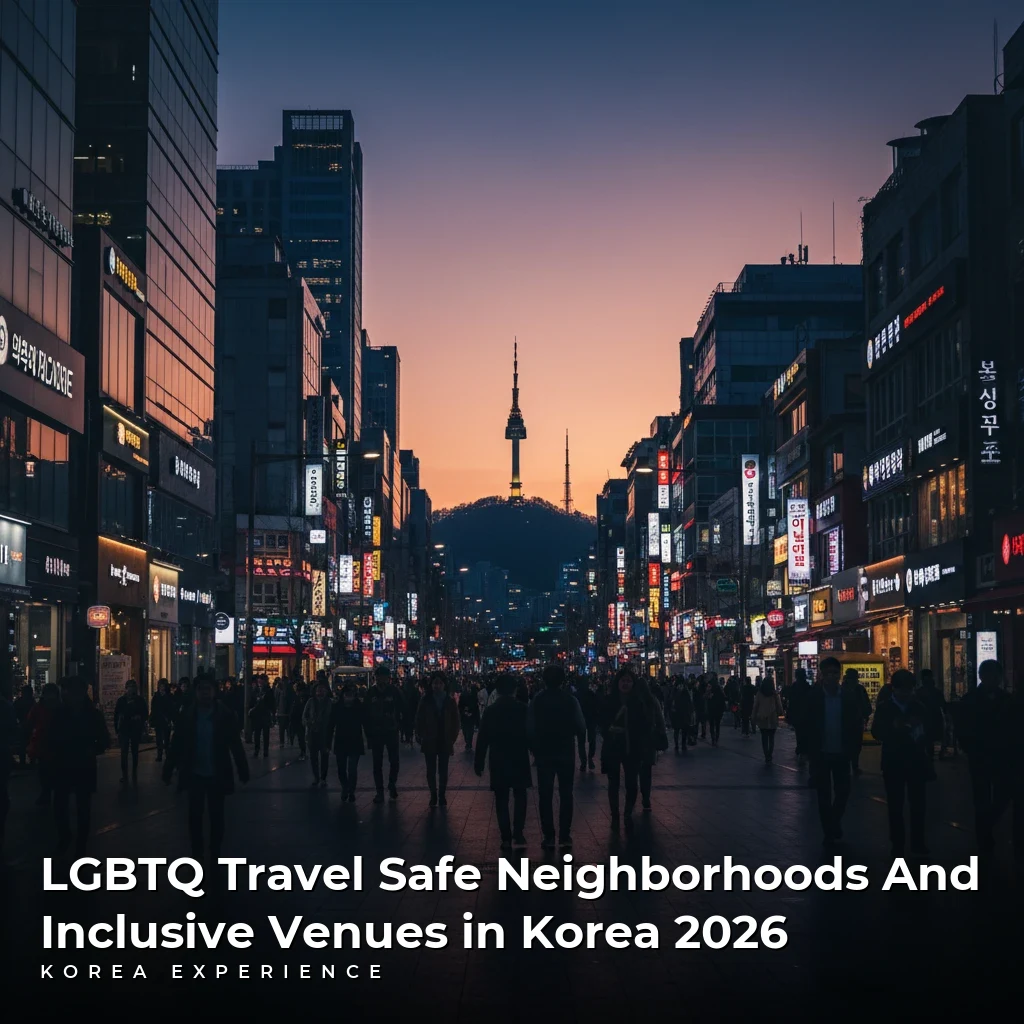
A complete guide to LGBTQ+ safety in Korea. Discover inclusive neighborhoods in Seoul, nightlife costs (₩15,000+ drinks), and specific travel tips for 2026.
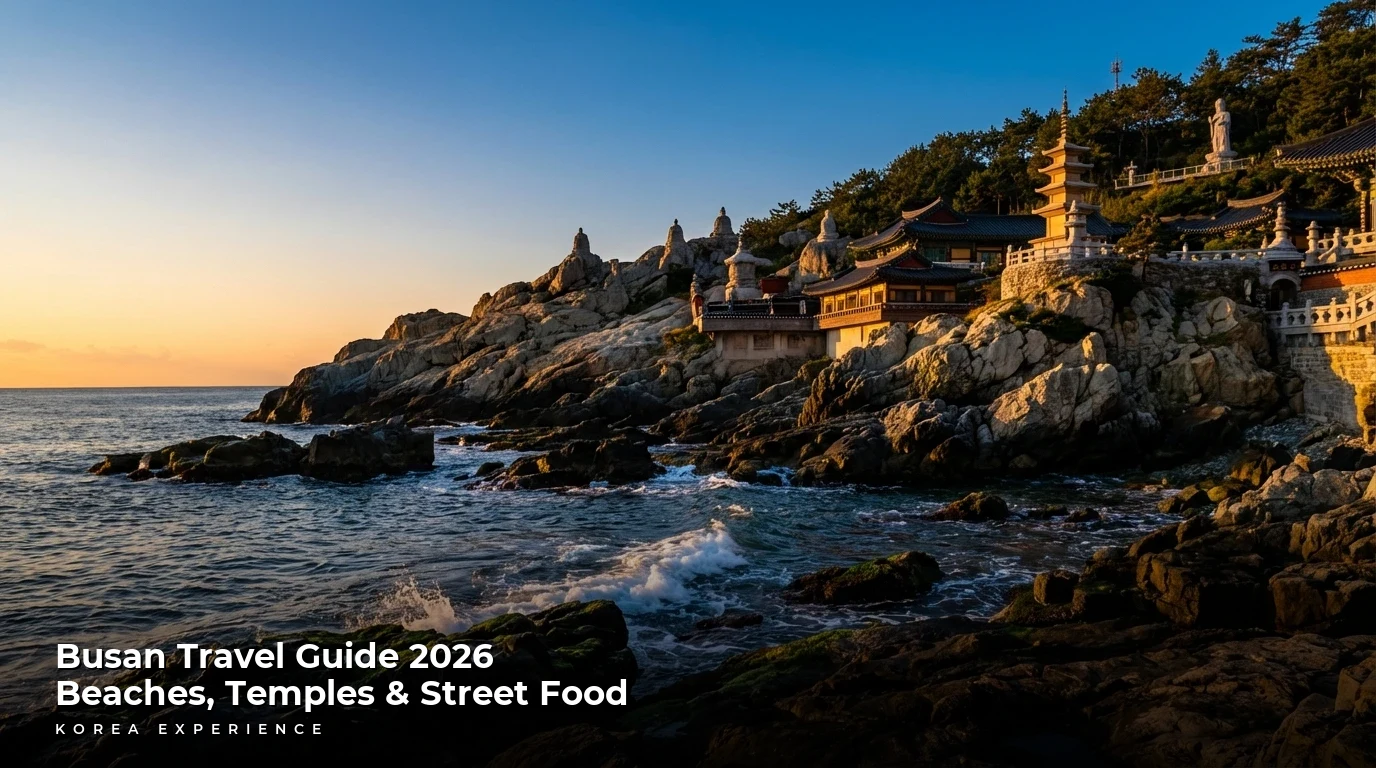
Discover the best of Busan in 2026. From Haeundae Beach to Haedong Yonggungsa Temple, explore top spots, costs, and itineraries for your trip.
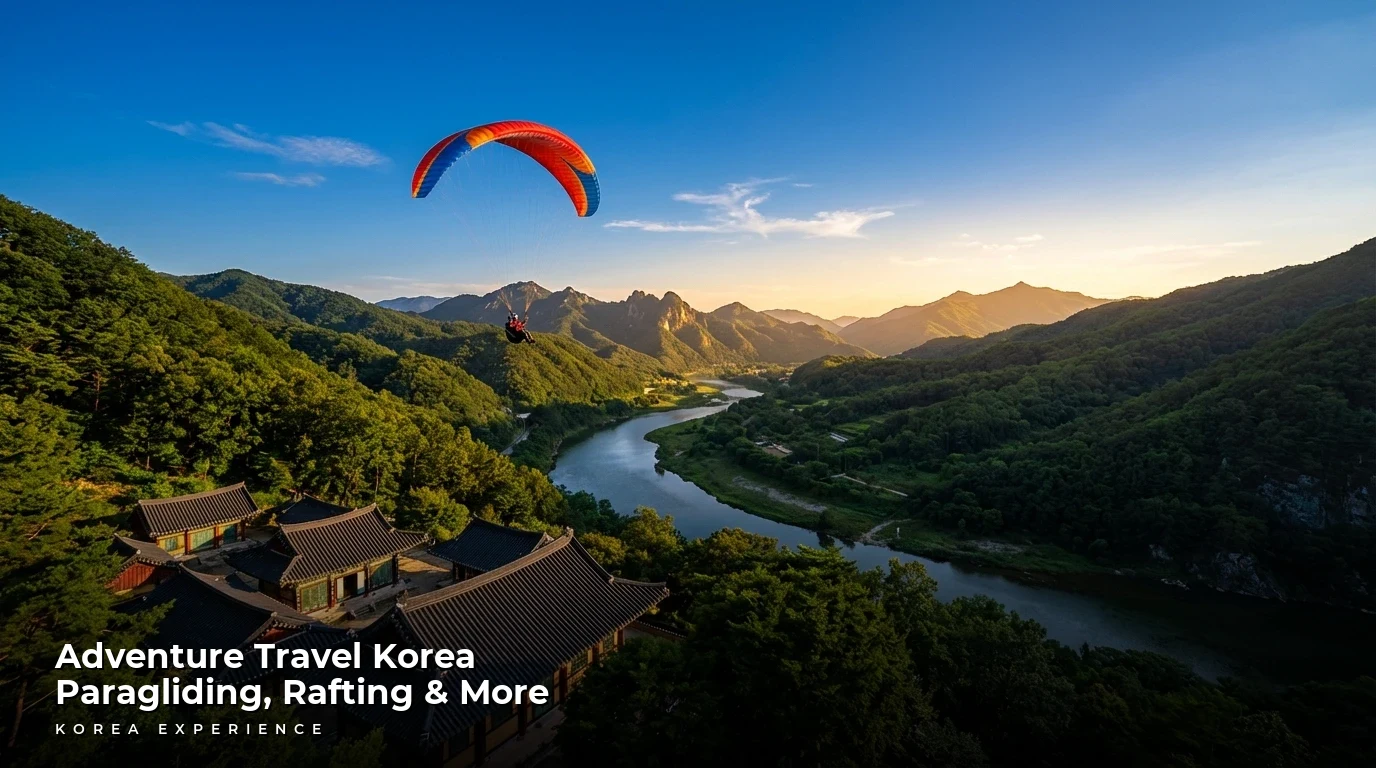
Discover Korea's best adventure spots. From paragliding in Danyang ($85) to rafting in Inje, get complete guides, prices, and booking tips for 2026.
Explore the chilling history of Seoul through haunted palaces and dark tourism spots. Discover ghost stories and practical visiting tips for 2026.
Discover the 3000 year history of kimchi, from ancient preservation to modern superfood. Includes 2026 travel tips, museum guides, and cooking class costs.
Discover the authentic taste of Sokcho with our guide to Squid Sundae and Abai Sundae. Explore history, best restaurants, and travel tips.