Sustainable Travel in Korea: Best Zero Waste Cafes and Eco Hotels 2026
Discover Korea's top eco-friendly travel spots for 2026. From zero-waste cafes in Seoul to LEED-certified hotels, travel green with our ₩50,000 budget tips.
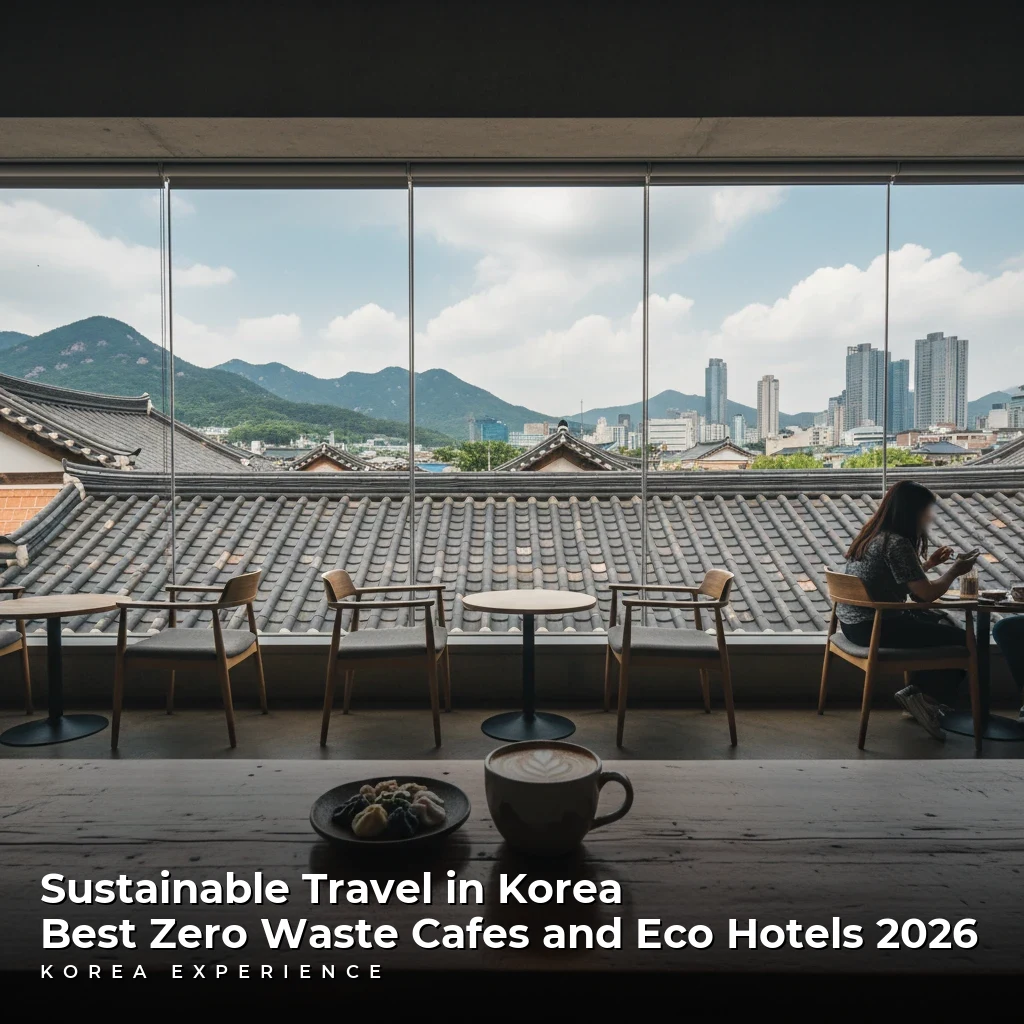
For many international travelers, South Korea evokes images of neon-lit skyscrapers, fast-paced technology, and endless plastic packaging associated with convenience culture. However, a significant shift has occurred. By 2026, sustainable travel in Korea has evolved from a niche preference to a mainstream movement, driven by the government's Green New Deal and a young generation demanding climate action. Travelers looking to minimize their carbon footprint now have access to a robust network of zero-waste cafes, refill stations, and eco-certified accommodations that make green travel not only possible but accessible and stylish.
The short answer: Sustainable travel in Korea is booming in 2026, centered around Mangwon-dong's zero-waste trail, government-subsidized eco-hotels, and the KTX-Eum rail network which reduces carbon emissions by 70% compared to domestic flights.
Key Takeaways
- 1Mangwon-dong in Seoul is the epicenter of the zero-waste movement with over 30 refill stations.
- 2Bringing a personal tumbler saves you ₩300-₩500 at nearly all major cafe chains.
- 3The KTX-Eum electric train is the most sustainable way to travel between Seoul and Busan (2.5 hours).
The State of Green Travel in Korea 2026
South Korea's journey toward sustainability has been rapid. In 2026, regulations on single-use plastics are stricter than ever. Hotels with more than 50 rooms are prohibited from providing free disposable toiletries (toothbrushes, razors, shampoo bottles), a policy that catches many tourists off guard. Violations can result in fines up to ₩3,000,000.
For the conscious traveler, this means packing a "Green Kit" is essential. However, the infrastructure supports this lifestyle beautifully. Public transport is world-class, and the proliferation of "Ttareungi" (Seoul's public bicycles) allows for low-carbon exploration of the capital. The data supports this shift: according to the Korea Tourism Organization, searches for "eco-friendly stays" in Korea have risen by 45% year-over-year since 2024.
📊 Sustainability Growth
Eco-Friendly Hotels and Accommodation
Finding sustainable accommodation in Korea used to mean camping or staying in remote temples. Today, you can find LEED-certified luxury hotels in Gangnam and renovated traditional homes that utilize passive cooling techniques.
The Rise of Green Key Hotels in Seoul
Several properties in Seoul have achieved "Green Key" certification, an international eco-label. These hotels utilize rainwater harvesting, solar energy, and motion-sensor lighting to reduce energy consumption by up to 30%.
One standout is the Hotel Cappuccino in Gangnam. They run an "Earn & Giveaway" program where guests who opt out of unnecessary amenities or linen changes receive "Angel Coins," which can be used to purchase coffee or donated to charity. It creates a gamified experience of sustainability.
Hotel Cappuccino(호텔 카푸치노)
Hanok Stays: The Original Eco-Architecture
For a more traditional approach, Hanok stays are inherently sustainable. Constructed from wood, stone, and clay, these structures "breathe." The traditional heating system, ondol, is energy-efficient, retaining heat in the stone floors for hours after the heat source is turned off.
Many Hanok guesthouses in Bukchon and Seochon have retrofitted their insulation to meet modern passive house standards while maintaining their aesthetic. Staying here supports heritage conservation and reduces the demand for concrete high-rises. Prices for a high-quality Hanok stay in 2026 average around ₩150,000 to ₩250,000 per night, depending on the season.
Booking Tip
When booking a Hanok, look for the "Korea Quality" certification mark. This ensures the property meets safety and hygiene standards while preserving cultural authenticity.
For those interested in the connection between traditional markets and accommodation, check out our guide on accommodation near traditional markets to minimize your food miles by eating local.
Zero Waste Cafes: The "Al Maeng" Revolution
The heart of Korea's zero-waste movement is undoubtedly Mangwon-dong. This neighborhood in Mapo-gu has transformed into a sanctuary for eco-conscious youth. The term "Al Maeng" comes from "Al Maeng-i" (kernel/core), signifying buying only the product, not the shell (packaging).
Almong Market (Almong Sangjeom)
This is the pioneer of the movement. Located near Mangwon Station, it is a refill station where you can buy everything from shampoo to spices by the gram. You must bring your own containers, or you can pick up sanitized donated jars for free. In 2026, they have expanded to include a vegan cafe section.
The Experience:
- Weigh your empty container.
- Fill it with locally sourced roasted tea or organic detergent.
- Weigh again and pay only for the contents.
- Prices typically range from ₩50 per gram for detergents to ₩200 per gram for premium teas.
Almong Market(알맹상점)
Bottle Factory
Located in Hongdae, Bottle Factory is famous for its "Bottle Club" system. If you forget your tumbler, you can borrow a returnable cup. They have saved over 100,000 disposable cups from landfills since their inception. The cafe interior is also a lesson in upcycling, with furniture made from reclaimed materials.
Many travelers don't know that Starbucks, Blue Bottle, and Mega Coffee in Korea are legally required to offer a discount if you use a personal cup. It's usually ₩300-500. Just say 'Tumbler-hae-juseyo' (I'll use a tumbler) when ordering.
For coffee lovers wanting to explore more unique spots, read our curated list of best coffee shops in Seoul 2026, where we highlight which ones are most tumbler-friendly.
Sustainable Dining: From Temple Food to Vegan Tables
Korean cuisine is heavily vegetable-based (namul), but often utilizes seafood broth (anchovy/kelp) or meat stocks. However, "Temple Food" is strictly vegetarian (often vegan) and avoids the five pungent spices (garlic, onion, scallions, chives, leeks), making it sustainable and meditative.
Balwoo Gongyang
Run by the Jogye Order of Korean Buddhism, this Michelin-starred restaurant offers an authentic temple food experience. The ingredients are seasonal and sourced directly from temples across the country, reducing the carbon footprint associated with food transport. Lunch courses start at ₩30,000, while dinner courses can reach ₩95,000.
The Rise of "Ugly Vegetable" Restaurants
In 2026, a new trend has emerged: restaurants specializing in "ugly" produce—fruits and vegetables that are aesthetically imperfect but nutritionally perfect. These venues rescue produce that would otherwise be discarded by supermarkets. Refined Ugly in Seongsu-dong is a pasta bar that uses 100% ugly tomatoes and carrots for their sauces.
Eco-Dining in Seoul: Temple vs. Upcycled
The Dualism Concept: Experience the best of both worlds — premium luxury moments paired with authentic budget-friendly experiences in one route.
Balwoo Gongyang
Michelin-star temple food experience
Mangwon Market
Buying 'ugly' produce and street food with own containers
Try the luxury temple food for the cultural insight, but visit the market to practice everyday sustainability.
To dive deeper into Korean gastronomy, check our guide to 50 must-try Korean foods, which includes vegan-friendly indicators.
Green Transport: How to Move Around Sustainably
Transportation is a major contributor to a traveler's carbon footprint. Fortunately, Korea's infrastructure makes it easy to ditch the car and the plane for domestic travel.
KTX-Eum: The Blue Train
The KTX-Eum (EMU-260) is South Korea's distributed traction high-speed train. Unlike older diesel locomotives, it is fully electric and energy-efficient. Traveling from Seoul to Andong takes about 2 hours and produces significantly less CO2 than driving or flying.
A one-way ticket from Seoul to Busan on the KTX costs approximately ₩59,800. While flights can sometimes be found for ₩40,000, the environmental cost is much higher, and the time saved is negligible once airport security is factored in.
Seoul to Busan: Transport Footprint
| Mode | Time (Center to Center) | Cost | CO2 Emission |
|---|---|---|---|
| KTX (Train) | 2.5 - 3 Hours | ₩59,800 | Low (12kg) |
| Airplane | 3.5 Hours | ₩40,000 - ₩90,000 | High (65kg) |
| Express Bus | 4 - 5 Hours | ₩25,000 - ₩40,000 | Medium (28kg) |
Seoul Public Bikes (Ttareungi)
The Ttareungi system is ubiquitous in Seoul. You can rent a green bike for just ₩1,000 per hour using the app. In 2026, the app interface is fully English-friendly. It is the perfect way to explore the Han River parks or the fortress wall.
📖 How to Rent a Ttareungi Bike
Step 1: Download App
Download 'Seoul Public Bike' app.
Step 2: Purchase Pass
Buy a 'Non-member' pass if you are a tourist. 1 hour is ₩1,000.
Step 3: Scan QR
Press the button on the bike terminal and scan the QR code with your phone.
Step 4: Ride & Return
Lock the bike at any station when done.
For those wanting to combine cycling with sightseeing, the independent bookstores scattered across the city make great waypoints. Read about exploring Korea's independent bookstores to plan your route.
Eco-Activities and Experiences
Sustainable travel isn't just about where you sleep and eat; it's about what you do.
Plogging (Jogging + Picking up Litter)
Originating in Sweden but enthusiastically adopted by Koreans, "Plogging" is a massive trend in 2026. Several groups organize meetups along the Han River or hiking trails like Bukhansan. It’s a fantastic way to meet locals. Organizations like "Seoul Ploggers" often post meetups on Instagram. You get exercise, clean the environment, and often finish with a communal meal.
Hiking: Leave No Trace
Korea is 70% mountains. Hiking is the national pastime. The national parks operate strictly on a "Leave No Trace" policy. You must carry out all your trash. In fact, some national parks, like Seoraksan, have "Green Point" systems where you weigh your trash at the exit and accumulate points for future parking discounts or souvenirs.
For the best locations, see our guide on autumn colors and hiking spots.
Upcycling Classes
Seoul offers numerous workshops where you can create souvenirs from waste. The Seoul Upcycling Plaza in Seongdong-gu is the world's largest upcycling cultural complex. You can take classes to make wallets from discarded milk cartons or jewelry from sea glass. Classes typically last 90 minutes and cost between ₩20,000 and ₩50,000.
Shopping Consciously: Beyond Fast Fashion
Korea is famous for fast fashion, but the "slow fashion" counter-movement is strong.
Vintage and Thrift Shopping
Gwangjang Market (2nd floor) remains a vintage clothing haven. You can find high-quality trench coats, denim, and unique pieces for ₩10,000 to ₩30,000. Buying second-hand extends the life of garments and reduces textile waste.
Refill Stations for Beauty
K-Beauty is legendary, but the plastic waste is a concern. Brands like Aromatica have flagship stores (like the one in Sinsa-dong) where you can refill lotions, toners, and shampoos. The "Zero Station" allows you to bring your empty Aromatica bottles (or buy glass ones) and refill them at a discount.
💵 Beauty Cost: New vs. Refill
Includes pump and plastic bottle
30% cheaper, zero plastic waste
Practical Tips for the Eco-Traveler
Navigating the recycling system in Korea can be daunting for foreigners because it is incredibly detailed.
Understanding Korean Recycling (Bunri-sugeo)
Korea has one of the highest recycling rates in the world. As a traveler staying in an Airbnb or rental, you must separate your waste.
- General Waste (Ilban Ssseugi): Goes in a specific district-designated bag (white/pink/yellow depending on the district) bought at convenience stores.
- Food Waste (Eumsik-mul): Goes in a special yellow bag or RFID bin.
- Recyclables: Must be clean and separated by type (Vinyl, Clear PET, Colored Plastic, Cans, Paper).
- Clear PET Bottles: Labels must be removed.
Strict Fines
Do not throw food waste in general trash. Do not put black plastic bags in recycling bins. Cameras are often installed near dumping sites, and fines start at ₩100,000.
Regional Spotlight: Sustainable Jeju
While Seoul is the urban hub, Jeju Island aims to be "Carbon Free Island by 2030."
Electric Vehicles (EV) in Jeju
Jeju has the highest density of EV chargers in the country. Renting an EV is often cheaper than a gasoline car here, thanks to subsidies. A typical daily rental for a Hyundai Ioniq 6 is around ₩60,000-₩80,000.
Haenyeo Culture
Supporting the Haenyeo (women divers) is a form of sustainable cultural tourism. They harvest seafood manually without oxygen tanks, ensuring no overfishing. Visit the Haenyeo Kitchen in Gujwa-eup for a meal where the divers tell their stories.
Conclusion
Sustainable travel in Korea in 2026 is no longer about compromising comfort; it's about enhancing the experience. By choosing to take the KTX, refilling your water bottle at Almong Market, or staying in a Hanok, you are engaging deeper with the culture and ensuring that Korea's beauty remains for future visitors.
Whether you are saving ₩500 on your morning latte or hiking the clean trails of Bukhansan, every small action counts. Korea invites you to travel lighter, greener, and smarter.
❓ Frequently Asked Questions
Have more questions?Contact us →
Sustainable Travel in Korea
- ✓Excellent public transport reduces need for cars
- ✓High availability of refill stations in Seoul
- ✓Discounts for using personal tumblers
- ✓Clean and safe drinking water availability
- ✗Complex recycling rules for short-term visitors
- ✗Over-packaging is still common in delivery food
- ✗Vegan labeling can sometimes be inconsistent
About the Author
Korea Experience Team
Written by the Korea Experience editorial team - experts in Korean medical tourism, travel, and culture with years of research and firsthand experience.
Explore more in Travel & Tourism
From Seoul's neon-lit streets to Jeju's volcanic landscapes — discover the best of Korea with insider travel tips, itineraries, and seasonal guides.
Browse All Travel & Tourism ArticlesContinue Reading
Explore more articles you might find interesting
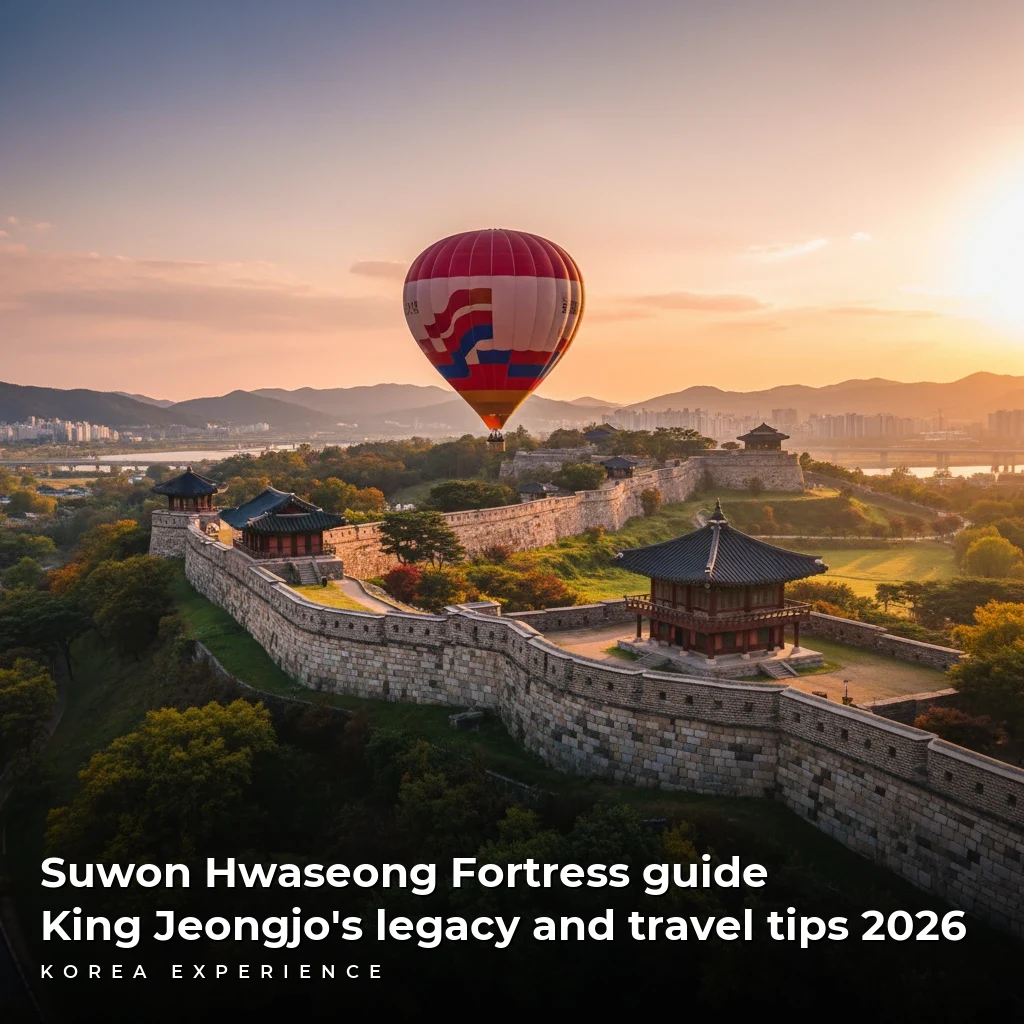
Explore Suwon Hwaseong Fortress in 2026. A complete guide to the 5.7km wall, King Jeongjo's history, Flying Suwon costs (₩20,000), and famous Galbi spots.
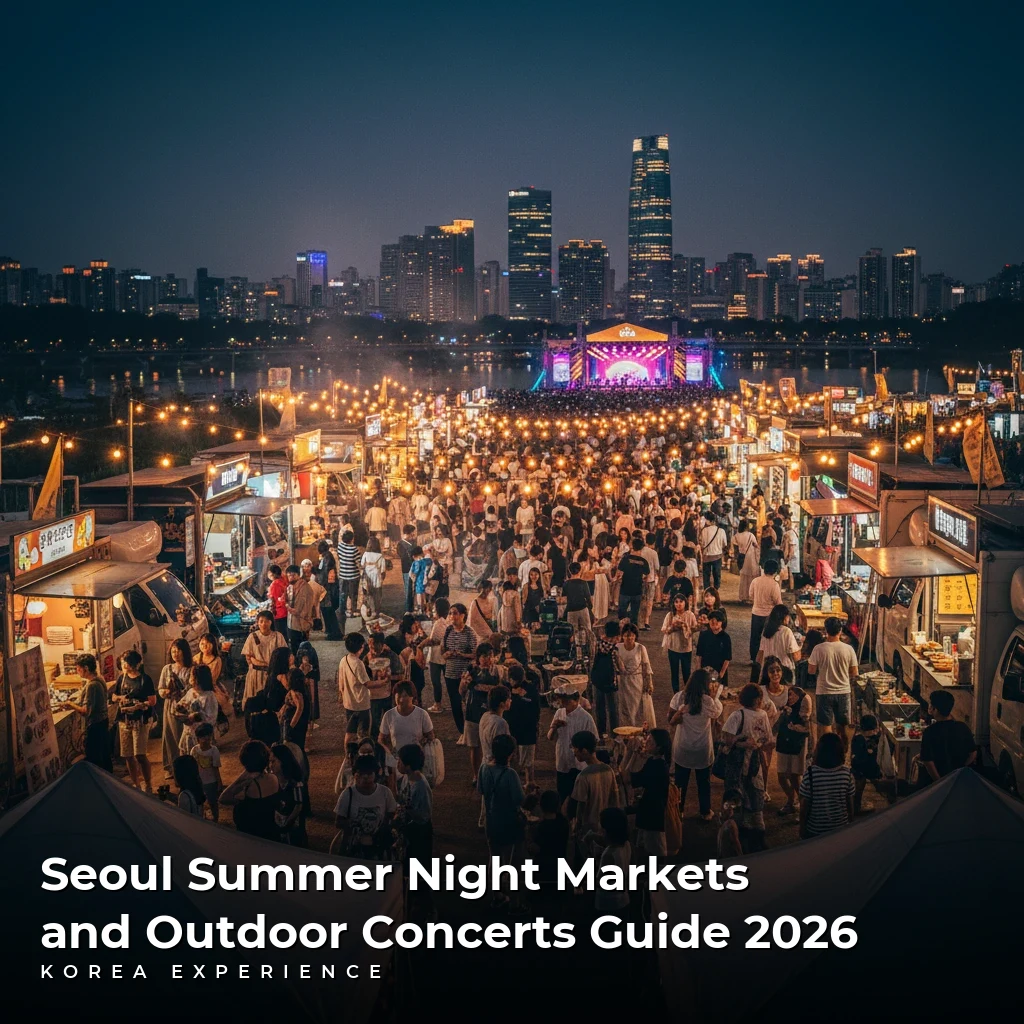
The ultimate guide to Korea's 2026 summer nightlife. Discover the Hangang Moonlight Market, Waterbomb Festival prices, and food truck costs averaging ₩8,000.
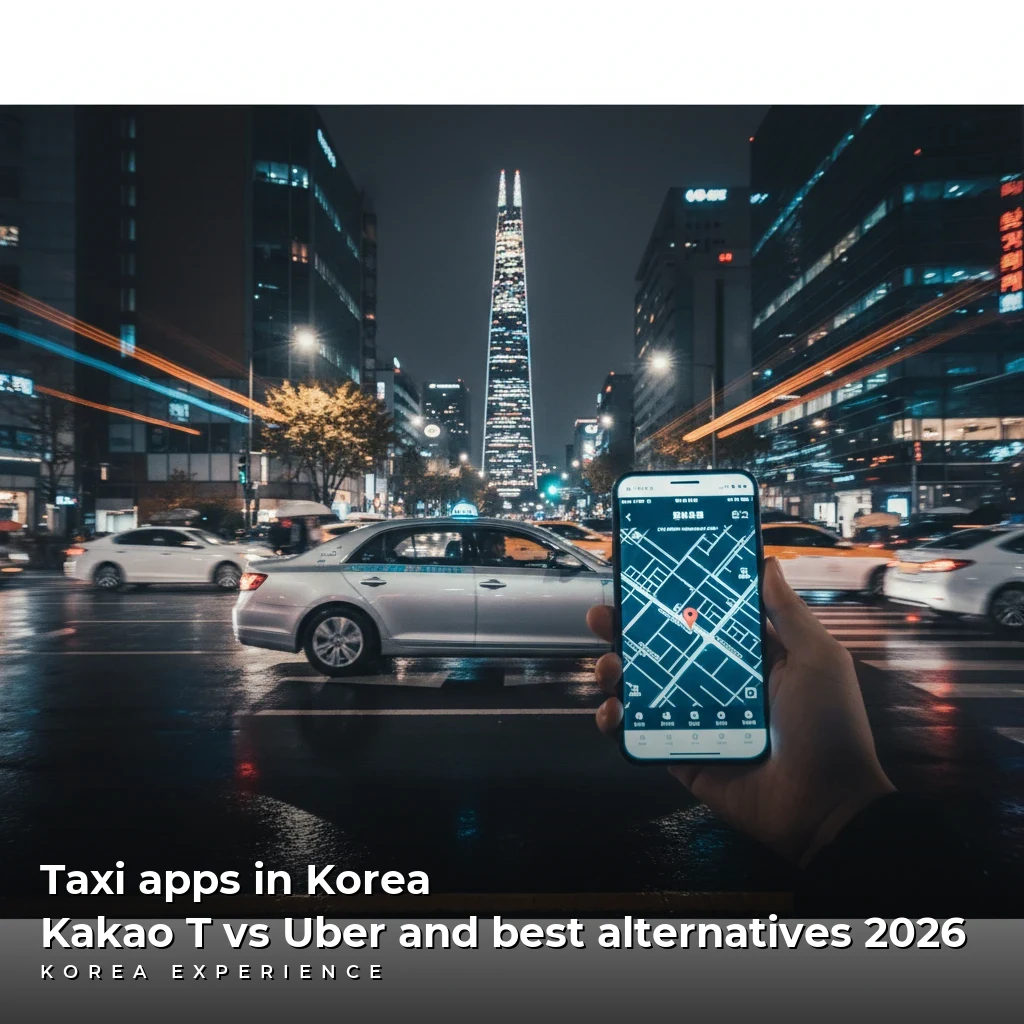
Compare Kakao T and Uber in Korea for 2026. Discover prices starting at ₩4,800, foreign card tips, and how to navigate Seoul like a local.
Discover top Korean beaches from Yangyang surfing to Jeju snorkeling. Includes 2026 prices, transport tips, and water activity costs for summer travel.
Discover the top 15+ English-friendly temple stays in Korea. From Seoul to mountains, learn booking tips, costs (₩50k-80k), and schedules for 2026.
The ultimate 2026 guide to spring in Korea. Discover bloom dates, Jinhae and Seoul festivals, budget tips, and photo spots. Expect to spend ₩50,000 daily.