Gangneung Coffee Street Guide 2026: Best Cafes on Anmok Beach
Explore Gangneung Coffee Street in 2026. Discover 30+ ocean-view cafes, average prices of ₩6,000 per latte, and the famous Coffee Festival details.
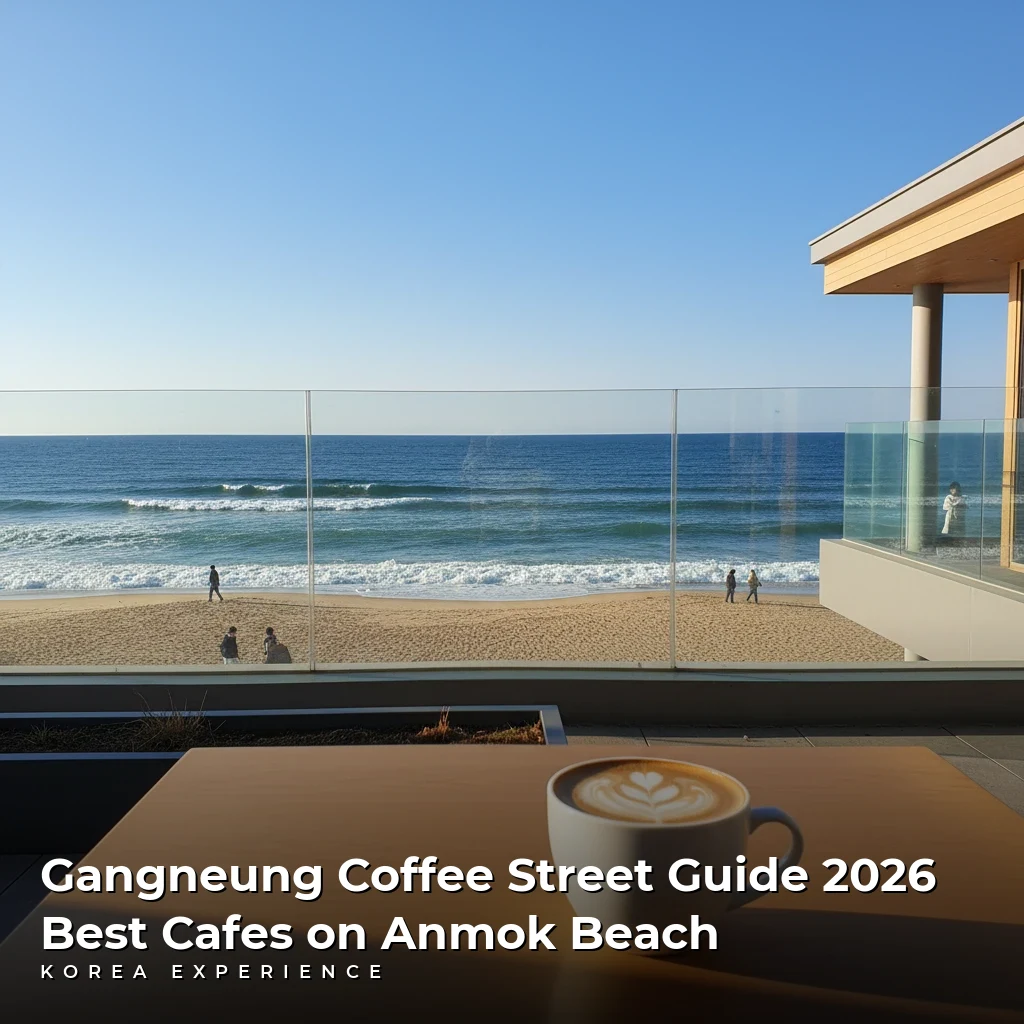
Gangneung Coffee Street, located along the pristine coastline of Anmok Beach, is South Korea’s premier destination for coffee enthusiasts, featuring over 30 specialized roasteries and cafes packed into a 500-meter stretch. Unlike the franchise-heavy streets of Seoul, this unique district offers artisanal brewing experiences where the average cup of hand-drip coffee costs between ₩6,000 and ₩9,000, served against a backdrop of the East Sea.
The short answer: Gangneung Coffee Street on Anmok Beach is Korea's coffee capital, famous for transforming from a 1980s vending machine hub into a sophisticated artisan cafe district. In 2026, visitors should prioritize the annual Coffee Festival in October, try signature treats like Coffee Bread (₩15,000/box), and visit iconic spots like Bohemian Roasters and Terarosa.
Key Takeaways
- 1Gangneung hosts over 500 coffee shops, but the famous 'Coffee Street' is specifically located on Anmok Beach.
- 2The KTX-Eum train from Seoul to Gangneung takes just 1 hour and 56 minutes, costing approximately ₩27,600.
- 3October is the peak season due to the Gangneung Coffee Festival, drawing over 400,000 visitors annually.
The Origins: From Vending Machines to Baristas
To truly appreciate the Coffee Trail, one must understand its humble and somewhat unusual beginnings. In the 1980s and 1990s, Anmok Beach wasn't lined with multi-story glass buildings. Instead, it was famous for vending machines.
Local couples and students would drive to the beach, not for a fancy latte, but for a ₩300 cup of instant coffee from a vending machine. At its peak, nearly 50 vending machines lined the shore. What made this unique was that the machine operators began competing on taste, customizing their ratios of sugar, cream, and coffee powder, and even using higher-quality water. This created a culture of "tasting" coffee by the sea.
The pivotal shift occurred around the early 2000s when first-generation baristas, most notably Park Yi-chu of Bohemian Roasters, settled in the area. They introduced the concept of roasting beans on-site. Today, while a few nostalgic vending machines remain, they are overshadowed by roasting factories that process tons of beans daily.
📊 The Coffee Economy
Getting to Gangneung: Speed vs. Scenery
Traveling to Gangneung has never been easier for international visitors. The introduction of high-speed rail for the 2018 Winter Olympics transformed accessibility to the east coast.
The KTX-Eum (High-Speed Train)
This is the preferred method for 85% of travelers. Departing from Seoul Station or Cheongnyangni Station, the KTX-Eum reaches Gangneung Station in under two hours.
- Duration: 1 hour 50 minutes to 2 hours.
- Cost: Approximately ₩27,600 (Economy) / ₩38,600 (First Class).
- Frequency: Trains run every hour starting from 05:00 AM.
Intercity Bus
For budget travelers or those departing from the Express Bus Terminal in Gangnam, the bus is a viable option, though traffic can significantly impact travel time.
- Duration: 2 hours 50 minutes (without traffic).
- Cost: Premium Gold Bus (fully reclining seats) is roughly ₩30,000; Standard is ₩23,000.
Transport Comparison: Seoul to Gangneung
| Feature | KTX-Eum | Express Bus |
|---|---|---|
| Travel Time | 2 Hours | 3-4 Hours |
| Cost (One Way) | ₩27,600 | ₩23,000 - ₩30,000 |
| Comfort | Legroom, WiFi | Reclining Seats (Premium) |
| Scenic View | Mountains & Tunnels | Highway Mountains |
Once you arrive at Gangneung Station, Anmok Beach is a short taxi ride away (approximately 5.6km). The taxi fare will be around ₩7,000 to ₩9,000 and takes about 15 minutes. Alternatively, you can take Bus 223-1 or 303-1, though intervals can be 20-30 minutes.
Top Cafes on Anmok Beach: The "Must-Visit" List
Walking down Anmok Coffee Street can be overwhelming. Every building is a cafe, and many offer rooftop terraces. Here are the standouts for 2026, selected based on brew quality and view.
1. Coffee Cupper (Anmok Branch)
As one of the pioneers in the area, Coffee Cupper is essentially a museum of coffee history. They manage their own coffee farm in Korea (a rarity due to the climate) and display antique grinders and brewing equipment.
- Best for: History buffs and hand-drip purists.
- Signature: Hand-drip Geisha coffee.
- Price: ₩7,000 - ₩10,000 per cup.
2. BOSSANOVA Coffee Roasters
Famous for its rooftop terrace with bean bags and white fabric drapes, this is the most "Instagrammable" spot on the strip. It’s incredibly popular with younger crowds.
- Best for: Photography and ocean views.
- Signature: Cream Latte.
- Price: ₩6,500.
3. AM Bread & Coffee
If you are hungry, this is the stop. While their coffee is standard, their bakery selection is massive. The third-floor seating area features floor-to-ceiling windows that make you feel like you are floating over the ocean.
- Best for: Brunch and large groups.
- Signature: Squid Ink Baguette (₩5,500).
Kikrus Coffee(키크러스 커피)
4. Santorini Coffee
Recognizable by its blue and white exterior modeled after the Greek island, Santorini puts heavy emphasis on their roasting process. They offer a wide variety of single-origin beans roasted daily on the premises.
- Best for: Single-origin tasting flights.
- Price: ₩6,000 for Americano.
For those interested in how these cafes compare to Seoul's vibrant scene, check out our guide to the best coffee shops in Seoul to see the difference between city and coastal coffee culture.
Beyond Anmok: The Extended Coffee Trail
While Anmok Beach is the center of the action, true coffee pilgrims know that the "Holy Trinity" of Gangneung coffee often lies slightly inland. If you have a car or are willing to take a 20-minute taxi ride, these spots are non-negotiable.
Terarosa Coffee Factory (Main Branch)
Located in Gujeong-myeon, this is a massive industrial space that serves as the headquarters for the famous Terarosa brand. The architecture alone draws architects and designers. It features a huge library, a pecan pie bakery, and a roasting plant that supplies beans across the country.
- Atmosphere: Industrial chic, cathedral-like ceilings.
- Must-try: House Juice and drip coffee.
- Wait time: Can exceed 45 minutes on weekends.
Bohemian Roasters (Park Yi-chu Coffee Factory)
Park Yi-chu is a legend in the Korean coffee world, often called one of the "1st Generation Baristas." His cafe in Sacheon-myeon is old-school. If you are lucky, you might catch the master himself hand-drip brewing. The coffee here is dark, rich, and intensely flavorful, sticking to traditional Japanese charcoal roasting styles.
- Atmosphere: Classic, serious, reverent.
- Must-try: House Blend (₩6,000).
Queue Management
At Bohemian Roasters and Terarosa, you will likely encounter a waiting list system (often utilizing a tablet with a Korean phone number input). If you don't have a Korean SIM, ask the staff at the counter for a physical number ticket immediately upon arrival.
Signature Food Pairings: What to Eat with Your Coffee
Gangneung has developed specific snacks that pair perfectly with their brews. You cannot leave the city without trying these local specialties.
Gangneung Coffee Bread (Gabeang)
These are small, coffee-bean-shaped pastries (manju) filled with coffee jam or red bean paste mixed with espresso. They are sold in boxes and make excellent souvenirs.
- Cost: Approx. ₩10,000 - ₩20,000 per box depending on size.
- Where to buy: Sold at almost every cafe on Anmok street, but the official "Gangneung Coffee Bread" store has the original recipe.
Soft Tofu Gelato (Soontofu Gelato)
Gangneung is famous for Chodang Soft Tofu (made with seawater). Local geniuses combined this with gelato. The result is a savory-sweet, incredibly creamy ice cream that beats traditional vanilla.
- Cost: ₩4,000 - ₩4,500 per scoop.
- Flavors: Original Tofu, Black Sesame, and Coffee Tofu.
Yeontan Bbang (Briquette Bread)
As mentioned in the Kikrus Coffee section, these are sponge cakes shaped like the coal briquettes formerly used to heat Korean homes. They tap into retro nostalgia and are chocolate-heavy.
If you are a foodie looking for more savory options in the region, consider reading our comprehensive guide to Korean regional flavors, which touches on the distinct tastes of the East Coast.
The Gangneung Coffee Festival: October 2026
If you are planning your trip for the fall, aim for early October. The Gangneung Coffee Festival is a massive event held at the Gangneung Ice Arena and Anmok Beach.
What to expect:
- 100-Barista Hand Drip Performance: A spectacle where 100 baristas brew simultaneously.
- Free Tastings: Dozens of booths offering sample cups (bring your own tumbler to reduce waste and get faster service).
- Seminars: Talks on sustainability, roasting techniques, and 2026 trends.
- Crowds: Expect over 400,000 visitors over the 4-5 day period. Hotels book out 3-4 months in advance.
📋 Festival Logistics
Accommodation Guide: Waking Up to the Ocean
Staying overnight in Gangneung allows you to experience the sunrise coffee culture. Many cafes open as early as 8:00 or 9:00 AM, perfect for watching the sun come up over the East Sea.
St. John’s Hotel
Located slightly north of Anmok Beach near Gyeongpo Beach, this is a massive resort famous for its infinity pool. It’s dog-friendly and often hosts pool parties.
- Price: ₩150,000 - ₩250,000 per night.
- Vibe: Resort luxury, bustling.
Skybay Hotel Gyeongpo
The building looks like a ship (or the Marina Bay Sands of Singapore on a smaller scale). It sits right between the ocean and Gyeongpo Lake, offering dual views.
- Price: ₩180,000 - ₩300,000 per night.
Boutique Stays on Anmok
There are smaller pensions and boutique hotels directly on the coffee street (like Hotel Herren-Haus). These offer direct access to the cafes but can be noisier due to street traffic.
- Price: ₩80,000 - ₩130,000 per night.
For a broader look at escaping the city hustle, check out our recommendations for best weekend getaways for expats.
Practical Itinerary: A 1-Day Coffee Tour
Here is how to structure a day trip to ensure you don't get "caffeine jitters" while seeing the best spots.
Gangneung Day Trip: Caffeine & Culture
The Dualism Concept: Experience the best of both worlds — premium luxury moments paired with authentic budget-friendly experiences in one route.
Arrival & Brunch
KTX arrival followed by brunch at Chodang Tofu Village.
Coffee Trail
Walk Anmok Beach and visit 2 cafes.
Culture Stop
Visit Haslla Art World or Ojukheon.
Sunset Brew
Rooftop coffee at BOSSANOVA.
Start with tofu to coat your stomach before consuming heavy amounts of coffee.
Budgeting for Your Trip
Gangneung is generally more affordable than Seoul, but "cafe hopping" adds up quickly. A premium hand-drip coffee is often the price of a full meal.
💵 Cost Breakdown (Per Person)
KTX First Class, Taxi everywhere, 3+ Specialty Coffees, Sashimi Dinner
Bus travel, Public Transit, 1 Coffee, Market Food
Many visitors make the mistake of only visiting Anmok. The real hidden gem is the 'Pine Tree Forest' walk along Gyeongpo Beach just 10 minutes away. Grab a takeout coffee from Anmok and walk north through the pines—it smells of pine needles and sea salt, a perfect palate cleanser.
Other Attractions Nearby
You can't drink coffee for 12 hours straight. Here are nearby spots to break up the caffeine intake:
- Ojukheon House: The birthplace of Shin Saimdang and Yulgok Yi I (the figures on the ₩50,000 and ₩5,000 notes). It is one of the oldest preserved wooden houses in Korea.
- Gangneung Central Market: A 15-minute taxi ride from the beach. Famous for Dakgangjeong (sweet crispy chicken) and Garlic Cream Cheese Bread.
- Haslla Art World: A stunning contemporary art museum and sculpture park on a cliff overlooking the sea. Great for photos.
If you are interested in the historical aspect of locations like Ojukheon, you might enjoy reading about historic Kdrama sets and folk villages to understand the architecture better.
Understanding the "New Wave" of Korean Coffee
Korea's coffee culture has evolved rapidly. In 2026, the trend in Gangneung is moving toward "Experiential Brewing." It is no longer just about buying a cup; it's about the education.
Many cafes now offer 30-minute roasting classes or "cupping" sessions where you can taste three different beans and learn to identify notes of jasmine, chocolate, or citrus. This educational aspect is what sets Gangneung apart from the trendy cafes in Seoul's Seongsu-dong or Hannam-dong.
📖 How to Order Hand Drip Like a Pro
Step 1: Choose Your Origin
Most cafes offer Ethiopia (acidic/fruity), Kenya (bold/wine-like), or Colombia (nutty/balanced).
Step 2: Select Temperature
Hot is recommended to taste the full profile, but 'Ice' is the Korean standard.
Step 3: Wait Patiently
Hand drip takes 10-15 minutes. Do not rush the barista.
Conclusion
Gangneung Coffee Street in 2026 remains a testament to Korea's ability to take a global commodity and make it distinctly their own. From the rusty vending machines of the 1980s to the glass-walled roasteries of today, Anmok Beach offers a sensory journey that combines the sound of crashing waves with the aroma of freshly roasted Arabica.
Whether you are a certified Q-grader or someone who just needs a caffeine kick to start the day, the Coffee Trail offers a depth of culture that goes far beyond the cup.
❓ Frequently Asked Questions
Have more questions?Contact us →
About the Author
Korea Experience Team
Written by the Korea Experience editorial team - experts in Korean medical tourism, travel, and culture with years of research and firsthand experience.
Explore more in Travel & Tourism
From Seoul's neon-lit streets to Jeju's volcanic landscapes — discover the best of Korea with insider travel tips, itineraries, and seasonal guides.
Browse All Travel & Tourism ArticlesContinue Reading
Explore more articles you might find interesting
Discover the best artisan roasters on Gangneung Coffee Street. Explore Anmok Beach cafes, prices, and brewing methods in Korea's coffee capital.
Discover the ultimate guide to Korean desserts in 2026. From fluffy Bingsu to street-side Hotteok, explore prices, locations, and top cafes.
Discover the best of Busan in 2026. From Haeundae Beach to Haedong Yonggungsa Temple, explore top spots, costs, and itineraries for your trip.
Discover the top 20 cafes in Seoul for 2026. From Seongsu warehouses to Hanok spots, find prices, wait times, and signature brews.
Explore the best of Myeongdong in 2026. Discover top K-beauty flagship stores, trendy fashion boutiques, and street food prices starting at ₩4,000.
Discover Seoul's best kept secrets for 2026. From Sindang-dong cocktail bars to Mullae art alleys, explore the city like a local. Prices and maps included.