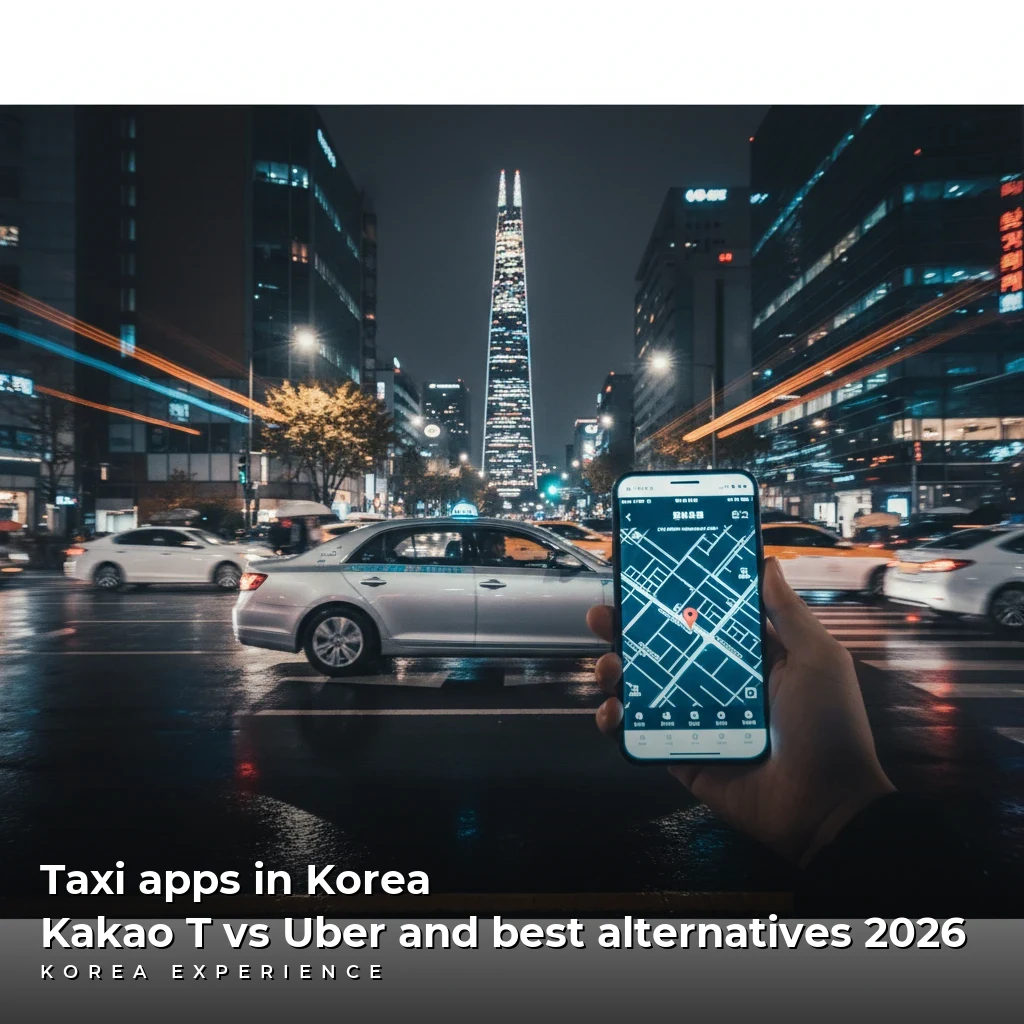
Korean Taxi Apps Kakao T vs Uber & Alternatives
Navigate Korea's taxi landscape with ease. Discover the best taxi apps like Kakao T and learn about Uber's presence and other essential alternatives for seamless travel.
Introduction: Mastering Korean Taxi Apps for Seamless Travel
Navigating a new country can be an exhilarating adventure, but getting around efficiently often presents its own set of challenges. For international travelers and expats in South Korea, understanding the local transportation system, especially taxi services, is crucial for a smooth and enjoyable experience. While Korea boasts an incredibly efficient public transport network of subways and buses, taxis offer unparalleled convenience, especially for late-night journeys, carrying luggage, or reaching destinations off the main public transport routes.
However, many visitors arrive in Korea wondering about the prevalence of familiar services like Uber and quickly discover that the landscape of taxi apps in Korea is uniquely dominated by a local giant: Kakao T. This often leads to confusion and a scramble for alternatives.
This comprehensive guide is designed to demystify Korea's taxi app ecosystem. We will delve deep into the undisputed market leader, Kakao T, explore the limited presence of Uber, and introduce you to several other valuable alternatives that cater to various needs and preferences. By the end of this post, you'll be equipped with all the insider knowledge and practical tips to confidently hail a ride anywhere in Korea, ensuring your travels are as convenient and stress-free as possible. Get ready to master Korea's taxi apps and unlock a new level of freedom in your Korean adventure!
Understanding the Korean Taxi Landscape
Before diving into the apps themselves, it's essential to grasp the fundamental structure of Korea's taxi services. This understanding will help you make informed choices, whether you're using an app or flagging down a taxi the traditional way.
Types of Taxis in Korea
Korea's taxi fleet is diverse, offering options to suit different budgets and comfort levels.
- Standard Taxis (일반 택시 - Ilban Taeksi): These are the most common and affordable taxis, typically colored orange, silver, white, or yellow. They are plentiful in all cities and can be hailed on the street, found at designated taxi stands, or booked via apps. They are clean and generally efficient.
- International Taxis (국제 택시 - Gukje Taeksi): These black taxis with "International Taxi" emblazoned on the side are specifically geared towards foreign visitors. Their drivers are trained to speak English, Japanese, or Chinese, and they offer fixed-fare services, especially for airport transfers. They can be booked online, via phone, or through certain apps. While slightly more expensive than standard taxis, the language certainty and professional service can be a huge benefit for tourists.
- Deluxe Taxis (모범 택시 - Mobeom Taeksi): These are easily recognizable by their black color with a gold stripe and "DELUXE TAXI" sign. Deluxe taxis offer a higher level of comfort, more spacious interiors, and experienced drivers. They do not have late-night surcharges but have a higher base fare, making them a premium option. You'll often find them at major hotels or business districts.
- Jumbo Taxis (점보 택시 - Jeombo Taeksi): These are larger vans designed to accommodate up to 6-9 passengers and significant luggage, making them ideal for groups or airport trips. They are also black and have a similar fare structure to Deluxe taxis.
Payment Methods for Taxis in Korea
Flexibility in payment is a hallmark of Korean taxis. You have several options:
- Cash: Always accepted. It's advisable to carry some smaller denominations, though most drivers can break larger bills.
- Credit/Debit Card: Virtually all taxis are equipped with card terminals, accepting major international cards like Visa, Mastercard, and American Express. This is a very convenient option.
- T-money Card: This reloadable public transportation card can also be used to pay for taxis. Simply tap your T-money card on the reader when exiting the taxi. This is incredibly convenient if you already use one for subways and buses. (For more details, see our guide on 'Using T-money for Public Transport in Korea'.)
- In-App Payment: The most convenient method when using taxi apps, allowing you to register your credit card and pay directly through the app, often before even getting out of the car.
The Importance of Kakao T
If there's one key takeaway from understanding the Korean taxi landscape, it's the sheer dominance of Kakao T. It's not just an option; it's practically the default for ride-hailing in Korea. Forget what you know about other global apps; Kakao T operates in a league of its own, deeply integrated into Korean daily life through the Kakao ecosystem (KakaoTalk, Kakao Map, etc.). For any international visitor or expat, understanding and utilizing Kakao T is non-negotiable for efficient taxi travel.
Kakao T: The Undisputed King of Taxi Apps in Korea
When it comes to taxi apps in Korea, Kakao T (카카오 T) is not just the most popular choice; it's practically the only choice for the vast majority of Koreans. Developed by Kakao, the company behind the ubiquitous messaging app KakaoTalk, Kakao T has successfully monopolized the ride-hailing market, boasting over 95% market share. For international visitors, mastering Kakao T is essential for seamless taxi travel.
Why Kakao T Dominates
Kakao T's dominance stems from several factors:
- Integration with KakaoTalk: Its seamless link to Korea's national messenger app means a vast pre-existing user base.
- Extensive Network: Almost every taxi driver in Korea is registered with Kakao T, ensuring quick and reliable pickups virtually anywhere.
- User-Friendly Interface: The app is intuitive and designed for efficiency.
- Comprehensive Services: Beyond standard taxis, Kakao T offers various other transportation options, from premium rides to designated drivers.
Getting Started with Kakao T
- Download the App: Search for "Kakao T" on the Apple App Store or Google Play Store.
- Sign-up and Verification: You'll need to sign up using your phone number. While a Korean phone number makes verification smoother, international numbers are generally supported.
- Important Tip: Ensure your phone number is active and can receive verification SMS messages during the setup process. Some users might experience issues with specific international numbers; having a local Korean SIM card or eSIM often resolves this. (Consider reading our guide on "Getting a Local SIM Card or eSIM in Korea" for more information.)
- Language Settings: The app offers an English interface, which can be toggled in the settings. This is a crucial feature for non-Korean speakers.
- Register Payment Method: Link your international credit or debit card (Visa, Mastercard, Amex are widely accepted). This allows for convenient in-app payment, where the fare is automatically charged at the end of the ride, eliminating the need to interact with the driver about payment.
How to Book a Taxi with Kakao T
The process is remarkably straightforward:
- Open the App and Select "Taxi": This is the main service icon.
- Set Your Destination: You can type in the address (English or Korean), use the map, or select from recent locations. The app will then show an estimated fare range.
- Insider Tip: If you have the Korean address of your destination (e.g., from Kakao Map or Naver Map), pasting it directly into Kakao T can improve accuracy.
- Set Your Pickup Location: The app usually auto-detects your current location. You can adjust the pin if needed.
- Choose Taxi Type:
- Kakao Taxi (General): Standard taxis, most common.
- Kakao Blue (카카오 블루): Kakao's directly managed taxis. Drivers cannot reject rides, and they automatically accept the next available request, ensuring faster dispatch. Slightly higher fixed dispatch fee.
- Kakao Black (카카오 블랙): Premium, high-end sedans with professional drivers. More expensive but offers superior comfort and service, similar to a luxury limousine.
- Kakao Vent (카카오 벤티): Large vans for groups or lots of luggage, often comparable in price to standard taxis for group travel.
- Kakao Electric (카카오 전기차): Electric vehicles, similar to standard taxis but environmentally friendly.
- International Taxi: Can also be booked through Kakao T, especially for airport transfers.
- Confirm Request: Once you've chosen your taxi type, tap "Call a Taxi." The app will search for nearby drivers.
- Track Your Ride: Once a driver accepts, you'll see their name, photo, vehicle type, license plate number, and estimated arrival time. You can track their approach on the map.
- Communicate (Optional): There's an in-app chat function, often with a basic translation tool, if you need to communicate with the driver before they arrive.
- Enjoy Your Ride: The driver will take you to your destination. The fare will be automatically processed if you registered your card.
Kakao T Features for Foreigners
- English Interface: Navigate the app in English for ease of use.
- Foreign Card Support: Most international credit/debit cards can be registered for in-app payment.
- In-App Translation: While basic, the chat translation feature can help bridge simple communication gaps.
- Destination Sharing: You can easily share your destination with the driver through the app, minimizing language-related misunderstandings.
Pricing and Payment on Kakao T
Kakao T adheres to standard Korean taxi fare regulations.
- Metered Fares: For standard taxis, fares are metered, starting with a base fare and increasing based on distance and time.
- Estimated Fares: The app provides an estimated fare range before you book, which is usually quite accurate.
- Surcharges: Late-night (typically after 10 PM or 11 PM until 4 AM) and early-morning hours incur a surcharge (20-40% depending on the time).
- In-App Payment: The most convenient method. Your registered card is charged automatically. You'll receive a receipt in the app.
- Manual Payment: If you prefer, you can select "Pay to Driver" and use cash, T-money, or a physical credit card at the end of the ride.
Kakao T is your go-to app for taxis in Korea. Take the time to set it up, and you'll find getting around remarkably simple and efficient.
Uber in Korea: What You Need to Know
Many international travelers are accustomed to relying on Uber for their transportation needs worldwide. However, when it comes to Uber in Korea, the situation is distinctly different from most other countries. Uber's presence in South Korea is significantly limited and functions very differently from its widespread ride-sharing services elsewhere.
Uber's Limited Presence and Services
Uber attempted to launch its full peer-to-peer ride-sharing service (Uber X) in Korea several years ago but faced strong opposition from the powerful local taxi industry and regulatory hurdles. As a result, Uber X is not available in Korea. Instead, Uber primarily operates through two services:
- Uber Black: This is Uber's premium chauffeur service, offering high-end sedans and professional drivers. It's similar to Korea's Deluxe Taxis or Kakao Black. While reliable and comfortable, it's significantly more expensive than standard taxis and caters to a niche market.
- Uber Taxi: This service integrates with licensed Korean taxi drivers. Essentially, it's a platform that allows you to hail a standard taxi through the Uber app. The fare is metered, similar to a regular taxi. Drivers are still part of the traditional taxi fleet, and many drivers also use Kakao T.
Where Uber is Available
Uber's services, particularly Uber Taxi, are primarily available in major metropolitan areas like Seoul, Busan, and limited services in other large cities. You will struggle to find an Uber in smaller towns or rural areas. Even in Seoul, the number of Uber Taxi drivers is significantly smaller compared to Kakao T, which can lead to longer wait times, especially during peak hours or in less central locations. Uber Black has broader availability in Seoul but is still a premium service.
Pros and Cons of Using Uber in Korea
Pros:
- Familiar Interface: For those accustomed to the Uber app, the interface is familiar, which can be comforting in a new country.
- English Language Support: The app is fully in English, eliminating language barriers during booking.
- International Payment: Easy to link international credit cards for in-app payment.
- Transparency: Provides fare estimates and driver details upfront.
Cons:
- Limited Availability: Significantly fewer drivers compared to Kakao T, meaning longer wait times and sometimes no available cars.
- Higher Cost (Uber Black): Uber Black is a premium service with premium pricing, not comparable to standard taxi fares.
- No Uber X: The affordable, peer-to-peer ride-sharing service widely used globally is not available.
- Less Integration: Does not offer the same breadth of transportation options or local integration as Kakao T.
Uber vs. Kakao T: A Quick Comparison
Here's a concise table highlighting the key differences between Uber and Kakao T in the Korean context:
| Feature | Kakao T | Uber (in Korea) |
|---|---|---|
| Service Type | Standard, Deluxe, Black, Van, Blue taxis | Uber Black (premium), Uber Taxi (standard) |
| Availability | Nationwide, high driver saturation | Major cities only, limited driver pool |
| Market Share | Dominant (>95% of ride-hailing) | Very small |
| English Support | Yes (app interface and some features) | Yes (full app interface) |
| Payment | In-app (int'l cards), cash, T-money, card | In-app (int'l cards) |
| Wait Times | Generally very short | Can be long, especially for Uber Taxi |
| Local Integration | Deeply integrated with Kakao ecosystem | Limited local integration |
| Cost | Standard taxi fares (metered) | Uber Taxi (metered), Uber Black (premium fixed) |
In summary, while Uber exists in Korea, it is not a primary or reliable option for everyday taxi needs, especially outside of central Seoul. International travelers are strongly advised to prioritize Kakao T.
Exploring Other Taxi App Alternatives in Korea
While Kakao T reigns supreme, and Uber maintains a niche presence, several other specialized or premium taxi apps and services exist in Korea. These alternatives might appeal to those seeking specific features like larger vehicles, guaranteed English-speaking drivers, or enhanced comfort.
Tada (타다): A Premium Ride Service
Tada (pronounced 'tah-da') made a significant splash in the Korean market, often seen as a competitor to traditional taxis before regulatory changes impacted its initial business model. Today, Tada primarily offers premium services:
- Tada Plus (타다 플러스): Offers high-quality sedans or vans with professional, polite drivers. Vehicles are well-maintained, and drivers are trained for excellent service. It's a comfortable and reliable option for business travelers or those seeking an elevated experience. Fares are higher than standard taxis.
- Tada Nexi (타다 넥시): A specialized service using larger vehicles, often catering to airport transfers or group travel. Drivers are often bilingual, providing a smoother experience for foreigners.
Pros of Tada: Premium service, well-maintained cars, professional drivers, good for groups or special occasions. Cons of Tada: Higher prices than standard taxis, less widespread availability than Kakao T.
i.M (아이엠): Another Premium Option
i.M is another app that focuses on premium, comfortable transportation, often utilizing larger, van-type vehicles (like Caravans). This makes them ideal for:
- Groups: Plenty of space for multiple passengers.
- Luggage: Ample storage for suitcases, perfect for airport runs.
- Comfort: Seats are often more spacious and luxurious.
i.M drivers are also known for their professionalism and polite service. They aim to provide a more consistent and high-quality experience than a random standard taxi.
Pros of i.M: Spacious vehicles, comfortable rides, professional drivers, good for groups and airport transfers. Cons of i.M: Premium pricing, not as ubiquitous as Kakao T.
Macaron Taxi (마카롱택시): Service-Oriented
Macaron Taxi positions itself as a service-oriented taxi platform, aiming to provide a more personalized and pleasant experience. While it uses standard taxis, it differentiates itself with various features:
- Designated Drivers: Customers can request a specific driver they've had before and rated highly.
- Pet-Friendly Rides: Offers options for passengers traveling with pets (Macaron Pet), a rare find in Korean taxis.
- Stroller/Child Seat Options: Provides additional services for families.
- Scheduled Rides: Allows for pre-booking, useful for early morning flights or important appointments.
Pros of Macaron Taxi: Unique service offerings (pet-friendly, child seats), focus on customer experience, scheduled rides. Cons of Macaron Taxi: Less common than Kakao T, availability might be limited to larger cities, higher fares for specialized services.
Airbridge (에어브릿지): Airport Transfers
Airbridge is an app and service specifically designed for airport transfers, particularly to and from Incheon International Airport (ICN) and Gimpo International Airport (GMP).
- Specialized for Airports: Focuses entirely on airport routes, making it highly reliable for this purpose.
- Fixed Fares: Offers transparent, fixed fares between the airport and various districts in Seoul, eliminating fare surprises.
- Meet & Greet Service: Drivers can meet you inside the terminal with a sign, which is convenient after a long flight.
- English-Speaking Drivers: Many drivers are bilingual, offering peace of mind for international arrivals.
Pros of Airbridge: Reliable for airport transfers, fixed transparent pricing, English-speaking drivers, meet & greet service. Cons of Airbridge: Only for airport transfers, not a general city taxi service.
International Tourist Taxi (국제택시): Official Service for Foreigners
This is an official service endorsed by the Seoul Metropolitan Government, specifically catering to foreign visitors. You can book them via their official website, phone, or sometimes through apps like Kakao T or Airbridge.
- English-Speaking Drivers: Guaranteed. Drivers are selected and trained for international passenger service.
- Fixed Fares: Offers fixed fares for journeys between Incheon/Gimpo airports and major areas of Seoul, ensuring no surprises.
- Online Booking: Can be pre-booked in advance, allowing for planning before arrival.
- Comfort: Vehicles are typically high-quality standard or deluxe taxis.
Pros of International Tourist Taxi: Official, guaranteed English communication, fixed transparent fares for airport routes, reliable service. Cons of International Tourist Taxi: More expensive than a standard metered taxi, not ideal for short city rides.
While Kakao T will cover 90% of your taxi needs, these alternatives offer valuable specialized services that can significantly enhance specific aspects of your travel in Korea, especially for premium comfort, group travel, or airport transfers.
Practical Tips for Using Taxi Apps in Korea
Even with the best apps at your fingertips, navigating a new country's taxi system can present unique challenges. Here are some practical tips and insider knowledge to ensure your taxi experiences in Korea are always smooth and stress-free.
Getting a Local SIM Card or eSIM
This is perhaps the most crucial tip for seamless app usage. While some international phone numbers may work for Kakao T registration, having a local Korean SIM card or an eSIM provides several benefits:
- Reliable Verification: Ensures smooth registration and verification for all local apps.
- Consistent Data Connection: Essential for GPS and app functionality, especially in areas with weaker international roaming signals.
- Direct Communication: Allows drivers to easily call you if they cannot find your pickup spot, or if you need to coordinate.
- (Internal Link Opportunity): For a detailed guide on options and providers, check out our post on "Staying Connected: Your Guide to Korean SIM Cards and eSIMs."
Registering International Payment Methods
Register your international credit or debit card (Visa, Mastercard, American Express are most widely accepted) within Kakao T and any other apps you plan to use.
- Convenience: In-app payment means you don't need to fumble for cash or cards at the end of the ride, especially useful if you're in a hurry or facing a language barrier.
- Transparency: Fares are often confirmed in the app, and receipts are digital.
- Avoid Currency Exchange: Pay directly in Korean Won, which is converted by your bank.
Dealing with Language Barriers
Even with English interfaces, direct communication with drivers can sometimes be challenging, as not all drivers are proficient in English.
- Use the App's Destination Feature: Always input your destination directly into Kakao T. This displays the destination in Korean to the driver, minimizing misunderstandings.
- Have Addresses Ready: If possible, have your destination address written in Korean (e.g., from Kakao Map or Naver Map) or a specific landmark name ready to show the driver. Screenshots are also helpful.
- In-App Chat Translation: Kakao T offers a basic translation function in its in-app chat. While not perfect, it can assist with simple messages if a driver is having trouble finding you.
- Hotels Can Help: If you're leaving from a hotel, the concierge can write down your destination in Korean or even speak to the driver on your behalf.
Peak Hours and Surcharges
Be aware of peak hours and associated surcharges:
- Late-Night Surcharges: Taxis typically apply a surcharge of 20-40% (depending on the exact time, usually 10 PM/11 PM to 4 AM) for rides during these hours. This is automatically applied to the meter.
- Rush Hour Difficulty: During morning (7-9 AM) and evening (5-7 PM) rush hours, it can be harder to find taxis, and wait times on apps might increase. Plan accordingly, or consider using the subway during these times.
- Out-of-City Surcharges: If your destination is outside the taxi's registered city limits, an additional surcharge may apply for the return trip. The driver should inform you of this beforehand.
Safety Tips
Taxis in Korea are generally very safe, but it's always wise to follow basic safety precautions:
- Check Driver ID and License Plate: Kakao T provides the driver's photo, name, and license plate number. Cross-check this with the vehicle before entering. Most taxis also display the driver's license visibly inside the car.
- Share Your Ride Details: Kakao T allows you to share your ride details (driver info, real-time location) with a trusted contact, just in case.
- Keep Your Phone Charged: A dead phone means no app, no map, and no way to call for help.
- Trust Your Gut: If a driver or vehicle makes you uncomfortable, it's always okay to decline the ride and wait for another.
By keeping these practical tips in mind, you'll be well-prepared to navigate Korea's taxi system efficiently and safely, making your travel experience even more enjoyable.
Cost Comparison: Taxi Fares in Korea
Understanding taxi fares is crucial for budgeting your trip. While apps provide estimates, knowing the underlying fare structure will give you a clearer picture of costs. Korean taxi fares are regulated by local governments and are generally consistent across major cities, with slight variations.
Base Fares and Metered Rates
Fares are determined by a combination of a base fare and a metered rate based on distance and time. The type of taxi significantly impacts the base fare and the per-kilometer rate.
- Standard Taxi (일반 택시):
- Base Fare: Approximately 3,800 - 4,800 Korean Won (KRW) in Seoul (as of recent adjustments). This covers the first 1.6 - 2 kilometers.
- Per Kilometer/Time: Increases by roughly 100 KRW for every 131-132 meters or 30-31 seconds when speed drops below 15 km/h.
- Deluxe Taxi (모범 택시) / Jumbo Taxi (점보 택시):
- Base Fare: Approximately 6,500 - 7,000 KRW. This covers the first 3 kilometers.
- Per Kilometer/Time: Increases by roughly 200 KRW for every 151 meters or 36 seconds. Significantly higher than standard taxis.
- International Taxi (국제 택시):
- Fares: Primarily operate on fixed-fare zones, especially for airport transfers. For city rides, they usually follow Deluxe Taxi meter rates but with English-speaking drivers.
Surcharges
- Late-Night Surcharge: A significant factor, typically applied during hours when public transport is limited.
- Standard Taxis:
- 10 PM to 11 PM: 20% surcharge
- 11 PM to 2 AM: 40% surcharge
- 2 AM to 4 AM: 20% surcharge
- (Note: These timings and percentages can vary slightly by city and may be subject to change.)
- Deluxe/Jumbo Taxis: Do NOT have late-night surcharges, which is one of their advantages despite higher base fares.
- Standard Taxis:
- Outside City Limits: If a taxi travels beyond its registered city, an additional return trip surcharge may be added, usually around 20%. Drivers should inform you if this applies.
Estimated Fares for Common Routes (Examples in Seoul)
Please note these are estimates and can fluctuate based on traffic, exact starting/ending points, and time of day (surcharges).
- Incheon International Airport (ICN) to Central Seoul (e.g., Myeongdong, Gangnam):
- Standard Taxi: 60,000 - 80,000 KRW (includes toll fees and potential late-night surcharge).
- Deluxe/Jumbo Taxi: 90,000 - 120,000 KRW (fixed fares often apply for International/Jumbo taxis).
- International Taxi: Fixed fares exist, e.g., Zone A (Gangnam, Seocho) 80,000 KRW, Zone B (Jongno, Myeongdong) 75,000 KRW.
- Gimpo International Airport (GMP) to Central Seoul (e.g., Hongdae, Myeongdong):
- Standard Taxi: 25,000 - 40,000 KRW.
- Gangnam to Myeongdong (within Seoul):
- Standard Taxi: 10,000 - 15,000 KRW (daytime).
- Deluxe Taxi: 20,000 - 25,000 KRW (daytime).
- Hongdae to Itaewon (within Seoul):
- Standard Taxi: 8,000 - 12,000 KRW (daytime).
Pricing Table: Overview of Taxi Fares in Seoul
| Taxi Type | Base Fare (Daytime) | Per Distance/Time Rate (Approx.) | Late-Night Surcharge (10 PM - 4 AM) | Key Benefit |
|---|---|---|---|---|
| Standard | 4,800 KRW (2 km) | 100 KRW / 131 m or 30 sec | 20-40% | Most common, affordable |
| Deluxe / Jumbo | 7,000 KRW (3 km) | 200 KRW / 151 m or 36 sec | None | Premium comfort, no night surcharge, groups |
| International | Fixed Fares / Deluxe | Fixed Fares / Deluxe | Varies by service | English-speaking drivers, fixed airport fares |
| Kakao Blue | 5,500 KRW (2 km) | Similar to Standard | Yes (20-40%) | Guaranteed dispatch, no refusal |
App-Based Fare Estimates vs. Metered Fares
- App Estimates: Kakao T provides an estimated fare range before you book. This is usually very accurate, especially for standard taxis using the meter. For Kakao Blue or Kakao Black, the fare might be fixed or calculated slightly differently but will be clearly displayed.
- Metered Fares: For standard taxis, the physical meter inside the car is the official arbiter of the fare. If you pay via card directly to the driver, they will typically input the exact meter reading. If you pay via the app, the app will charge you based on the metered fare.
Always check the estimated fare on your chosen app before confirming a ride to avoid surprises. With this information, you can better plan your travel budget and choose the most suitable taxi service for your needs.
Kakao T vs. Uber vs. Tada vs. i.M: Comprehensive Feature Comparison
To help you make an informed decision, here's a detailed comparison of the primary taxi and ride-hailing apps available to international visitors in Korea.
| Feature / App | Kakao T | Uber (in Korea) | Tada (타다) | i.M (아이엠) |
|---|---|---|---|---|
| Primary Service | Standard Taxi, Blue, Black, Vent (Ride options) | Uber Black (Premium), Uber Taxi (Standard) | Tada Plus (Premium Taxi), Tada Nexi (Van) | Premium Van Service |
| Market Share | ~95% of ride-hailing in Korea | Very limited | Niche market (premium, groups) | Niche market (premium, comfort) |
| Availability | Nationwide (all major cities & towns) | Major cities (Seoul, Busan), limited elsewhere | Major cities (Seoul, Busan, Jeju) | Major cities (Seoul, Gyeonggi) |
| English Support | Full app interface, some in-app translation | Full app interface | Full app interface | Full app interface |
| Account Creation | Phone number (int'l numbers may work, local best) | Phone number (int'l numbers generally work) | Phone number (int'l numbers may work) | Phone number (int'l numbers may work) |
| Payment Options | In-app (int'l card), cash, T-money, local card | In-app (int'l card) | In-app (int'l card) | In-app (int'l card) |
| Vehicle Types | Standard Sedans, Luxury Sedans, Vans, Electric | Luxury Sedans (Black), Standard Sedans (Taxi) | High-end Sedans, Large Vans (Caravans) | Large Vans (Caravans, Starex) |
| Driver Communication | In-app chat (basic translation), call driver | In-app chat, call driver | In-app chat, call driver | In-app chat, call driver |
| Estimated Fares | Yes, before booking | Yes, before booking (especially for Black) | Yes, before booking | Yes, before booking |
| Pre-booking/Schedule | Yes (certain services) | Yes (Uber Black) | Yes | Yes |
| Unique Selling Points | Ubiquitous, fastest dispatch, many options | Familiar brand, premium black car option | Premium experience, well-maintained cars, professional drivers | Spacious comfort, ideal for groups/luggage |
| Cost | Standard taxi fares to premium fares | Premium (Black) to Standard (Taxi) fares | Premium fares | Premium fares |
| Recommended For | Everyday travel, quick pickups, all situations | Familiarity (if preferred), premium rides | Business travelers, comfortable journeys, small groups | Groups, travelers with luggage, comfort |
This comparison illustrates that while Kakao T is the essential daily driver, the other apps serve valuable purposes for specific needs, such as a desire for premium comfort, group travel, or reliable airport transfers with English-speaking drivers.
Frequently Asked Questions (FAQ)
1. Is Uber widely used in Korea?
No, Uber is not widely used in Korea in the same way it is in many other countries. Its peer-to-peer ride-sharing service (Uber X) is not available. Uber primarily operates Uber Black (a premium chauffeur service) and Uber Taxi (which allows you to hail a licensed Korean taxi through the Uber app). Kakao T is by far the dominant ride-hailing app.
2. Can I use my international credit card with Kakao T?
Yes, generally you can. Kakao T supports the registration of major international credit and debit cards such as Visa, Mastercard, and American Express for in-app payments. It's recommended to link your card upon setting up the app for convenience.
3. What if I don't have a Korean phone number for Kakao T?
While a Korean phone number makes the registration process smoother, Kakao T does support international phone numbers for sign-up and verification. However, some international numbers might encounter issues receiving the verification SMS. If you face difficulties, acquiring a local Korean SIM card or eSIM (which can be done at the airport) is highly recommended for reliable service.
4. Are taxi drivers in Korea likely to speak English?
Many standard taxi drivers in Korea may have limited or no English proficiency. This is where using the app's destination input feature (which displays the address in Korean to the driver) becomes invaluable. If you require guaranteed English communication, consider booking an International Taxi or using services like Tada or i.M which often have bilingual drivers, especially for airport transfers.
5. Is it safe to take taxis in Korea?
Yes, taking taxis in Korea is generally very safe and reliable. Korean taxis are well-regulated, and drivers are licensed professionals. For added peace of mind, always check that the driver's details (photo, license plate number) match what's displayed on your Kakao T app, and consider using the in-app feature to share your ride details with a trusted contact.
Conclusion: Your Essential Guide to Navigating Taxis in Korea
Navigating the taxi landscape in a new country can feel daunting, but with the right tools and knowledge, it becomes an effortless part of your travel experience. For international visitors and expats in South Korea, understanding the local ride-hailing ecosystem is paramount, and this guide has armed you with everything you need.
The undeniable takeaway is that Kakao T is your essential companion for taxi travel across Korea. Its widespread adoption, comprehensive services, and user-friendly interface make it the go-to app for reliability and convenience. While Uber's presence is limited, and other apps like Tada and i.M offer premium or specialized services, Kakao T will handle the vast majority of your daily transportation needs.
Here are your actionable takeaways for seamless taxi travel in Korea:
- Download and Set Up Kakao T: Do this as soon as possible, ideally with a local Korean SIM or eSIM for the most reliable experience. Link your international credit card for hassle-free payments.
- Understand Your Options: Know the difference between standard taxis, deluxe, international, and app-specific services to choose the best fit for your budget and comfort.
- Prioritize In-App Booking: Use the apps to input your destination in advance, communicate with drivers, and track your ride. This minimizes language barriers and provides transparency.
- Be Aware of Fares and Surcharges: Factor in base fares, metered rates, and potential late-night surcharges when planning your budget.
- Utilize Practical Tips: From having addresses in Korean ready to ensuring your phone is charged, these small details make a big difference.
With these insights, you're now fully prepared to confidently hail a ride anywhere from the bustling streets of Seoul to the scenic routes of Jeju Island. Enjoy your travels in South Korea, knowing that convenient and reliable transportation is always just a tap away!
About the Author
Korea Experience Team
Written by the Korea Experience editorial team - experts in Korean medical tourism, travel, and culture with years of research and firsthand experience.
⚠️ Medical Disclaimer
The information provided on this website is for general informational purposes only and does not constitute medical advice. Always consult with qualified healthcare professionals before making any medical decisions.
Continue Reading
Explore more articles you might find interesting

Uncover Korea's best slopes for skiing and snowboarding, brave icy climbs, and discover essential tips for an unforgettable winter adventure.
Explore Seoul's vibrant shopping scene from the K-Beauty hubs of Myeongdong to Gangnam's luxury boutiques and everything in between. Discover fashion, food, and culture.
Discover Seoul's vibrant nightlife, from buzzing karaoke rooms and trendy clubs to traditional pochas. This guide covers districts, activities, safety, and insider tips for an unforgettable night out.