Korea Travel SIM Cards vs eSIM: Best 2026 Options for Tourists
Compare Korea's best SIM and eSIM options for 2026. Data plans from ₩3,000/day, airport pickup details, and speed tests for KT, SKT, and LG U+.
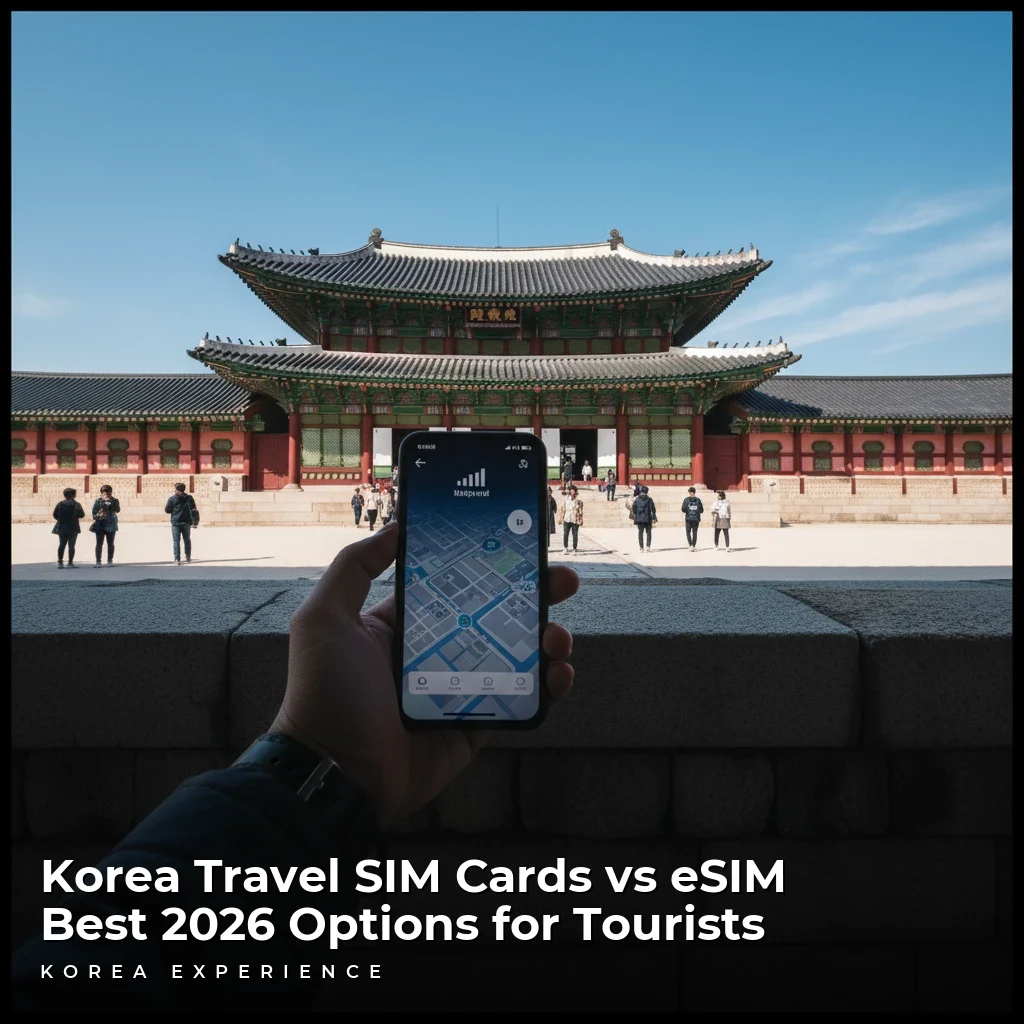
Deciding how to stay connected in South Korea is the very first technical challenge every traveler faces. With South Korea boasting the world's fastest average mobile internet speeds (often exceeding 100 Mbps on standard LTE and 600+ Mbps on 5G), being disconnected here isn't just inconvenient—it renders you invisible in a digital-first society. You need a connection to hail a KakaoTaxi, translate menus with Papago, navigate the complex subway system via Naver Map, and increasingly, to order food at kiosks.
The short answer: For most travelers in 2026 with a phone released after 2020, an eSIM is the superior choice due to instant delivery, zero physical swapping, and competitive pricing (approx. ₩3,500/day). However, if you need a local phone number to receive calls or reservation texts, a physical SIM from a major carrier (KT or SKT) picked up at Incheon Airport is still required.
Key Takeaways
- 1eSIMs are 15-20% cheaper than airport roaming desks and require no physical pickup.
- 2Most data-only eSIMs do NOT come with a Korean phone number (010 prefix), which blocks you from making restaurant reservations.
- 3Unlocking your phone in your home country is mandatory; Korean carriers cannot unlock your device.
The Korean Connectivity Landscape in 2026
South Korea's telecommunications infrastructure is dominated by three major giants: SK Telecom (SKT), KT (formerly Korea Telecom), and LG U+. Unlike many other countries where budget carriers offer vastly different speeds, in Korea, even third-party Mobile Virtual Network Operators (MVNOs) lease the exact same high-speed towers as the "Big Three."
As of 2026, 5G coverage in Seoul and the metropolitan area (Sudogwon) is effectively 98%. Even if you are hiking in Seoraksan National Park or visiting a remote temple in Jeolla-do, you will rarely see your signal drop below LTE.
📊 Korea Mobile Network Stats 2026
However, the hardware you bring matters. Korea uses LTE Bands 1, 3, 5, 7, and 8. Most modern global phones support these, but if you are bringing an older device or a budget phone from a region with different spectrum allocations, you might experience spotty service.
The Great Debate: Physical SIM vs. eSIM
For the last decade, the physical SIM card was the gold standard. You would land at Incheon International Airport (ICN), queue at a "Roaming Center," and have a staff member swap your chip. In 2026, the eSIM (Embedded SIM) has taken over 65% of the tourist market.
What is an eSIM?
An eSIM is a digital SIM that allows you to activate a cellular plan from your carrier without having to use a physical nano-SIM. For travelers, this means you can buy your Korea data plan while sitting on your couch in New York or London, scan a QR code, and have service the moment your plane touches down in Incheon.
Detailed Comparison
Physical SIM vs. eSIM
- ✓Physical SIM: Usually includes a local 010 phone number (for voice/text reception).
- ✓Physical SIM: Compatible with older phones (iPhone X and earlier).
- ✓eSIM: Instant delivery via email; no airport queuing required.
- ✓eSIM: Keep your home SIM active for 2FA banking texts.
- ✗Physical SIM: easy to lose your original home SIM card during the swap.
- ✗Physical SIM: Requires visiting a counter during operating hours.
- ✗eSIM: Most tourist plans are Data-Only (no voice calls).
- ✗eSIM: Once installed, it cannot be transferred to another phone if your device breaks.
Device Compatibility Check
Before purchasing an eSIM, dial *#06# on your phone. If you see an "EID" number in the device info, your phone supports eSIM. If you only see IMEI, you must use a physical SIM card.
Top Korean Providers Compared
When buying a SIM for Korea, you have two channels: Direct from Carrier (SKT, KT, LG U+) or Third-Party Resellers (Airalo, Nomad, Klook, Trazy).
Direct carrier plans are generally more reliable because traffic isn't routed through servers in Hong Kong or Singapore (which increases ping/latency), keeping your connection snappy for things like loading maps or gaming.
1. KT (Korea Telecom)
KT is the favorite for tourists because their plans almost always include free access to KT Olleh WiFi, a massive network of secure WiFi hotspots found in subways, cafes, and street corners. This saves your high-speed data allowance.
- Best for: Heavy data users and those traveling to cities with subway systems.
- Price: Approx ₩27,500 for 5 days.
2. SK Telecom (SKT)
SKT is the premium carrier with the widest coverage in extremely rural areas. If you plan to visit islands or deep mountain regions, SKT is slightly more reliable.
- Best for: Rural exploration and stability.
- Price: Approx ₩28,000 for 5 days.
3. LG U+
Often runs the most aggressive promotions. Their connectivity is excellent in Seoul and Busan but can be slightly (negligibly) weaker in remote mountains compared to SKT.
- Best for: Budget-conscious travelers staying in major cities.
- Price: Approx ₩25,000 for 5 days.
Major Carrier Tourist Plans (5-Day Unlimited)
| Feature | KT Roaming | SK Telecom | LG U+ |
|---|---|---|---|
| Price (Approx) | ₩27,500 | ₩28,000 | ₩25,000 |
| Daily Speed Cap | 3GB High Speed | 3GB High Speed | 3GB High Speed |
| Throttled Speed | 5 Mbps | 5 Mbps | 5 Mbps |
| In-Call Voice | Add-on Available | Add-on Available | Included (Incoming) |
| Public WiFi | Included (Best) | Included | Included |
Cost Analysis: Budgeting for Connectivity
For a standard 10-day trip, your connectivity costs will likely represent less than 2% of your total budget, yet it provides 100% of your ability to navigate.
If you are a budget backpacker, you might be tempted to rely solely on public WiFi. While Seoul has excellent public WiFi (Seoul_Public_WiFi), it is not ubiquitous. You will lose signal between subway stations or while walking in residential alleys.
For a deeper dive into managing your travel funds, check out our guide on budget travel in Korea, where we break down how saving ₩5,000 on a SIM card might cost you more in time and frustration.
💵 Cost Comparison by Duration (Unlimited Data)
Best daily rate (₩2,380/day)
The "Phone Number" Dilemma
This is the single most confusing aspect for travelers.
Scenario A: Data-Only Most eSIMs and cheaper physical SIMs are "Data Only." You have internet, so you can use WhatsApp, KakaoTalk, and FaceTime. However, you cannot receive a standard phone call or SMS text message.
Scenario B: With Voice/Text (010 Number) Premium physical SIMs (and select eSIMs from carriers directly) come with a local Korean phone number starting with 010.
- Incoming: Usually free to receive calls and texts.
- Outgoing: Usually requires topping up credit (e.g., pay ₩11,000 for 40 minutes of talk time).
Why do you need a number?
- Restaurant Queuing: Famous places (like those in our guide to Korean BBQ) use waiting list kiosks (CatchTable or Tableling) that require a Korean number to text you when your table is ready.
- Emergencies: Calling 112 or 119.
- Meeting Locals: Older Koreans or business contacts may prefer standard calls over KakaoTalk initially.
If you are a foodie planning to hit viral spots like London Bagel Museum or popular K-BBQ joints, you MUST get a SIM with a 010 number. Without it, you cannot enter your info into the waiting kiosk, and staff will not let you stand in line manually.
Step-by-Step Activation Guide
The process differs significantly between physical and eSIMs.
Option 1: eSIM Activation (The Modern Way)
📖 How to Activate Your Korea eSIM
Step 1: Purchase & Receive
Buy online. You will receive a QR code via email immediately.
Step 2: Scan QR Code
Go to Settings > Cellular > Add eSIM. Scan the code provided.
Step 3: Label the Plan
Label your new plan 'Korea' and your home plan 'Primary'.
Step 4: Arrival Activation
Upon landing in Korea, switch 'Cellular Data' to the 'Korea' line. Turn 'Data Roaming' ON for the Korea line.
Option 2: Physical SIM Pickup (The Reliable Way)
If you chose a physical SIM for the phone number benefit, you'll likely pick it up at Incheon Airport.
SK Telecom Roaming Center(SK텔레콤 로밍센터)
Long-Term Options: Staying Over 90 Days?
If you are coming on a Working Holiday Visa, Student Visa, or for a long-term business stay, tourist SIMs are not sustainable. They are expensive (approx. ₩70,000/month) and, crucially, they do not allow for Identity Verification (Bon-in-injeung).
In Korea, your phone number is your digital ID. You cannot order delivery food (Yogiyo/Baedal Minjok), buy concert tickets (Interpark), or sign up for many websites without a phone number tied to your Alien Registration Card (ARC).
For a comprehensive breakdown of getting a "real" postpaid contract, read our dedicated guide on long-term SIM cards.
Troubleshooting: What to do if it doesn't work?
Even in tech-savvy Korea, glitches happen. Here is a troubleshooting timeline.
Troubleshooting Connection Issues
Airplane Mode Toggle
Turn Airplane mode on for 10 seconds, then off. This forces the phone to search for towers.
Check APN
Ensure APN is set to 'lte.sktelecom.com' or 'alwayson.kt.com' depending on carrier.
Restart Device
A full reboot often clears cache issues preventing 5G handshake.
Visit Carrier Store
Go to any official KT/SKT/LG store in the city. Staff can usually help unlock APN settings.
Alternatives: WiFi Eggs and Roaming
The WiFi Egg (Pocket WiFi)
Once the king of travel connectivity, the WiFi egg is fading but has niche uses.
- Pros: Connect up to 5 devices (great for families/groups); cheaper per person.
- Cons: Another device to charge; you must stay within 10 meters of the egg holder; heavy penalty (₩100,000+) if lost.
- Cost: Approx ₩3,300 per day.
International Roaming
Your home carrier (AT&T, Verizon, Vodafone, etc.) likely offers a roaming pass.
- Pros: Zero effort. Keep your number.
- Cons: Extremely expensive (usually $10 USD / ₩13,500 per day). Speeds are often throttled to 2G/3G speeds after 500MB.
Choosing the Right Option for Your Route
Your choice of SIM might depend on where you are going. If you are sticking to the ultra-connected districts of Gangnam and Hongdae, almost any carrier works.
If you are planning an itinerary that involves remote locations or heavy navigation usage—perhaps exploring the coastal routes of Busan—stability is key. Check our Busan Seafood Guide to see the kind of hidden spots where having a reliable SKT or KT connection ensures you don't get lost in the winding market alleys.
Connectivity Needs: Urban vs. Adventure
The Dualism Concept: Experience the best of both worlds — premium luxury moments paired with authentic budget-friendly experiences in one route.
Urban Explorer (Seoul)
LG U+ eSIM. Relies on subway WiFi. Perfect for cafes and museums.
Remote Adventurer (Jeju/Gangwon)
SK Telecom Physical SIM with Voice. Maximum coverage for hiking and emergencies.
If leaving major cities, pay the extra ₩5,000 for the premium carriers (SKT/KT).
Frequently Asked Questions
❓ Korea SIM Card FAQs
Have more questions?Contact us →
Final Verdict
For 90% of travelers visiting Korea in 2026, the eSIM is the clear winner. It removes the anxiety of losing your home SIM card and allows you to be connected the moment your plane lands.
However, do not underestimate the value of a Korean phone number. If you are a foodie wanting to visit the hottest restaurants, or if you are meeting Korean friends, the physical SIM from KT or SKT with voice capability is worth the minor inconvenience of an airport pickup.
Whichever you choose, ensure you download the essential apps before you arrive. A SIM card is the key, but apps like Naver Map and Papago are the doors they open. For more on essential digital tools, read our comparison of English-friendly food apps.
Safe travels and happy connecting!
About the Author
Korea Experience Team
Written by the Korea Experience editorial team - experts in Korean medical tourism, travel, and culture with years of research and firsthand experience.
Explore more in Travel & Tourism
From Seoul's neon-lit streets to Jeju's volcanic landscapes — discover the best of Korea with insider travel tips, itineraries, and seasonal guides.
Browse All Travel & Tourism ArticlesContinue Reading
Explore more articles you might find interesting
Discover the best Korea SIM cards for long-term stays. Compare MVNOs, postpaid plans, and verification steps to save money and stay connected.
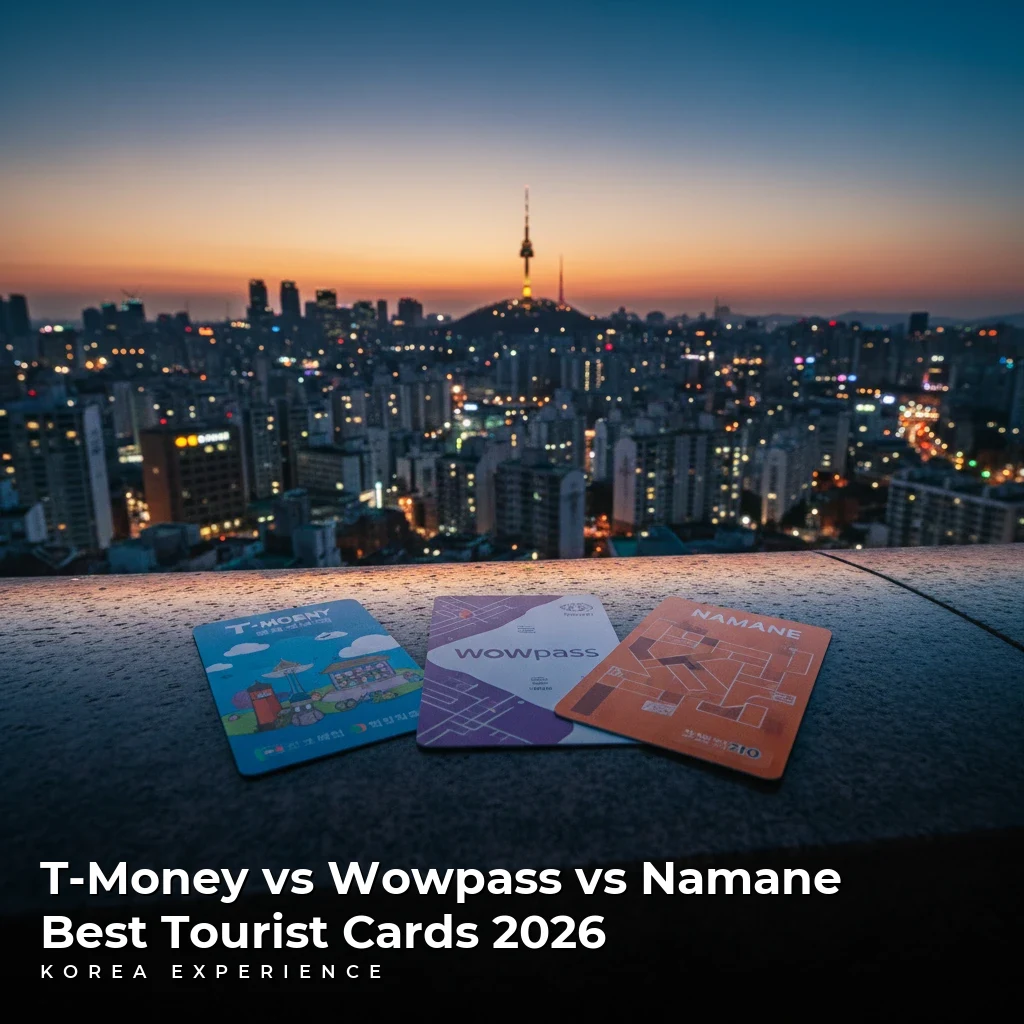
Choosing the best tourist card in Korea for 2026? This data-backed comparison of T-Money, Wowpass, and Namane will guide your decision for travel and payments.
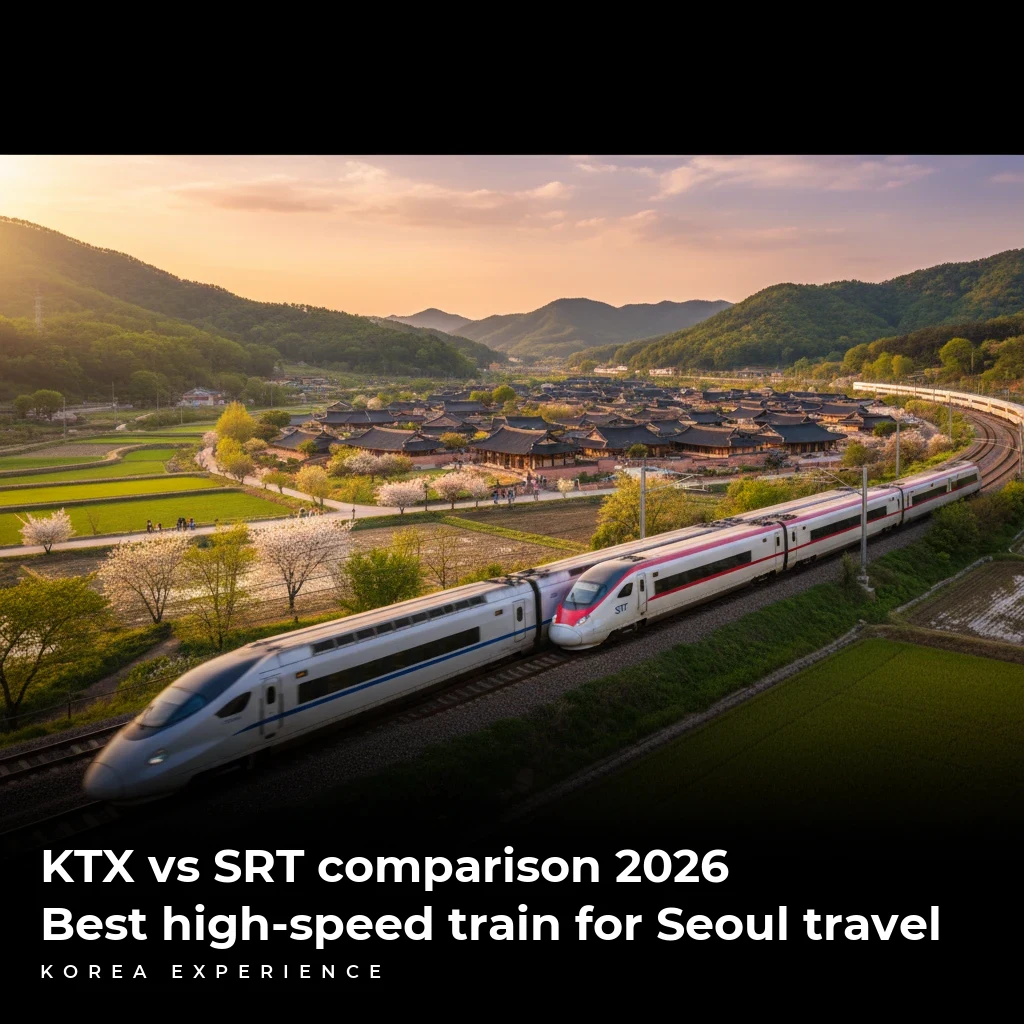
Compare KTX and SRT high-speed trains in Korea. Discover price differences (10% cheaper), station locations, and how to book tickets for your 2026 trip.

Compare Incheon Airport transfer options. AREX ($7.50, 43 min) vs Limousine Bus ($13-14, 70+ min). Find the best route for your hotel and budget.
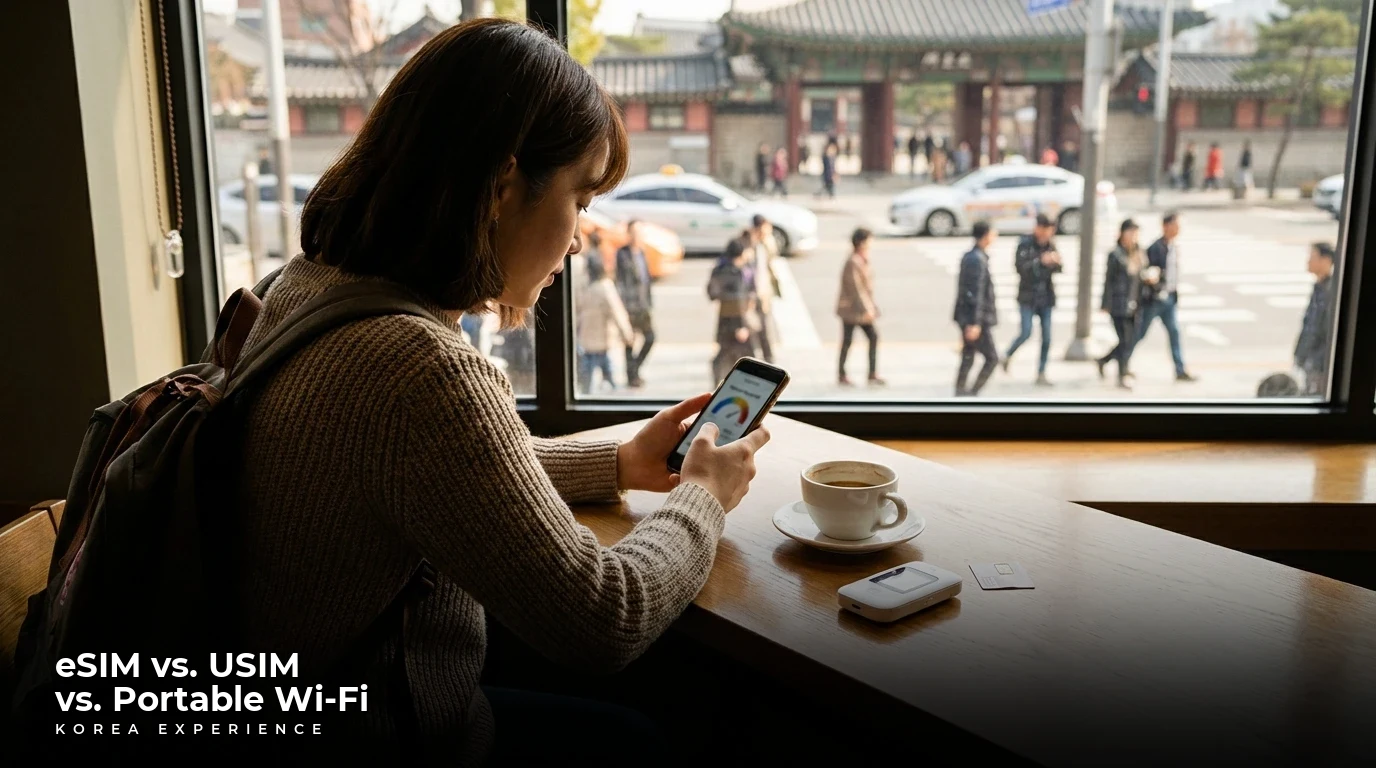
Compare eSIM, USIM, and Pocket Wi-Fi for 2026 travel. Learn why 90% choose eSIMs for $3/day and how to handle the new facial recognition laws.
Compare PRP and PDO thread lifts in Korea with costs, recovery times, and results. A detailed guide for medical tourists seeking natural rejuvenation.