Scar treatment options silicone sheets vs laser: Korea guide 2026
Compare scar treatment options silicone sheets vs laser in Korea. We analyze costs, efficacy, and why Seoul is the global capital for skin repair in 2026.
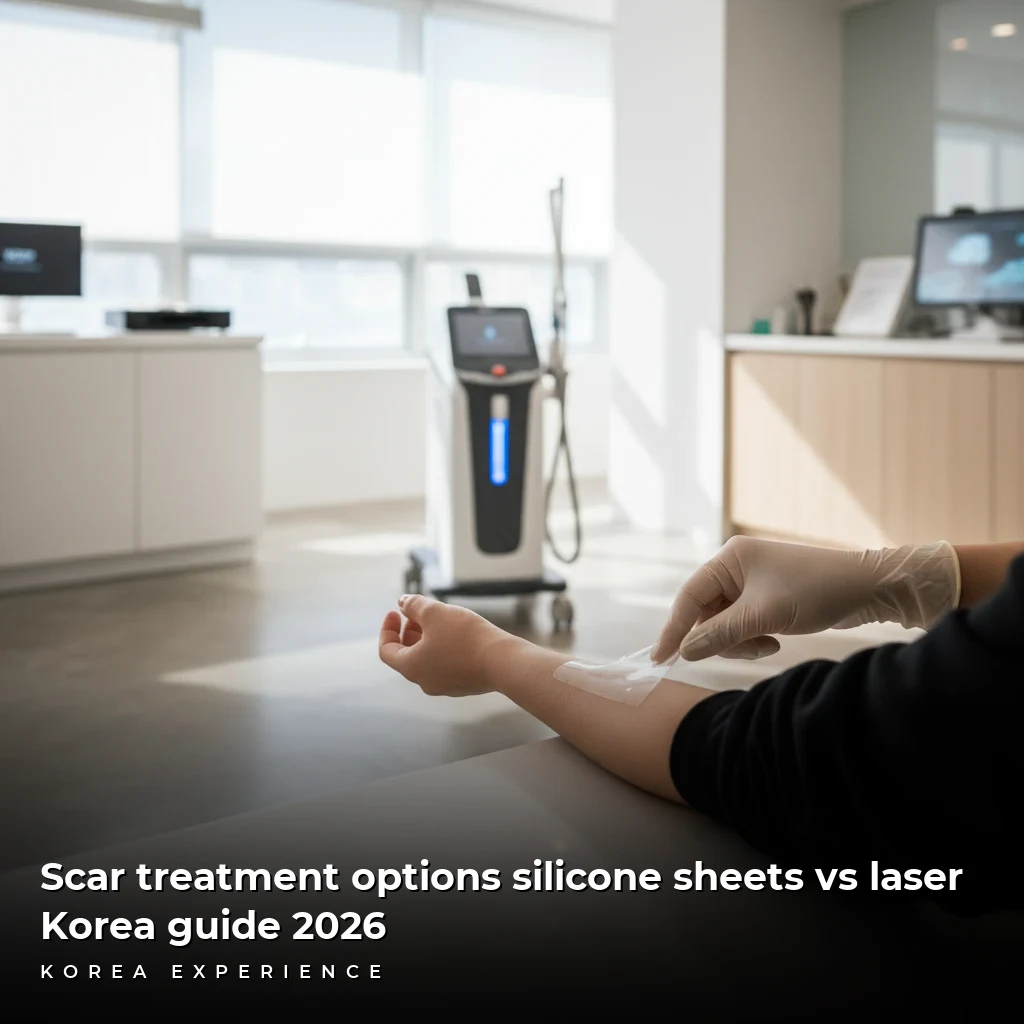
When deciding between scar treatment options—specifically silicone sheets vs laser—the right choice depends entirely on the age, texture, and type of your scar, though for significant results, Korean laser technology offers a distinct advantage.
The short answer: Silicone sheets are best for early-stage prevention and flattening raised scars (hypertrophic/keloid) at home, costing roughly ₩30,000 ($22) per month. Laser treatments in Korea are superior for correcting texture, color, and older scars, with sessions in Seoul costing 50-70% less than in the US, averaging ₩150,000-₩400,000 ($110-$300) per session depending on the laser type.
Key Takeaways
- 1Silicone sheets work best on scars less than 2 years old that are raised
- 2Korean laser treatments (V-Beam, Fraxel, Pico) are 50-70% cheaper than US prices
- 3Combination therapy (laser + injections) is the standard in Gangnam clinics
Medical Disclaimer
The content provided here is for informational purposes only and does not constitute medical advice. Always consult with a board-certified dermatologist before starting any treatment. For medical emergencies in Korea, dial 119. For medical consultations in English, contact the Korea Disease Control and Prevention Agency at 1339.
Understanding scar physiology and Korean dermatology
To understand the battle of scar treatment options silicone sheets vs laser, you must first understand what you are treating. A scar is the body's natural way of healing and replacing lost or damaged skin. However, the fibrous tissue is composed of collagen, just like regular skin, but the fiber composition is different. Instead of a basket-weave formation, the collagen in scars aligns in a single direction, resulting in a distinct texture.
In South Korea, where the "glass skin" aesthetic reigns supreme, tolerance for visible scarring is low. This has driven the domestic medical market to innovate rapidly. While a patient in London or New York might be told a scar is "permanent," a dermatologist in Seoul's Gangnam district often views it as a problem to be solved through aggressive, multi-modal therapy.
There are three main types of scars that international patients travel to Korea to treat:
- Atrophic Scars: These sit below the skin surface (often from acne or chickenpox). They look like pitted holes.
- Hypertrophic Scars: These are raised and red but stay within the boundary of the injury.
- Keloid Scars: These grow beyond the original injury site and can be painful or itchy.
In 2026, the standard of care in Korea has shifted away from single-modality treatments. The debate isn't just "silicone vs laser," but rather "when to stop silicone and start laser," or "how to combine them." With over 500 dermatology clinics concentrated within a 3km radius in Gangnam, the competition drives prices down and technology up.
"Many foreign patients come expecting a single 'magic laser.' In reality, for raised scars, we often start with steroid injections to flatten the tissue, prescribe silicone sheets for home care, and use V-Beam lasers for redness. It is a symphony of treatments, not a solo."
Option A: Silicone sheets and gels (The home defense)
Silicone gel sheeting has been the gold standard for non-invasive scar management for over 30 years. If you visit any Olive Young (Korea's ubiquitous health and beauty store) or a local pharmacy (yakguk), you will find an entire aisle dedicated to these products.
How silicone works
Silicone sheets do not remove scars; they manage the environment in which the scar heals. They work through two primary mechanisms:
- Occlusion (Hydration): They seal the scar, preventing moisture loss. This hydration signals fibroblasts (collagen-producing cells) to scale back production, preventing the scar from getting thick and raised.
- Static Electricity: The friction between the silicone and skin creates a negative static charge, which is believed to help align collagen fibers more naturally.
Cost and availability in Korea
In Korea, popular brands include Cica-Care, Dermatix Ultra, and Remescar.
- Average Price: A 12cm x 3cm sheet of Cica-Care typically costs around ₩25,000 to ₩35,000 ($18-$26) at a Korean pharmacy.
- Durability: One sheet can be washed and reused for 14-28 days.
- Usage: For effective results, they must be worn for 12-24 hours a day for at least 3-6 months.
📖 How to Use Silicone Sheets
Step 1: Cleanse
Wash the scar area and dry it completely. No lotions underneath.
Step 2: Cut to Size
Cut the sheet slightly larger than the scar (extend 1-2cm beyond the edge).
Step 3: Apply
Peel off the backing and apply sticky side down. Use medical tape if it's on a joint.
Pros and cons of silicone
The primary advantage of silicone is safety and cost. It is non-invasive and painless. However, compliance is the biggest issue. Wearing a sticky patch for 23 hours a day for 6 months is difficult, especially in Korea's humid summers (July-August), where sweat can cause the sheet to slide off or cause a heat rash.
Furthermore, silicone is largely ineffective for atrophic (pitted) scars. If you are looking to treat deep acne scars or "ice pick" scars, silicone sheets will do almost nothing. For these, you must look toward professional treatments. For more on acne-specific issues, read our guide on acne scar treatment options in Korea.
Option B: Laser treatments in Korea (The professional fix)
When comparing scar treatment options silicone sheets vs laser, the laser category is where Korea truly shines. Korean clinics utilize a variety of wavelengths to target different aspects of the scar: color (redness/brown), texture (bumpiness), and depth.
Types of lasers used in Seoul (2026)
-
V-Beam (Pulsed Dye Laser):
- Target: Redness and vascularity.
- Best for: Fresh, red hypertrophic scars and post-acne redness (PIE).
- Cost in Korea: ₩100,000 - ₩200,000 ($75-$150) per area/session.
- Experience: Feels like a rubber band snap. Minimal downtime (some bruising).
-
Fraxel / Fractional CO2:
- Target: Texture and collagen remodeling.
- Best for: Atrophic acne scars, surgical scars, and uneven texture.
- Cost in Korea: ₩150,000 - ₩350,000 ($110-$260) per full face or large area.
- Experience: High intensity. Requires numbing cream (applied for 30-40 mins). Downtime involves 3-5 days of redness and peeling.
-
PicoSure / PicoWay:
- Target: Pigmentation and minor texture.
- Best for: Brown scars (hyperpigmentation) and tattoo removal.
- Cost in Korea: ₩80,000 - ₩150,000 ($60-$110) per session.
- Experience: Very fast ("pico" second) pulses shatter pigment without high heat. Low downtime.
-
Excel V:
- Target: Multi-mode (Redness, Brown spots, Texture).
- Best for: Complex scars with mixed issues.
- Cost in Korea: ₩200,000 - ₩400,000 ($150-$300).
📋 Korean Laser Session Facts
The "All-in-One" package
Unlike Western clinics that often charge separately for each laser, Korean clinics frequently offer "All-in-One" scar packages. A typical visit might include a V-Beam pass for redness, followed immediately by a fractional laser for texture, and finished with a calming cryotherapy facial—all for a single price. This integrated approach is a key differentiator in the scar treatment options silicone sheets vs laser debate.
For those interested in general skin health, you can check our article on best Korean skin clinics in Gangnam.
Head-to-head comparison: Silicone vs Laser
To make an informed decision, let's look at the metrics directly. We are assuming a patient has a moderate surgical scar (approx 5-7cm) or moderate acne scarring on cheeks.
Silicone Sheets vs. Laser Treatment
| Feature | Silicone Sheets | Laser Therapy (Korea) |
|---|---|---|
| Primary Mechanism | Hydration & Static | Thermal Injury & Remodeling |
| Best For | Prevention, Raised Scars | Texture, Pits, Color |
| Pain Level | None | Moderate (Numbing used) |
| Cost (6 months) | $150 - $200 (Total) | $800 - $1,500 (3-5 sessions) |
| Downtime | None | 3-7 Days per session |
| Time to Results | 3-6 Months | Visible after 1-2 sessions |
The verdict
If your scar is fresh (less than 3 months) and raised, start with silicone sheets immediately. It is the most cost-effective prevention method.
If your scar is old (more than 1 year), indented (atrophic), or heavily pigmented, silicone sheets will likely be a waste of money. You require the physical remodeling that only energy-based devices (lasers) can provide.
Why choose Korea for scar treatment?
The global medical tourism market is competitive, but Korea holds a unique position for dermatology. When weighing scar treatment options silicone sheets vs laser, the "Laser" option becomes significantly more attractive when performed in Seoul due to three factors: Cost, Technology, and Volume.
1. The price advantage
In the United States, a single session of Fraxel Dual can cost between $800 and $1,500. In Seoul, the same machine, often operated by a dermatologist with higher case volume, costs between ₩300,000 and ₩500,000 ($220-$370). Even factoring in a flight (approx $1,200 from the US West Coast), a patient needing 5 sessions saves money by combining the treatment with a trip.
💵 Cost Comparison: Laser Treatment (Per Session)
High markup, consultation fees extra
Includes tax, numbing, and aftercare pack
2. High-volume expertise
Korean dermatologists treat an incredibly high volume of patients. A popular clinic in Gangnam might see 100+ laser patients per day. This repetition leads to mastery. They are experts at managing settings to maximize results while minimizing PIH (Post-Inflammatory Hyperpigmentation), a common risk for darker skin tones.
3. Advanced pain management and aftercare
In Korea, pain management is standard. Numbing cream is applied liberally and left on for 30-45 minutes under occlusion wrap. Air cooling devices (Zimmer coolers) are used during the laser. After the laser, patients are moved to a recovery room for "modeling packs" (thick rubber masks) and LED light therapy to reduce inflammation—usually included in the base price.
For recovery accommodation, see our guide on Airbnb vs recovery hotels for medical tourists.
The treatment journey: What to expect in Seoul
If you decide that the "Laser" side of the scar treatment options silicone sheets vs laser debate is right for you, here is what a typical appointment looks like in Seoul.
Step 1: Booking and Consultation
Most major clinics have English interpreters. You can book via WhatsApp or KakaoTalk.
- Location: Most clinics are clustered near Gangnam Station (Line 2) or Sinsa Station (Line 3).
- Consultation: Unlike the US where you might see a nurse practitioner, in Korea, you almost always see the Doctor for the consultation. They will use a UV camera (like the Mark-Vu system) to analyze the scar depth.
Step 2: Preparation
- You will be asked to wash your face in a powder room.
- Numbing cream is applied. You will wait in a comfortable lounge with WiFi and water for roughly 40 minutes.
Step 3: The Procedure
- The procedure itself is fast. A scar treatment usually takes 10 to 20 minutes of active laser time.
- Tip: If you have a low pain threshold, ask for a "stress ball" or stuffed animal—most clinics have them!
Step 4: Immediate Aftercare
- You won't be kicked out immediately. You will receive a cooling mask (15 mins) and regenerative cream.
- You will be given a prescription for an antibiotic ointment or a steroid cream to prevent inflammation. There is usually a pharmacy on the 1st floor of the same building.
Typical Clinic Visit Timeline
Arrival & Check-in
ID verification and skin analysis scan
Numbing
Application of anesthetic cream
Laser Procedure
Doctor performs the treatment
Cooling Care
Cryotherapy and modeling mask
Pharmacy Run
Pick up ointments on the ground floor
Post-procedure care in Korea
After laser treatment, your skin is vulnerable. The "Silicone vs Laser" debate actually merges here, as you might use silicone gels after the laser scabs heal to maintain results.
Skin regeneration products
Korea is famous for "Cica" (Centella Asiatica) products. You should visit Olive Young and look for:
- Regenerative Creams: Look for brands like Aestura, Zeroid, or Real Barrier. These are often formulated for post-procedure skin and help repair the barrier.
- Sun Protection: This is non-negotiable. UV exposure on treated scars leads to hyperpigmentation. Buy physical sunscreens (mineral filters) which are less irritating.
- Hydrocolloid Patches: If the laser was ablative (broke the skin), you might need these patches to absorb exudate.
Shopping Tip
At Olive Young, look for the "Medical Device" (의료기기) label on scar products. These have passed stricter government tests than standard cosmetics. Brands like 'EasyDerm' are widely trusted.
Recovery lifestyle
For 3-5 days post-laser:
- Avoid saunas (jjimjilbang).
- Avoid heavy sweating (gyms).
- Avoid alcohol (which increases inflammation).
- Keep the area moisturized constantly.
If you are looking for gentle food options during recovery, check out our guide on best Korean healing foods for surgery recovery.
Representative clinic areas
While we cannot endorse a specific clinic, knowing where to go is half the battle.
Sinnonhyeon Station Area(신논현역)
This area, spanning from Sinnonhyeon to Gangnam Station, houses hundreds of clinics. The competition ensures fair pricing. Walking distance between clinics is often less than 50 meters.
The role of injectables and subcision
In the discussion of scar treatment options silicone sheets vs laser, we must briefly mention the supporting actors: injections and subcision.
Keloid Injections (Triamcinolone): If you have a thick, raised keloid, laser alone is rarely enough. Korean doctors almost always combine lasers with steroid injections to "melt" the fibrous tissue. These injections cost roughly ₩10,000 - ₩30,000 ($7-$22) per scar, which is negligible compared to US prices.
Subcision: For deep, tethered acne scars, a needle is used to break the fibrous strands pulling the skin down. This is often done before the laser session. It adds roughly ₩100,000 - ₩200,000 to the cost but significantly improves results for rolling scars.
For a deeper dive into injectable options, see anti-aging treatments in Korea botox fillers and more 2026.
Success rates and realistic expectations
It is vital to manage expectations.
- Silicone Sheets: Expect a 20-40% improvement in scar height and redness over 6 months. It will likely not affect the width of the scar.
- Laser Treatment: Expect a 50-70% improvement in texture and color after a series of 3-5 treatments.
- Complete Removal: No treatment can 100% "erase" a scar. The goal is to make it socially invisible or easily covered with makeup.
📊 Patient Satisfaction Rates
The lower satisfaction with silicone often stems from "user error"—patients giving up after 3 weeks because they don't see immediate results. Laser treatments force compliance because you simply show up to the appointment.
Pros and Cons summary
Korean Laser Treatment Analysis
- ✓Significantly faster results than sheets
- ✓Addresses texture (pitting) which sheets cannot
- ✓Cost in Korea is 50-70% lower than Western clinics
- ✓Access to latest tech (PicoSure Pro, V-Beam Prima)
- ✗Requires downtime (redness/scabbing)
- ✗Higher upfront cost than silicone
- ✗Requires travel/logistics to Seoul
- ✗Sun sensitivity post-treatment
Conclusion
When weighing scar treatment options silicone sheets vs laser, the decision framework is clear. Silicone sheets are your maintenance crew—essential for fresh surgical wounds or minor injuries to prevent bad scarring. They are cheap, accessible, and require discipline.
Laser treatment is the renovation crew. If you have existing damage, pitted texture, or stubborn discoloration, silicone will not help you. For these cases, booking a flight to Korea is often a financially sound decision. The combination of world-class technology, high-volume expertise, and prices that are a fraction of Western alternatives makes Seoul the premier destination for scar revision in 2026.
If you are planning a trip, remember that scar treatment is rarely a "one and done" event. Plan for a minimum stay of 5-7 days to allow for a consultation, treatment, and follow-up check. With the savings on the procedure, you can enjoy the rest of what this vibrant country has to offer.
To budget for your entire trip including treatment, food, and accommodation, our guide on the cost of living in Seoul vs Busan comparison 2026 can help you plan your expenses.
❓ Frequently Asked Questions
Have more questions?Contact us →
About the Author
Korea Experience Team
Written by the Korea Experience editorial team - experts in Korean medical tourism, travel, and culture with years of research and firsthand experience.
⚠️ Medical Disclaimer
The information provided on this website is for general informational purposes only and does not constitute medical advice. Always consult with qualified healthcare professionals before making any medical decisions.
Explore more in Medical Tourism
World-class medical procedures at competitive prices. From plastic surgery and dermatology to dental care and health checkups — your complete guide to medical tourism in Korea.
Browse All Medical Tourism ArticlesContinue Reading
Explore more articles you might find interesting
Comprehensive guide to vaginal rejuvenation in Seoul 2026. Compare costs (saving 30-50%), English-speaking clinics, laser treatments, and surgical options.
Compare Ultherapy, Thermage, and Shurink costs and results. Discover why Seoul offers treatments at 30-50% less than global rates with our 2026 guide.
Comprehensive guide to laser skin treatments in Seoul including costs for Fraxel, Pico, and Shurink, plus 2026 clinic recommendations.
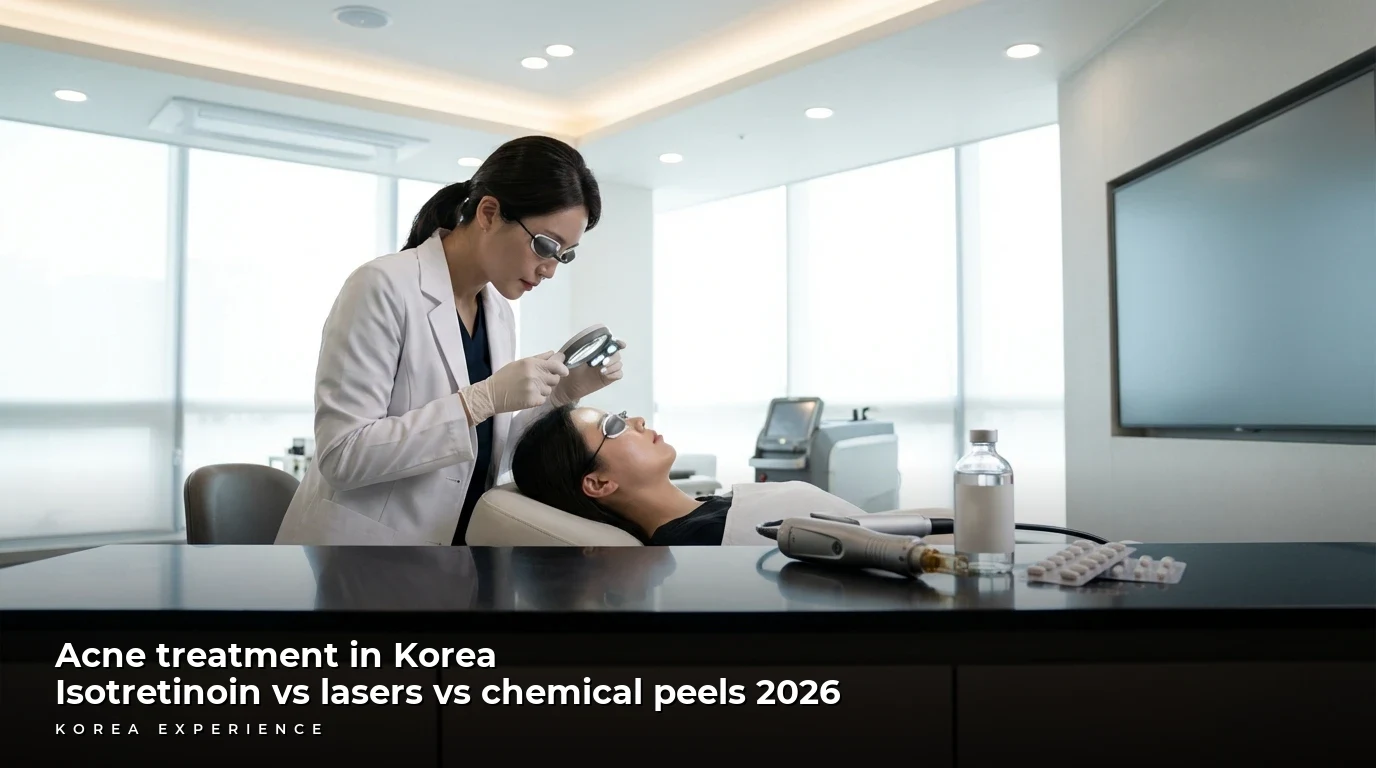
A complete guide comparing acne treatments in Seoul. We analyze costs, downtime, and efficacy of Isotretinoin, lasers, and peels with 2026 pricing data.
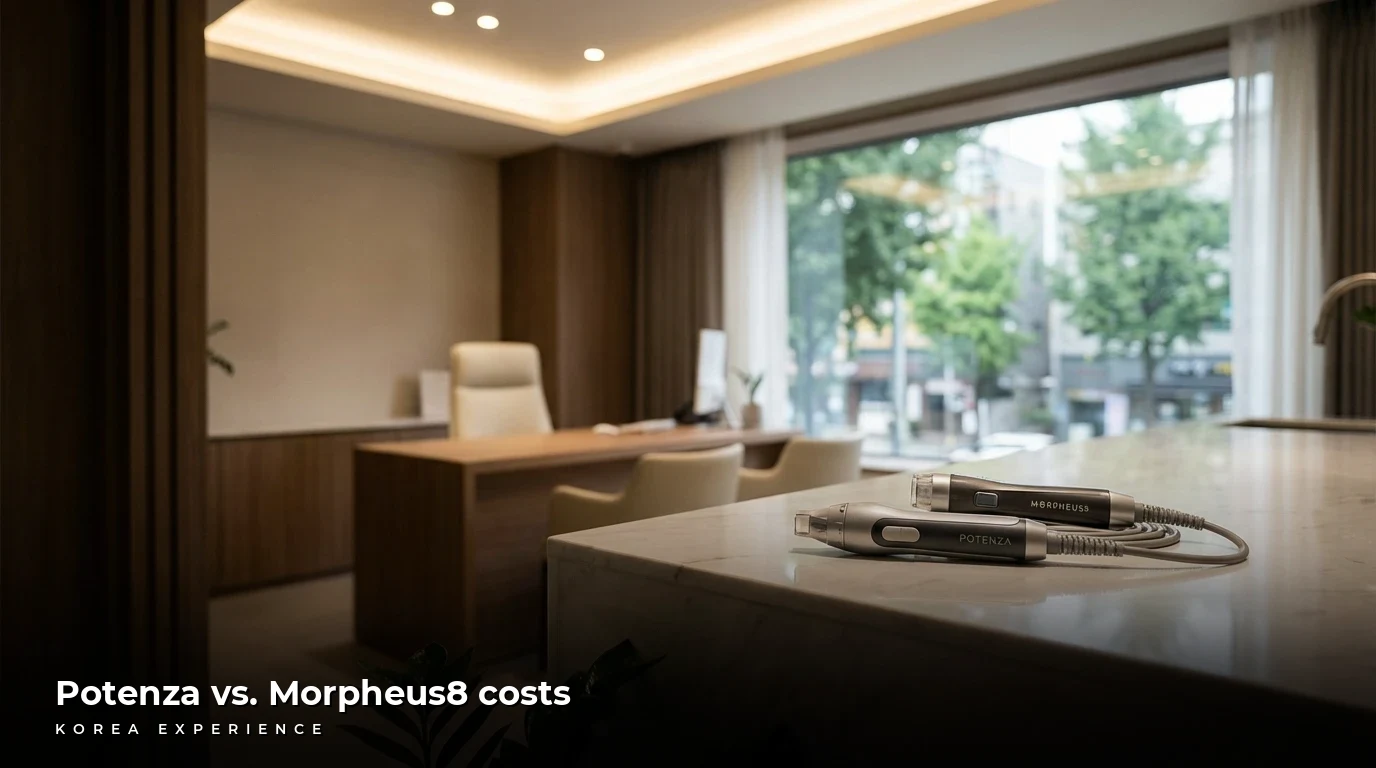
Compare Potenza and Morpheus8 costs in Seoul for 2026. Save 70% with prices starting at $215 USD versus $1,500 in the West for skin tightening.
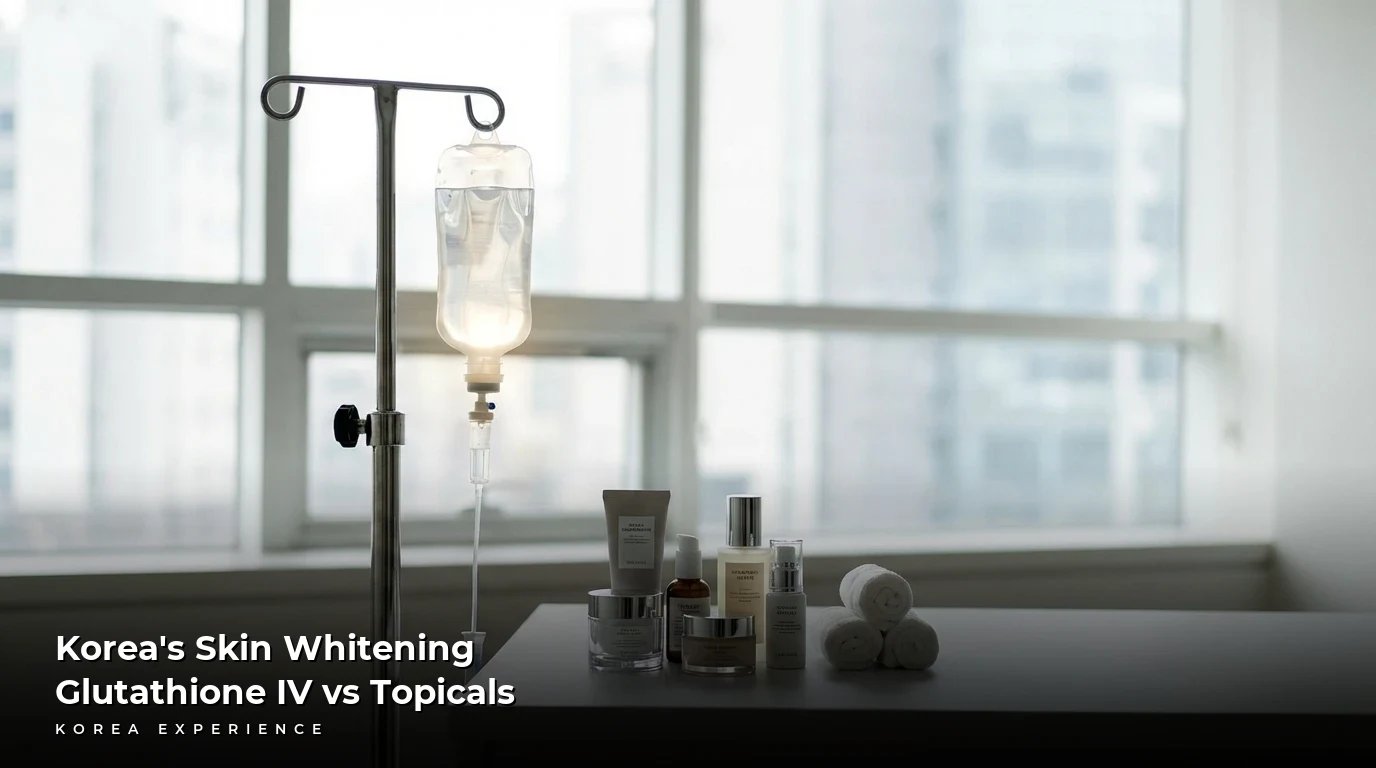
Unlock the secrets to brighter skin in Korea. Compare Glutathione IV drips and topical treatments, including costs, effectiveness, and safety in Seoul clinics.