Senior Medical Tourism in Korea: Joint Replacement & Cataract Surgery
A complete guide to senior joint replacement and cataract surgery in Korea. Save 40-60% on robotic procedures with world-class care and recovery facilities.
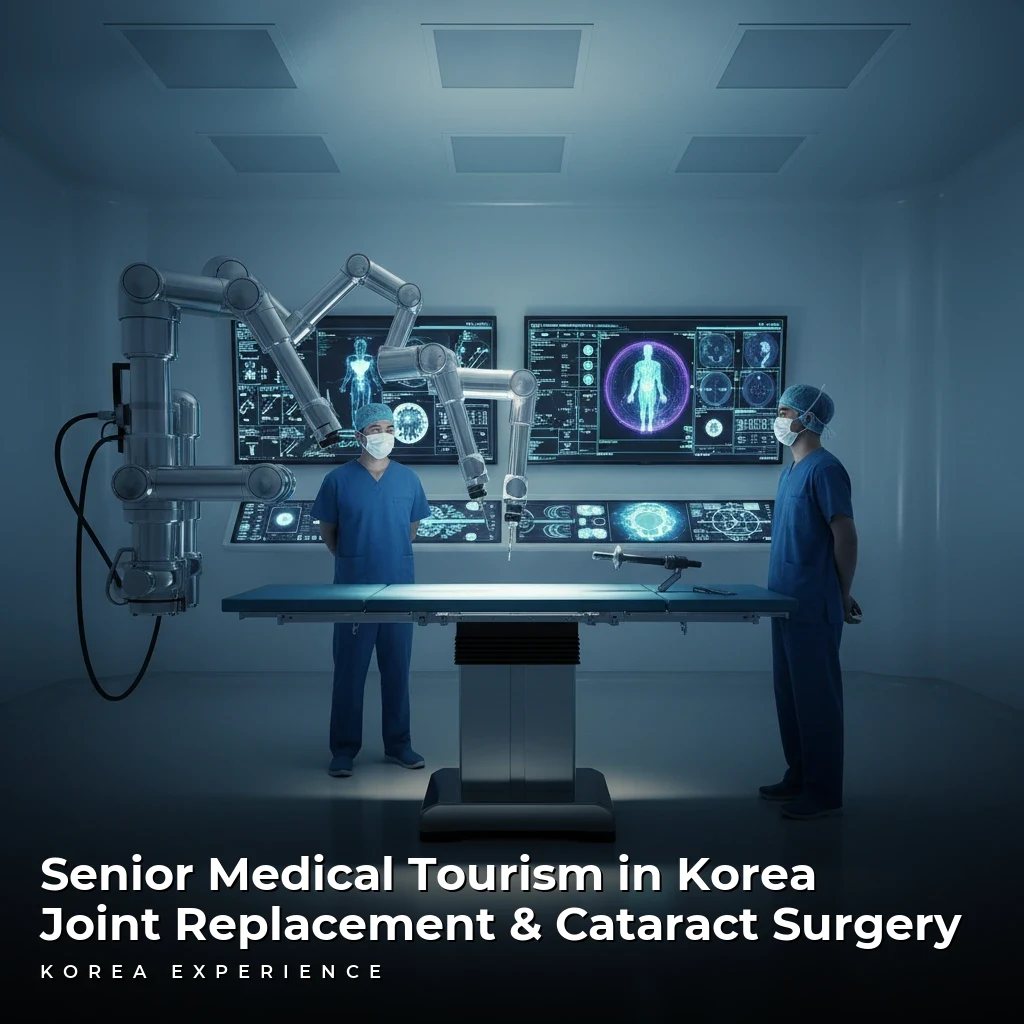
For international seniors facing long wait times or exorbitant costs at home, South Korea has emerged as the premier destination for high-quality, efficient joint replacement and cataract surgeries. In 2026, the combination of advanced robotic technology, comprehensive post-operative care, and transparent pricing makes Korea a superior choice for orthopedic and ophthalmologic procedures.
The short answer: Seniors can expect to pay between $12,000 and $18,000 for robotic knee replacement and $1,500 to $3,500 per eye for premium multifocal cataract surgery in Korea. These prices are typically 40-60% lower than US averages, with virtually zero wait times and hospital stays that are 3-4 days longer than Western standards to ensure safe recovery.
Key Takeaways
- 1Robotic joint surgeries in Korea have a 98% success rate with sub-millimeter precision
- 2Comprehensive packages often include 5-7 days of inpatient care, unlike outpatient US trends
- 3Multifocal lens implants correct near, intermediate, and far vision simultaneously
- 4Medical visas (G-1) allow stays up to 1 year for extended rehabilitation if needed
Why Korea is the top choice for senior medical tourism
South Korea's healthcare system is consistently ranked among the top five globally for efficiency and technological adoption. For seniors specifically, the appeal lies in the "all-inclusive" nature of the care. Unlike many Western healthcare systems that push for "same-day discharge" to cut costs, Korean hospitals prioritize patient stability.
📊 Orthopedic Excellence
The density of medical infrastructure is staggering. In Seoul alone, there are over 25,000 clinics and hospitals. For a senior traveling 10+ hours for surgery, knowing that emergency care is available within a 1.5km radius anywhere in the city provides immense peace of mind. Furthermore, the wait time for a specialist consultation is typically less than 48 hours, compared to the 3-6 month wait often experienced in the UK or Canada.
The Comfort Factor
Korean hospitals offer "Foreigner International Clinics" where staff speak fluent English, Japanese, Russian, and Arabic. You are assigned a dedicated coordinator who stays with you from the initial email consultation through to your flight home.
Robotic joint replacement: Knees and hips
As we age, osteoarthritis becomes a debilitating reality for millions. Korea has pioneered the use of 4th-generation robotic systems (such as MAKO and ROSA) for total knee and hip replacements. These are not experimental procedures here; they are the standard of care.
The technology advantage
Robotic surgery doesn't mean a robot performs the surgery autonomously. Instead, it acts as a high-precision guide for the surgeon. Before the first incision is made, a 3D CT scan generates a virtual model of your unique anatomy. The software calculates the exact bone resection required—down to 0.5mm and 0.5 degrees of alignment.
This precision is critical for seniors. A well-aligned implant reduces wear and tear, extends the life of the artificial joint to 20-25 years, and significantly lowers post-operative pain.
📋 Knee Replacement Facts
The recovery protocol
In the US, a total knee replacement is often an outpatient procedure or involves a single-night stay. In Korea, the standard protocol involves hospitalization for 5 to 7 days. This extended stay allows for:
- Pain Management: IV pain control is managed aggressively by anesthesiologists.
- Immediate Rehab: Physical therapy begins the morning after surgery, twice daily, under hospital supervision.
- Draining and Dressing: Licensed nurses handle all wound care, reducing infection rates to near zero.
- Nutrition: Patients are served balanced, anti-inflammatory Korean meals designed to speed up tissue repair.
For more on nutrition during your stay, read about best Korean healing foods for surgery recovery.
Advanced cataract surgery and vision correction
Cataracts are a natural part of aging, usually affecting people over 60. However, the approach in Korea goes beyond just removing the cloudy lens; it focuses on "Refractive Cataract Surgery." The goal is to restore vision to 20/20 and eliminate the need for glasses entirely.
Premium multifocal lenses
Standard insurance in many countries covers only "monofocal" lenses, which fix distance vision but leave the patient needing reading glasses. Korean clinics specialize in "trifocal" or "extended depth of focus" (EDOF) lenses (like PanOptix or Vivity).
These premium lenses allow seniors to drive (distance), look at a dashboard (intermediate), and read a menu (near) without swapping glasses.
Lens Options in Korea
| Feature | Monofocal | Multifocal (Premium) |
|---|---|---|
| Distance Vision | Excellent | Excellent |
| Reading Vision | Poor (Need glasses) | Excellent |
| Computer Work | Fair | Excellent |
| Night Halos | Minimal | Possible (Adapts) |
| Cost (per eye) | $800 - $1,200 | $2,500 - $3,500 |
The "One-Day" efficiency
Ophthalmology clinics in Gangnam operate with incredible efficiency. A typical timeline looks like this:
- 09:00 AM: Arrive for comprehensive testing (50+ eye metrics checked).
- 11:00 AM: Consultation with the surgeon to select the lens.
- 02:00 PM: Surgery (takes about 15 minutes per eye).
- 04:00 PM: Discharge with protective goggles.
- Next Day: Follow-up check; most patients have restored vision immediately.
Many seniors worry about doing both eyes at once. In Korea, we often perform bilateral surgery on the same day or consecutive days because our sterilization protocols are so strict. This saves you weeks of unbalanced vision recovery.
Cost analysis: Korea vs. USA and Europe
Cost is a major driver for medical tourism. While Korea is not the "cheapest" option in Asia (Thailand and India are generally lower), it offers the highest value—Western-standard safety at a fraction of the price.
Below is a breakdown of average costs for 2026. Note that these prices for Korea usually include the surgery, implant/lens, hospital stay, and pre-op testing.
💵 Medical Cost Comparison (USD)
High deductibles, short stay
Wait times vary
Often not covered by insurance
Robotic, 7-day stay included
Ceramic implant, 5-day stay
Premium lens included
Insurance Disclaimer
Most Western private insurance (like US Medicare) does not cover treatment abroad. However, some international plans (Cigna Global, Bupa) may cover elective surgery in Korea. Always check your policy before booking.
For guidance on how to secure your appointments, check our guide on booking medical consultations in Korea.
Top hospitals for senior care
Choosing the right facility is paramount. For major joint surgery, university hospitals or specialized orthopedic hospitals are recommended. For eyes, specialized private clinics in Gangnam often have better equipment than general hospitals.
1. Asan Medical Center (AMC)
Located in eastern Seoul, AMC is Korea's largest hospital. It handles the highest volume of international patients and performs over 2,500 joint replacements annually.
- Best for: Complex cases, patients with other underlying health conditions (diabetes, heart issues).
2. Yonsei Severance Hospital
One of the oldest and most prestigious Western-style hospitals in Korea. Their "Severance Robot and MIS Center" is world-renowned.
- Best for: Robotic hip and knee surgery.
3. Glory Seoul Eye Clinic (and similar Gangnam clinics)
Specialized eye centers in Gangnam-gu offer a level of service akin to a 5-star hotel.
- Best for: Cataract, LASIK, and presbyopia correction.
Yonsei Severance Hospital(연세세브란스병원)
The step-by-step journey
Planning a major surgery abroad can be daunting. Here is a realistic timeline of how a trip for knee replacement would look.
Joint Replacement Itinerary
Remote Consultation
Send X-rays/MRIs via email. Receive quote and treatment plan.
Arrival & Pre-op
Land at Incheon. Transport to hospital. MRI/CT scans and blood work.
Surgery
Procedure takes 1-2 hours. Wake up in recovery room.
Inpatient Recovery
Physical therapy begins. IV antibiotics and pain control.
Outpatient Rehab
Move to a hotel. Daily visits for therapy and stitch removal.
Fly Home
Fit to fly certificate issued. Wheelchair assistance at airport.
Visa Requirements
For stays under 90 days, many nationalities (US, UK, EU) can enter on a tourist waiver (K-ETA). However, if complications arise or you plan extended rehab, the G-1 (Medical Treatment) visa allows stays of up to one year. The hospital's international center will provide the necessary sponsorship documents.
Accommodation and post-op logistics
After discharge from the hospital, you likely won't be ready to fly home immediately—especially after joint surgery. You will need 7-10 days of outpatient observation.
Where to stay?
For seniors, comfort and accessibility are key. You have two main options:
- Medical Hotels: Some major hospitals (like St. Mary's) have connected hotels specifically for recovering patients. They have adjustable beds and emergency pull cords.
- Serviced Residences: Areas like Gangnam and Songpa have "officetels" or serviced apartments that offer kitchenettes and laundry.
Recovery Accommodation
- ✓Privacy and space for family members
- ✓Often 50% cheaper than hospital private rooms
- ✓Kitchen access for custom dietary needs
- ✗Must travel to hospital for check-ups
- ✗No 24/7 nursing staff
- ✗Need to manage own pain medication schedule
For a deeper dive into choosing the right place, read Airbnb vs recovery hotels for medical tourists.
Transport for limited mobility
Seoul is largely accessible, but navigating the subway with a walker or cane can be challenging during rush hour (8:00-9:30 AM and 6:00-7:30 PM).
- Taxis: KakaoT is essential. "Venti" taxis are large vans perfect for patients who can't bend their legs easily.
- Subway: Look for the elevator icons on apps like KakaoMetro.
- Walking: Seoul's pavement can be uneven in older districts. Stick to main avenues in Gangnam or Yeouido.
📖 How to arrange accessible transport
Step 1: Download Kakao T
This is Korea's Uber. You can link a foreign credit card.
Step 2: Select 'Venti' or 'Black'
Standard taxis are sedans. Venti are large vans (Staria/Carnival) allowing leg extension.
Step 3: Set Destination
Input the hospital name in English or paste the Korean address.
Combining recovery with gentle tourism
The concept of "Medical Tourism" implies some level of leisure. For seniors recovering from surgery, high-energy K-Pop concerts are out, but Korea offers serene, low-impact cultural experiences perfect for healing.
Recommended "Slow Travel" spots
- Cheonggyecheon Stream: A flat, paved 11km stream running through downtown Seoul. It is wheelchair accessible at major entry points and offers a peaceful respite from the city noise.
- Bongeunsa Temple: Located right across from the COEX mall/convention center in Gangnam. While some parts are hilly, the main grounds are flat and offer a "Temple Stay" atmosphere without leaving the city.
- Han River Parks: Specifically the Banpo or Yeouido sections. You can rent mats and just sit by the river, watching the city go by.
Wheelchair Rentals
Most major tourist sites (Gyeongbokgung Palace, National Museum) offer free wheelchair rentals at the information desk. You just need to leave your passport as a deposit.
For detailed routes suitable for seniors, see our guide on accessible Seoul best routes for wheelchair and limited mobility.
Risks and considerations
No surgery is without risk. While Korea's medical standards are elite, communication gaps can occur.
- The Language Barrier: While doctors speak English, ward nurses might not. Use translation apps like Papago (better than Google Translate for Korean).
- Deep Vein Thrombosis (DVT): Long-haul flights post-surgery increase blood clot risks. You MUST consult your surgeon about when it is safe to fly (usually 4-6 weeks for hips/knees).
- Follow-up Care: Ensure you have a doctor back home willing to remove stitches or conduct follow-up X-rays. Ask your Korean surgeon for a full medical packet in English (CD with X-rays and operation notes) before you leave.
Final thoughts
For seniors, the decision to have surgery abroad is not taken lightly. It requires courage and careful planning. However, the reward in Korea is access to medical technology that might otherwise be out of financial reach, delivered with a level of service and respect for the elderly that is deeply ingrained in Korean culture.
Whether it is seeing your grandchild clearly for the first time thanks to multifocal lenses, or walking pain-free through the palaces of Seoul on a new knee, medical tourism in Korea offers a new lease on life.
❓ Frequently Asked Questions
Have more questions?Contact us →
Ready to explore more about health and wellness in Korea? Read about anti-aging treatments in Korea or check out our guide to best neighborhoods for expats in Seoul to plan your stay.
About the Author
Korea Experience Team
Written by the Korea Experience editorial team - experts in Korean medical tourism, travel, and culture with years of research and firsthand experience.
⚠️ Medical Disclaimer
The information provided on this website is for general informational purposes only and does not constitute medical advice. Always consult with qualified healthcare professionals before making any medical decisions.
Explore more in Medical Tourism
World-class medical procedures at competitive prices. From plastic surgery and dermatology to dental care and health checkups — your complete guide to medical tourism in Korea.
Browse All Medical Tourism ArticlesContinue Reading
Explore more articles you might find interesting
A complete guide to barrier-free hospitals and medical tourism in Korea for travelers with disabilities, featuring the top 5 accessible facilities.
Discover the safest recovery hotels in Gangnam for post-surgery care, featuring adjustable beds, 24/7 concierge, and clinic proximity for 2026 travelers.
Unlock your guide to rhinoplasty in Korea for 2026. Discover costs, top clinics, procedures, and essential tips for a successful medical tourism journey.
A complete guide to Korean post-procedure care, featuring top pharmacy creams, deswelling treatments, and recovery protocols with 2026 pricing data.
A comprehensive guide to FFS, VFS, and top surgery in Seoul for 2026. Includes costs, recovery times, and clinic recommendations for international patients.
A comprehensive guide to anesthesia types in Korean medical tourism, costs, safety protocols, and what to expect during surgery. Average read time 15 mins.