7 Traditional Markets Outside Seoul Worth The Trip in 2026
Discover Korea's best markets beyond Seoul. Explore Busan, Jeju, and Daegu with specific food prices, transport tips, and 2026 travel data.
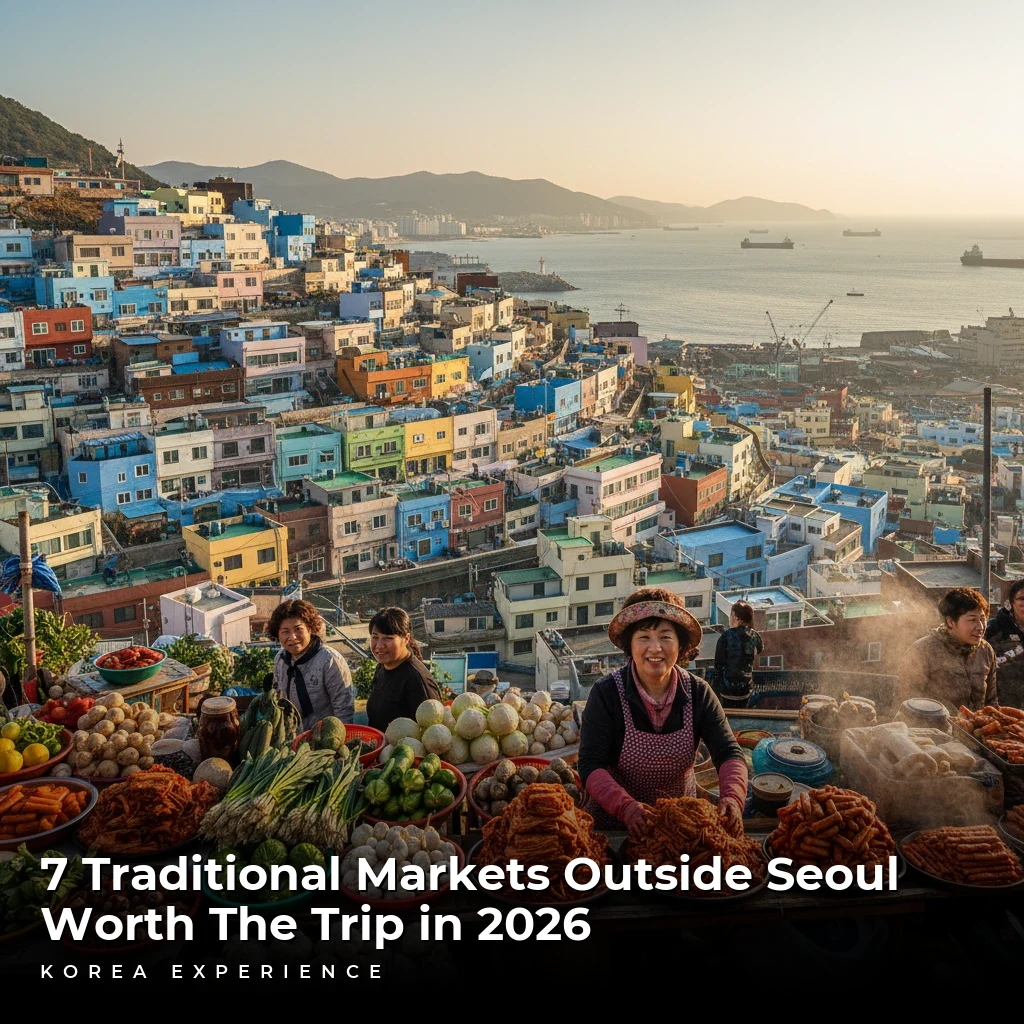
While Seoul's Gwangjang Market and Namdaemun Market offer incredible experiences, they often operate at capacity with over 300,000 daily visitors combined, leading to inflated prices and diluted authenticity. For the international traveler seeking the raw, unfiltered spirit of Korea, the true culinary and cultural gold mines are found in the provinces. From the briny, energetic shouts of Busan’s Jagalchi to the tangerine-scented alleys of Jeju’s Dongmun, venturing beyond the capital reveals a Korea that is cheaper, louder, and deliciously diverse.
The short answer: The best traditional markets outside Seoul are Busan’s Jagalchi (seafood) and Gukje (vintage), Daegu’s Seomun (night market and textiles), and Jeju’s Dongmun (local specialties). Plan for 2-3 hours per market and bring cash in ₩10,000 denominations.
Key Takeaways
- 1Busan's Jagalchi Market is Korea's largest seafood hub; expect to pay ₩40,000-60,000 per person for a full sashimi course.
- 2Daegu Seomun Market features the country's largest night market, operating from 7:00 PM to 11:30 PM daily (except first/third Sundays).
- 3Jeju Dongmun Market is essential for buying souvenirs like Omegi rice cakes (₩1,000 each) and Hallabong chocolates.
Why You Must Leave Seoul for Market Culture
In 2026, the decentralization of Korean tourism has become a major trend, with visits to regional provinces increasing by 18% compared to 2024. The primary driver? Authenticity and cost. A plate of bindaetteok (mung bean pancake) that might cost ₩5,000 to ₩6,000 in central Seoul often sells for ₩3,000 to ₩4,000 in provincial markets.
Beyond the price difference, regional markets serve as the distinct kitchens of their respective provinces. Jeolla province markets are famous for their generous side dishes (banchan), often providing 10-12 free sides with a ₩9,000 soup, whereas Gyeongsang province markets focus on intense, spicy flavors and fresh marine products.
📊 Market Economy 2026
When you step out of the KTX (Korea Train eXpress) or express bus, you are entering a different culinary ecosystem. The dialect changes, the ingredients are fresher (often sourced from less than 50km away), and the hospitality—known as jeong—feels more personal.
Busan: The Coastal Giants
Busan, Korea's second-largest city located approximately 325km southeast of Seoul, is home to two of the most significant markets in the country: Jagalchi and Gukje. These markets are not merely places of commerce; they are historical landmarks forged during the Korean War (1950-1953).
Jagalchi Market: The Pulse of the Ocean
If "Oiso, Boiso, Saiso" (Come, See, Buy) is the slogan of Busan, Jagalchi is where it echoes loudest. As Korea's largest seafood market, it handles over 30% of the country's coastal fish distribution. The market is divided into the modern 7-story main building and the sprawling outdoor street stalls run by the famous Jagalchi Ajurmas (married women).
The ground floor of the main building is a wet market where you select live fish, king crabs, and abalone. You then take your purchase to the second floor, where restaurants will prepare it for a "table setting fee" (usually ₩5,000 per person) plus the cost of spicy stew (maeuntang).
Jagalchi Market(자갈치시장)
Pro Tip: Seasonal Timing
Visit in October for the Jagalchi Cultural Tourism Festival. However, for the best eating experience, visit during winter (December-February) when yellowtail fish (Bangeo) and snow crabs are in season and at their fattiest. Prices for Bangeo plate can range from ₩50,000 to ₩80,000 depending on size.
For those interested in regional differences, check out our guide on Busan seafood vs. other regions.
Gukje Market: The Market of Everything
Just a 5-minute walk (approx. 400 meters) across the street from Jagalchi lies Gukje Market. "Gukje" means "International," a name earned during the 1950s when refugees traded US military supplies here to survive. Today, it is a labyrinth of over 1,500 shops selling everything from vintage clothing and lighting fixtures to imported snacks and industrial tools.
The "Food Alley" (Meokja-golmok) here is legendary. You must try Chungmu Gimbap (plain rice rolls with spicy radish and squid) and Bibim Dangmyeon (spicy glass noodles), a dish invented here to feed hungry refugees cheaply. A bowl typically costs just ₩6,000 in 2026.
💵 Busan Market Food Prices (2026 Average)
Market price varies daily
Local delicacy for stamina
BIFF Square specialty
Spicy glass noodle lunch
Daegu: Seomun Market's Nighttime Magic
Located in the chaotic heart of Daegu (237km from Seoul), Seomun Market is one of the three historic markets of the Joseon Dynasty. It is massive, covering 27,000 square meters with more than 4,000 shops. While it is the national hub for textiles and fabrics during the day, it transforms into a culinary wonderland at night.
The Seomun Night Market, which gained massive popularity in the late 2010s, remains a top destination in 2026. It features over 80 mobile food stalls stretching 350 meters. Unlike Seoul’s markets which close early, Seomun pumps with energy until midnight on weekends.
📖 How to Conquer Seomun Night Market
Step 1: Arrive at Dusk
Get to Seomun Market Station (Line 3 Monorail) by 6:30 PM. The view from the monorail entering the city is spectacular.
Step 2: Scout the Lines
The longest lines usually form for Makchang (grilled intestines) and Torched Beef Sushi. Split your group to queue for different items simultaneously.
Step 3: Secure Seating
There is a designated eating zone with plastic tables. It fills up by 7:30 PM. One person should hold a table while others fetch food.
Step 4: Cash vs Card
While most stalls accept cards in 2026, cash is faster and appreciated for small purchases under ₩5,000.
What to Eat in Daegu
Daegu is known for spicy heat. Napjak Mandu (flat dumplings) are a local icon. Unlike the plump dumplings in Seoul, these are almost flat, filled with a tiny amount of glass noodles and chives, and then drenched in soy sauce, vinegar, and red pepper flakes. A serving of 6-8 dumplings costs roughly ₩4,000.
For a deeper dive into regional taste differences, read our guide to Korean regional flavors.
Jeju Island: Island Flavors at Dongmun & Seogwipo
Jeju Island requires a flight (1 hour 10 minutes from Seoul Gimpo), but the markets justify the airfare. Jeju markets are distinct because they sell produce you cannot easily find on the mainland: Hallabong oranges, Omegi rice cakes, and black pork.
Jeju Dongmun Market (Jeju City)
Located 10 minutes from Jeju International Airport, this is often the first or last stop for travelers. It is a hybrid market catering to locals buying groceries and tourists hunting for souvenirs.
Must-Buy Item: Omegi-tteok. This is a glutinous millet rice cake rolled in red bean powder or nuts. It is dense, not too sweet, and costs about ₩1,000 to ₩1,500 per piece. Many shops offer frozen boxes (30 pieces for ₩30,000) packed for flights.
Jeju Market Route: Day vs Night
The Dualism Concept: Experience the best of both worlds — premium luxury moments paired with authentic budget-friendly experiences in one route.
Day: Sashimi Platter
Fresh Galchi (Hairtail) sashimi set
Night: Street Food
Black Pork Skewers & Hallabong Juice
Visit during the day for high-quality produce and seafood. Return at 7 PM when Gate 8 transforms into the Night Market zone for street food.
Seogwipo Maeil Olle Market (Southern Jeju)
On the southern side of the island, this market feels more relaxed and pedestrian-friendly than Dongmun. The central walkway includes a running water feature with benches, allowing you to eat your street food comfortably.
The Star Dish: Kkongchi Gimbap (Saury Gimbap). This is visually shocking—a whole grilled fish, head and tail included, protruding from the rice roll. It costs approximately ₩5,000. Despite the intimidation factor, the bones are soft or removed, and the taste is smoky and rich.
For more on seasonal catches in Jeju, refer to our seasonal fish guide.
Sokcho: The Chicken Pilgrimage
Sokcho Tourist & Fishery Market (formerly Jungang Market) in Gangwon province attracts huge crowds for one specific reason: Dakgangjeong (sweet and crispy fried chicken).
Located about 2.5 hours by bus from Seoul, Sokcho is a popular weekend getaway. The market is cleaner and more modernized than many others, with wide alleys and clear signage.
The most famous shop, Manseok Dakgangjeong, sells thousands of boxes a day. However, don't ignore 'Jungang Dakgangjeong' nearby—locals often prefer it for its slightly spicier kick. A box costs around ₩19,000-20,000 and stays crispy even when cold, making it the perfect hotel room snack.
Besides chicken, try the Abai Sundae (squid stuffed with noodles and tofu), a specialty of the North Korean refugees who settled in the nearby Abai Village.
Jeonju: Nambu Market's Modern Renaissance
Jeonju is the spiritual home of Korean food. Nambu Market, located near the famous Hanok Village, offers a fascinating blend of the old and the ultra-new.
The Traditional: Blood Sausage Soup
The lower level is famous for Pisundae-guk (Blood Sausage Soup). The sausage here uses real pig's blood and vegetables without noodles, resulting in a rich, creamy texture. "Jojeom-rye Nammun Pisundae" is the most famous eatery, with queues often lasting 30-40 minutes on weekends. Price: ₩9,000 per bowl.
The Modern: Cheongnyeon Mall (Youth Mall)
On the second floor of the market, you will find the Youth Mall. This project rejuvenated the market by offering low rent to young entrepreneurs. It’s filled with hip cafes, stationary shops, and fusion restaurants. It’s a stark, beautiful contrast to the traditional market downstairs.
Nambu Market Experience
- ✓Home to arguably the best Sundae-guk in Korea
- ✓Cheongnyeon Mall offers unique, non-touristy souvenirs
- ✓Walking distance from Jeonju Hanok Village
- ✗Restaurants close early (some by 7 PM) unless it's Friday/Saturday Night Market
- ✗Extremely crowded during Jeonju International Film Festival
- ✗Limited English menus in the traditional section
If you're visiting Jeonju, pair your market trip with a hanbok experience. Check our hanbok rental guide for tips.
Gyeongju: Jungang Market's History
Gyeongju, the "museum without walls," is packed with Silla dynasty history. Jungang Market (often called the lower market) offers a unique "Big 4" distinct from other regions.
The market operates a bustling Night Market (6:30 PM - 11:00 PM) where you can buy a "Big 4" coupon tray for ₩12,000. This plastic tray has four compartments, allowing you to choose four different menu items from participating stalls (steak cubes, shrimp, pork belly, etc.). It is the most efficient way to sample variety without overspending.
Practical Tips for Market Hopping
Navigating regional markets can be intimidating due to the language barrier and pace. Here is how to survive and thrive.
1. Payment Methods in 2026
While credit cards are widely accepted (approx. 85% of vendors), cash is still king for bargaining and small street food purchases.
- Card: Accepted at restaurants and larger stalls.
- Cash: Necessary for older grandmothers selling vegetables on the ground or small snacks (₩1,000-3,000).
- Bank Transfer: almost all vendors display a bank account number. If you have a Korean bank app, this is very common, but useless for most tourists.
2. The Art of Bargaining
Bargaining is not as aggressive in Korea as in Southeast Asia. It is reserved mostly for bulk purchases or non-food items (clothing, vintage goods).
- Don't: Try to bargain on a ₩1,000 rice cake or a set menu price at a restaurant.
- Do: Ask "Service juseyo?" (Can you give me a little extra/service?) when buying ₩50,000+ of seafood or fruit. They might throw in a few extra tangerines or shellfish.
Market vs. Supermarket vs. Convenience Store
| Feature | Traditional Market | Supermarket (E-Mart) | Convenience Store (CU/GS25) |
|---|---|---|---|
| Price (Fresh Food) | Lowest ($) | Medium ($$) | Highest ($$$) |
| Bargaining | Possible | Impossible | Impossible |
| English Support | Low | Medium | Low/Medium |
| Hygiene Perception | Rough/Authentic | Clinical | Standardized |
| Open Hours | Early Close (8 PM) | Late (10-11 PM) | 24 Hours |
3. Navigation and Facilities
- Toilets: Look for the public restroom sign (hwa-jang-sil). In major markets like Jagalchi or Seomun, they are clean and modern. In smaller markets, they can be rough. It is always wise to carry a packet of tissues.
- Safety: Korea is incredibly safe, but markets are crowded. Pickpocketing is rare, but losing your party is common. Agree on a meeting point (like the main gate or a specific bank sign) before diving in.
Ideal Market Itinerary (Afternoon to Evening)
Arrival & Exploration
Arrive before the dinner rush. Browse dry goods and souvenir shops while light is good.
Appetizer Hunting
Snack on 'standing food' like Hotteok or fish cakes (Eomuk).
Main Dinner
Sit down at an indoor vendor for a hearty meal (Sashimi, Gukbap, or Noodles).
Night Market Vibes
If the market has a night zone (like Daegu or Jeju), grab dessert or a second round of snacks here.
Conclusion
Venturing to traditional markets outside Seoul is the quickest way to shatter the "neon-city" image of Korea and touch its grounding, earthy roots. Whether it’s the seaside grit of Busan, the spicy heat of Daegu, or the island sweetness of Jeju, these markets offer a value proposition that Seoul simply cannot match in 2026: higher quality food, lower prices, and a connection to the local spirit that money can't buy.
Pack your appetite, bring your cash, and don't be afraid to sit on a plastic stool next to a local stranger. That is where the real Korea begins.
❓ Frequently Asked Questions
Have more questions?Contact us →
About the Author
Korea Experience Team
Written by the Korea Experience editorial team - experts in Korean medical tourism, travel, and culture with years of research and firsthand experience.
Explore more in Travel & Tourism
From Seoul's neon-lit streets to Jeju's volcanic landscapes — discover the best of Korea with insider travel tips, itineraries, and seasonal guides.
Browse All Travel & Tourism ArticlesContinue Reading
Explore more articles you might find interesting
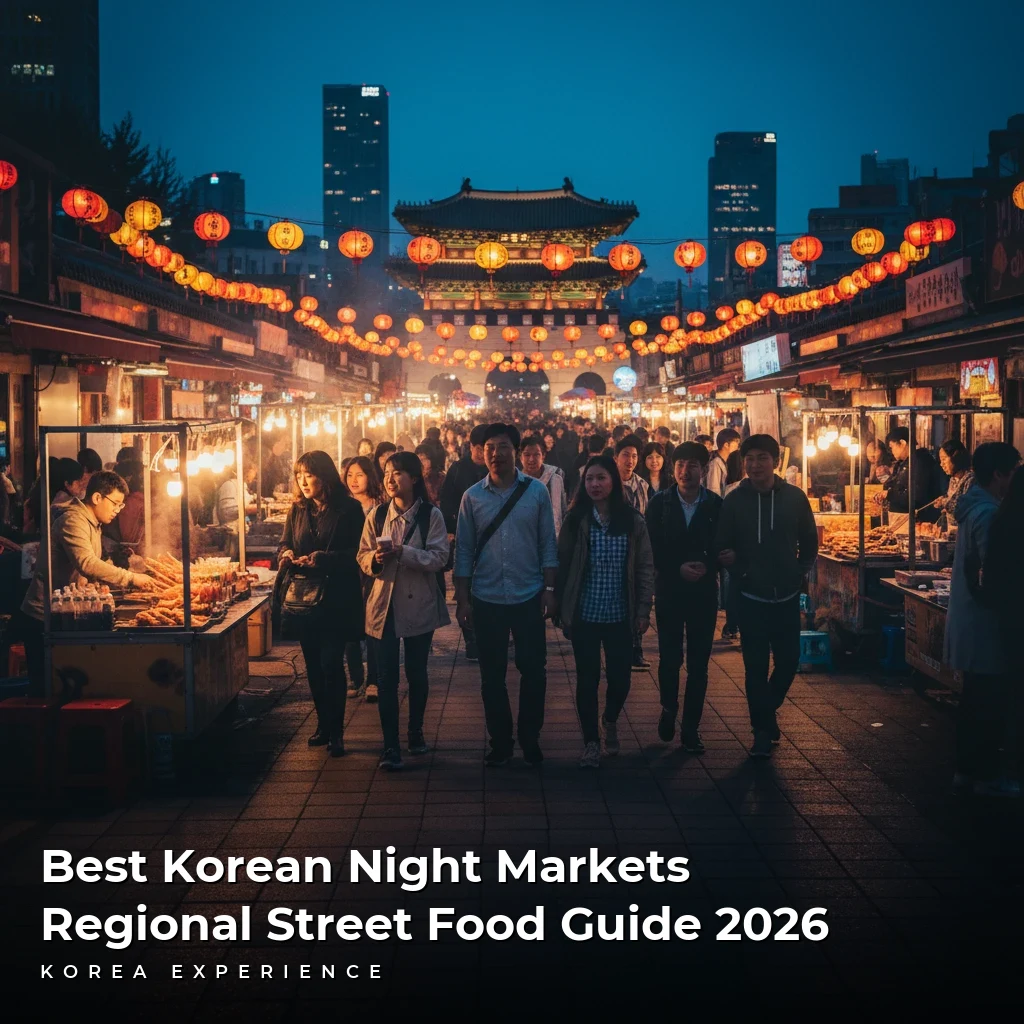
Discover top night markets in Seoul, Busan, and Jeonju. We compare food prices (₩3,000-15,000), opening hours, and must-try dishes for your 2026 trip.
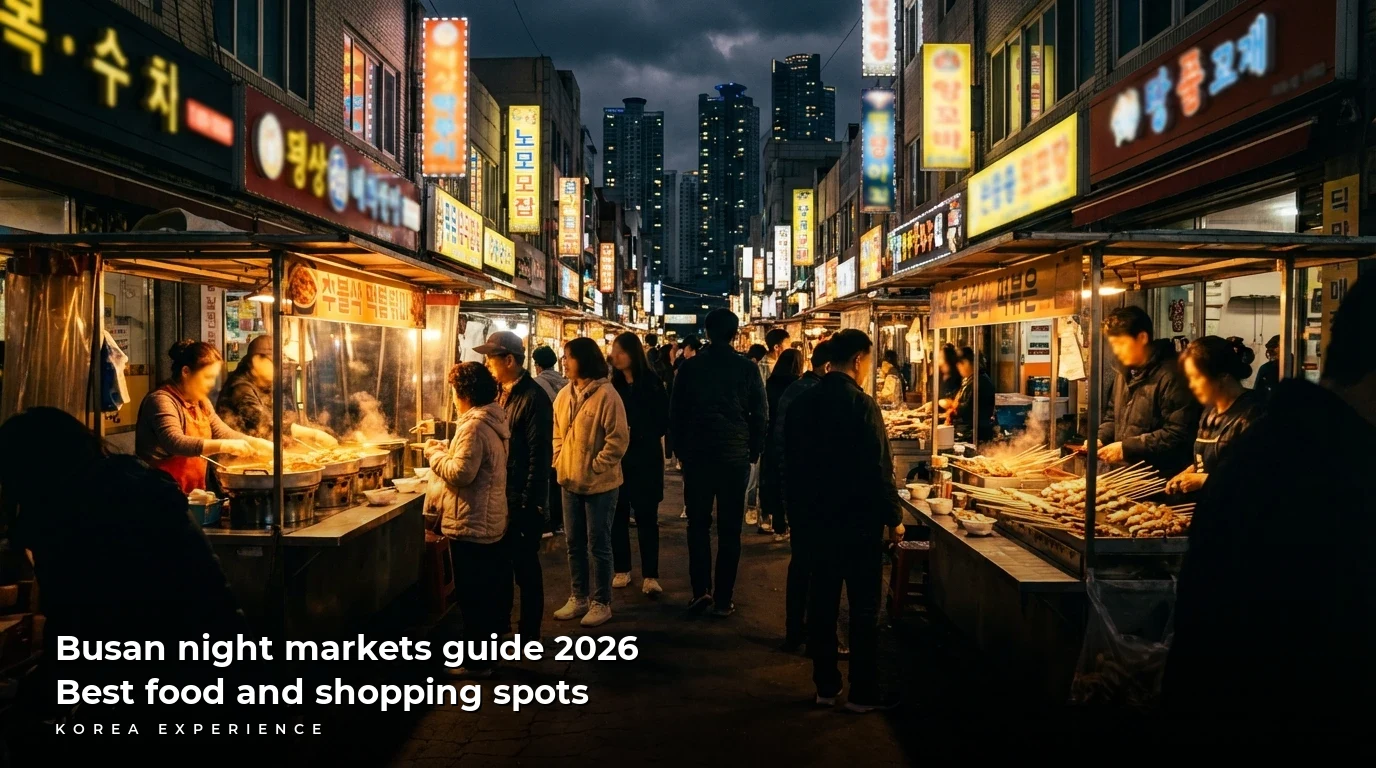
Discover the best Busan night markets in 2026. From Bupyeong Kkangtong's street food to Haeundae's seafood, find prices, hours, and transport tips.
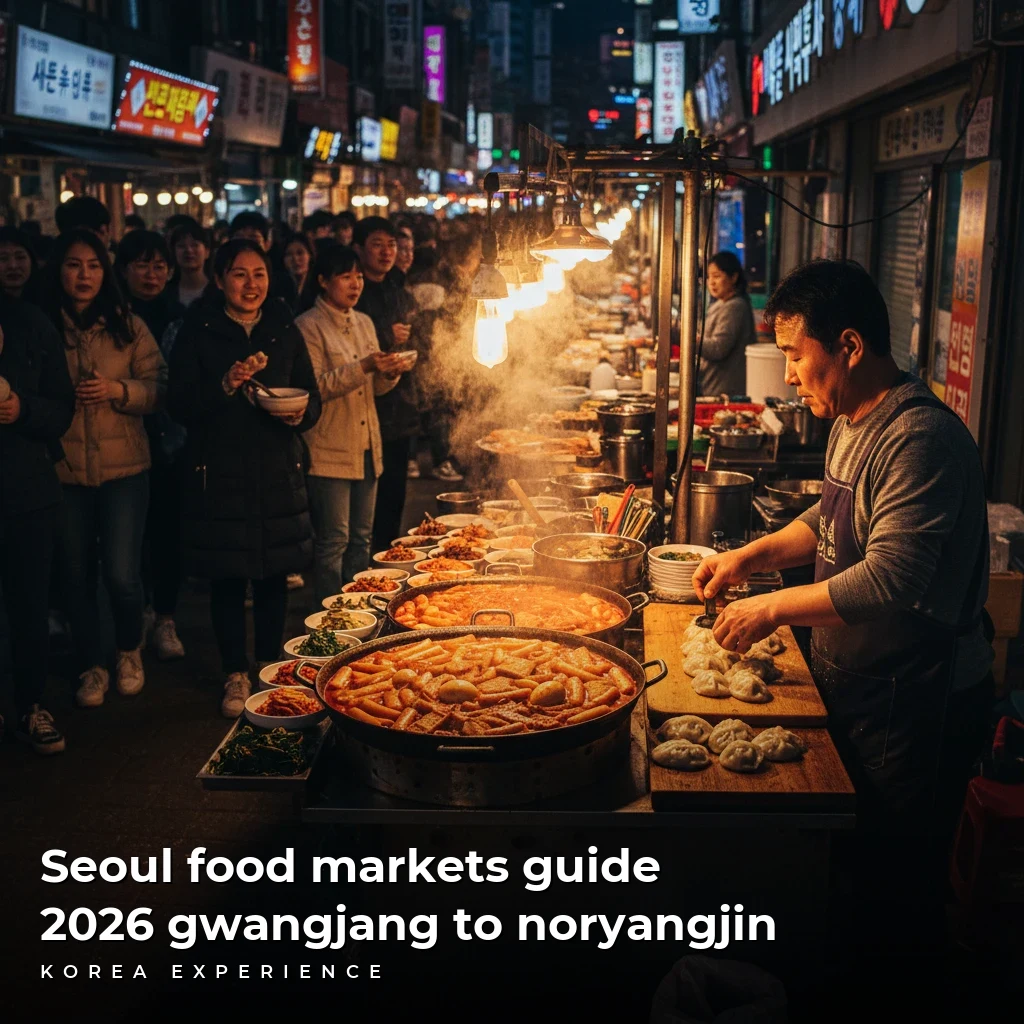
The ultimate 2026 guide to Seoul traditional markets. Discover prices, hidden stalls, and expert tips for Gwangjang, Noryangjin, and local favorites.
Discover Seoul's best kept secrets for 2026. From Sindang-dong cocktail bars to Mullae art alleys, explore the city like a local. Prices and maps included.
Discover top Korean beaches from Yangyang surfing to Jeju snorkeling. Includes 2026 prices, transport tips, and water activity costs for summer travel.
Discover the best of Busan in 2026. From Haeundae Beach to Haedong Yonggungsa Temple, explore top spots, costs, and itineraries for your trip.