Underground shopping streets complete guide: Seoul and beyond 2026
Discover Korea's best underground shopping streets. Save up to 70% on fashion in Goto Mall, Gangnam, and Busan with our 2026 guide to prices and locations.
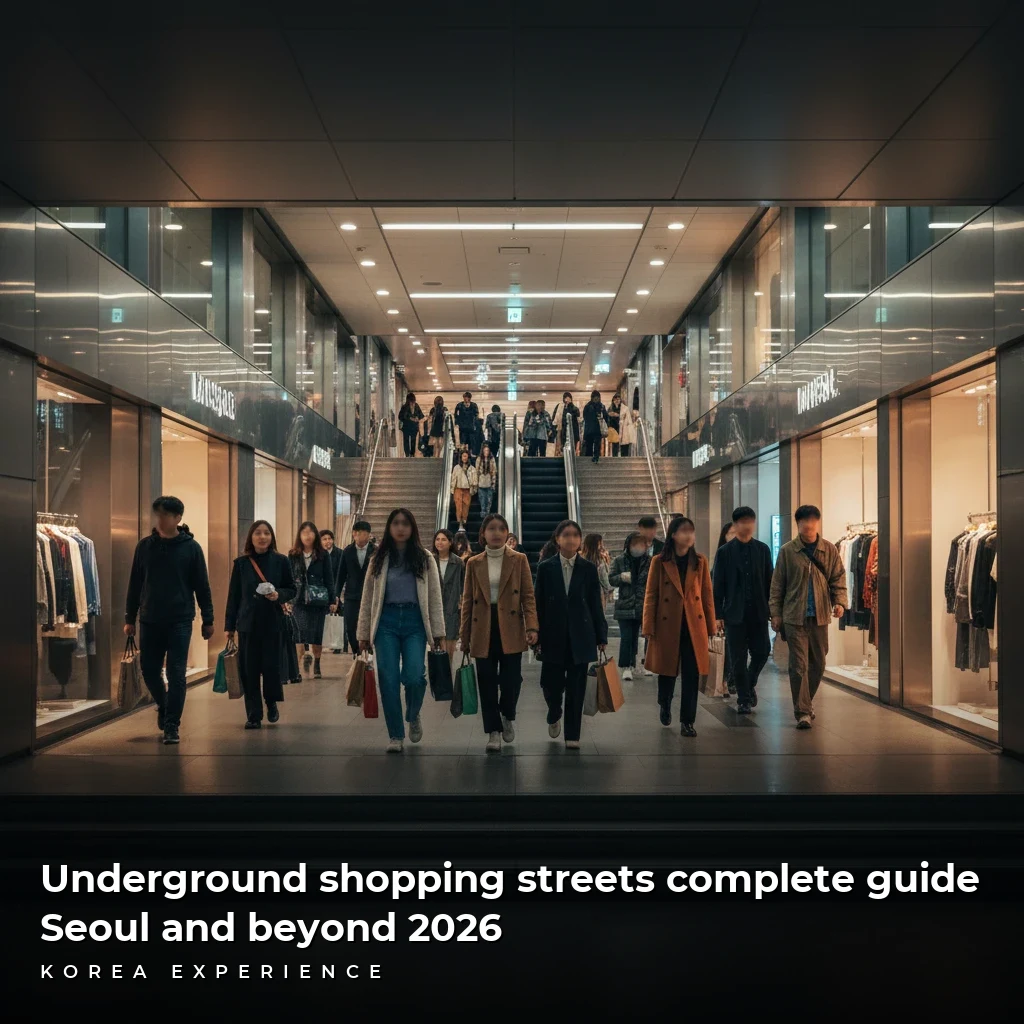
Korean underground shopping streets, known locally as Jiha Sangga (지하상가), are vast subterranean retail networks connecting major subway stations that offer clothing, accessories, and cosmetics at prices 30% to 50% lower than street-level boutiques. For travelers in 2026, these climate-controlled labyrinths are the secret to acquiring the latest "K-Style" fashion without the department store markup, with the average t-shirt costing between ₩10,000 and ₩15,000 ($7-11 USD) and accessories often starting as low as ₩1,000 ($0.75 USD).
The short answer: The best underground shopping streets are Goto Mall (Express Bus Terminal) for sheer size and variety, Gangnam Station for trendy youth fashion, and Bupyeong in Incheon for holding the world record for most stores. Bring cash to negotiate better deals.
Key Takeaways
- 1Goto Mall connects to Express Bus Terminal and is the largest in Seoul with over 600 stores.
- 2Most items are 'Free Size' (One Size), fitting US sizes 2-6 comfortably.
- 3Paying with cash (Korean Won) often secures a discount or waives the 10% VAT.
- 4Return policies are strict; most sales are final, especially for white clothing and sale items.
Why Shop Underground in Korea?
Shopping underground in Korea isn't just about escaping the rain or the humid summer heat; it is a cultural phenomenon that dictates the speed of Korean fashion trends. These malls are effectively the fast-fashion engine of the country. Unlike Western malls anchored by large department stores, these are linear avenues lined with hundreds of small, independently owned stalls (roughly 3 to 4 meters wide each).
The primary draw is price and efficiency. A shopper can inspect 50 different stores selling similar trends within a 15-minute walk. In 2026, the data shows that price sensitivity remains a major factor for tourists; purchasing a complete outfit (top, bottom, and socks) in an underground mall averages ₩45,000, compared to ₩120,000 for similar styles in a department store like Lotte or Shinsegae.
Furthermore, these spaces are hyper-connected. You don't need to leave the subway system to shop. For example, at Gangnam Station, over 200,000 commuters pass through daily, fueling a high turnover of inventory. If a style doesn't sell within a week, it is often discounted to the ₩5,000 rack or removed entirely. This ensures that what you see is exactly what is trending on the streets of Seoul right now.
Cash is King
While all stores legally must accept credit cards, paying with cash is the norm for bargaining. If an item is ₩10,000, a card payment might be processed, but if you buy three items totaling ₩30,000, offering cash can often get the total down to ₩27,000 or prompt the owner to throw in a free pair of socks.
Top 5 Underground Shopping Malls in Seoul
While there are over 20 major underground shopping arcades in the Seoul Metropolitan area, five stand out for their size, accessibility, and quality of goods.
1. Goto Mall (Gangnam Terminal Underground Shopping Center)
Goto Mall is the undisputed king of underground shopping in Seoul. Located at the Express Bus Terminal Station (Lines 3, 7, and 9), it stretches approximately 880 meters in two parallel lines. It is so massive that it is divided into three distinct zones: West (Zone G), Central (Zone G/T), and East (Zone G).
The West section typically focuses on younger, trendier fashion and inexpensive basics. The East section leans slightly towards older demographics, home decor, and flower markets. In the middle, you will find a congregation of shoe stores and bag shops.
📋 Goto Mall Essentials
Navigating Goto Mall can be overwhelming. The corridors are long, and during peak hours (5:00 PM - 7:00 PM), the foot traffic is intense. Prices here are extremely competitive because store owners know you can walk ten feet to find a similar item. A standard knit sweater here in autumn usually costs exactly ₩10,000 across fifty different stores.
For those interested in home goods, the far East end of Goto Mall features an excellent flower market and interior decor section. You can find high-quality artificial flowers, vases, and bedding for roughly 40% less than specialized home goods stores in Gangnam.
Goto Mall (Go-To Mall)(고투몰 (강남터미널 지하쇼핑센터))
2. Gangnam Station Underground Shopping Center
If Goto Mall is about volume, Gangnam Station is about trends. Located beneath one of the busiest subway stations in the world (Line 2 and Shinbundang Line), this mall caters to the 20s and 30s crowd that frequents the Gangnam area for work, language academies, and social gatherings.
The fashion here is slightly more "put together" and office-appropriate compared to the casual vibes of other malls. You will see a higher concentration of blouses, slacks, and midi-skirts suitable for Korean office environments. Prices are marginally higher—perhaps ₩2,000 to ₩5,000 more per item than Goto Mall—due to the premium real estate location.
Beauty is also a major focus here. The underground area is packed with road-shop cosmetic brands like Innisfree, Etude, and Olive Young, often offering "1+1" (buy one get one free) deals to capture the commuter traffic. It's a great spot to pick up skincare. If you are looking for specific beauty recommendations, check out our guide to best under-the-radar K-beauty brands.
3. Yeongdeungpo Underground Mall
Yeongdeungpo has historically been a hub for transport in southwest Seoul. This underground mall connects directly to Yeongdeungpo Station (Line 1) and the massive Times Square Mall and Lotte Department Store.
This creates a unique "high-low" shopping dynamic. You can browse luxury goods in Times Square and then descend underground to find similar-looking fast fashion for a fraction of the price. Yeongdeungpo's underground is divided into three sections, with the central section catering to young adults and the outer sections often offering menswear and clothing for middle-aged women (Ajumma fashion).
The menswear selection here is notably better than at Goto Mall or Gangnam Station, offering suits, dress shirts, and casual streetwear for men at reasonable prices (e.g., dress shirts for ₩15,000).
4. Jamsil Underground Shopping Center
Located at Jamsil Station (Lines 2 and 8), this mall is adjacent to Lotte World Tower and Lotte World Adventure. Because of the tourist traffic heading to the theme park, the shops here offer a lot of cute character goods, pajamas, and accessories alongside standard fashion.
The layout is centered around the fountain plaza near the entrance to Lotte World. It is smaller than Goto Mall but offers a less chaotic shopping experience. The quality of clothing here tends to be decent, as it competes with the nearby department stores. It is an excellent stop if you are already planning to visit the Lotte World Aquarium or Tower.
5. Bupyeong Underground Shopping Center (Incheon)
While technically in Incheon (about 50 minutes from Seoul Station via Line 1), Bupyeong deserves a special mention. In 2014, it was certified by the World Record Academy as having the largest number of underground stores in a single area. It is a subterranean city.
Bupyeong is known as the "Dungeon" because it is incredibly easy to get lost. However, the sheer volume of 1,400+ stores means the competition is fierce, driving prices down to the absolute floor. You can find t-shirts for ₩5,000 and jeans for ₩10,000.
Don't fear getting lost in Bupyeong. Look at the floor! The mall uses color-coded paths (Red, Green, Blue, Orange) painted on the ground to help you navigate back to the subway exits. If you find a store you like, photograph the store number above the sign immediately, or you will never find it again.
Shopping Strategy: How to Survive and Thrive
Shopping underground requires a different mindset than shopping in a mall like COEX or The Hyundai Seoul. Here is a step-by-step guide to mastering the experience.
📖 The Underground Shopping Strategy
Step 1: Withdraw Cash
Visit an ATM before entering. Withdraw around ₩200,000 in ₩10,000 and ₩50,000 bills. Cash gives you bargaining power.
Step 2: Scan the Whole Line
Walk down one side of the aisle first without buying. Note the prices. You will likely see the same coat in 5 stores.
Step 3: Check the Quality
Feel the fabric. Check the stitching. Because prices are low, quality varies wildly. Look for 'Made in Korea' tags for better stitching than cheap imports.
Step 4: The Purchase
Ask 'How much is this in cash?' (Hyeongeum-euro eolmayeyo?). Pay, check the item one last time, and get your receipt if possible (though rare for cash deals).
The "Free Size" Dilemma
One of the biggest shocks for international visitors is the sizing system. Most tops and dresses are sold as "Free Size" (F).
- What it means: It is designed to fit the average Korean frame.
- Reality: It typically equates to a US Size 2 to 6 (Small to Medium).
- Fit: Usually boxy or loose-fitting, which is the prevailing style. Sleeves might be shorter than Western standards.
For bottoms (pants/skirts), sizes are usually S, M, and L.
- S: 25-26 inch waist
- M: 27-28 inch waist
- L: 29-30 inch waist
If you wear a size larger than US 8 or 10, finding fitted clothing might be challenging underground. However, oversized sweaters, coats, and elastic-waist skirts are often accommodating.
Pros and Cons of Underground Shopping
Underground Malls vs. Department Stores
- ✓Prices are 30-50% lower
- ✓Huge variety of trendy items
- ✓Weather-proof shopping
- ✓Great for cheap accessories and socks
- ✗Fitting rooms are rare or non-existent
- ✗Sizing is limited (Free Size)
- ✗Refunds are almost impossible
- ✗Can be crowded and claustrophobic
What to Buy: Best Value Items
Certain categories of items offer exceptional value in underground malls compared to anywhere else in the world.
1. Socks (The ₩1,000 Wonder)
Korea is famous for its high-quality socks. In underground malls, you will find "Sock Museums"—stalls with thousands of designs ranging from K-pop characters to Ramen brands to high-quality plain cotton.
- Price: Usually ₩1,000 ($0.75) per pair, or 11 pairs for ₩10,000.
- Quality: Surprisingly durable. They make the perfect affordable souvenir for friends back home.
2. Accessories and Jewelry
Earrings, necklaces, and rings are abundant. Because Korea follows fast fashion trends, you can find duplicates of luxury designs for under ₩10,000.
- Warning: If you have metal allergies, ask if the posts are "silver" or "titanium," though verify this with caution at cheaper stalls.
3. Phone Cases and Tech Accessories
Korea is a tech-forward nation. Underground malls are packed with phone case stalls offering designs that haven't even reached Western markets yet. You can find grip toks, dangling charms, and heavy-duty cases.
- Price: ₩5,000 to ₩15,000.
4. Seasonal Outerwear
In autumn and winter, the coat selection is incredible. You can find stylish trench coats for ₩40,000 or padded puffer jackets for ₩50,000. While they may not be down-filled like North Face, they are stylish and warm enough for city commuting. For weather context, check our guide on best time to visit Korea to know what season requires what coat.
Price Comparison: Underground vs. Street Level
To understand the value proposition, here is a breakdown of typical costs for a standard casual outfit in 2026.
💵 Outfit Cost Comparison (2026)
Includes rent premium & curation
Same style, higher volume sales
Beyond Seoul: Busan and Daegu
Seoul doesn't have a monopoly on underground shopping. If your travels take you south, you are in for a treat.
Busan: Seomyeon Underground Shopping Center
Located at the intersection of Line 1 and Line 2 in Busan, Seomyeon is the heart of the city's commercial district. The underground mall here is more modern and slightly wider than Goto Mall. It connects directly to the Lotte Department Store.
- Vibe: Very similar to Gangnam Station but with a distinct Busan flair—brighter colors and slightly edgier street style.
- Food: It connects to fantastic food alleys. After shopping, you can explore the famous Busan food scene. Check our Busan Seafood Guide for post-shopping meal ideas.
Daegu: Banwoldang Metro Center
Daegu is known as the "Fashion City" of Korea due to its history as a textile hub. The Banwoldang underground area is massive and often features better quality fabrics than Seoul malls because of the local textile industry connection.
- Tip: Look for summer linens here; Daegu gets very hot, and the local fabric quality for summer weight clothes is excellent.
Navigational Tips and Facilities
Using Lockers (T-Locker)
Shopping bags get heavy. Most major stations in Seoul now use the "T-Locker" system.
- Download the T-Locker app (available in English) or use the kiosk screen.
- You can reserve a locker in advance or on-site.
- Payment is handled via card or T-Money.
- Standard size costs roughly ₩2,000 for 4 hours.
Restrooms and Wi-Fi
- Restrooms: Located at the far ends of the shopping strips or near the subway gate entrances. They are generally clean and free.
- Wi-Fi: Public Seoul Wi-Fi is available in most underground areas, but it can be spotty deep inside the stores. Having a local SIM is recommended.
Opening Hours and Closing Days
- General Hours: 10:00 AM to 10:00 PM.
- Peak Hours: 4:00 PM to 7:00 PM (Avoid if you dislike crowds).
- Closing Days: This is tricky. Goto Mall usually closes on the third Thursday of the month, while others might close on the first and third Tuesdays. Always check Naver Maps or the specific mall's schedule before making a special trip on a weekday.
📊 Underground Economy
A Note on Quality and Sustainability
While the prices are unbeatable, it is important to address the nature of fast fashion. The items sold in underground malls are mass-produced, often in China or domestic factories focusing on speed over longevity.
- Check Materials: Look for cotton blends rather than 100% synthetics if you want the item to last more than a season.
- Wash Care: Always wash these clothes on a gentle cycle cold wash and hang dry. Korean dryers are rare, and these clothes will almost certainly shrink in a hot American dryer.
If you are looking for a more traditional and sustainable Korean souvenir, you might consider renting or buying a Hanbok instead. Read our guide on Hanbok Rental to understand the difference in fabric quality.
Final Thoughts
A trip to Korea isn't complete without descending into the underground world of Jiha Sangga. It is an intense, sensory experience where K-pop blasts from speakers, vendors shout out daily deals, and the sheer volume of merchandise can make your head spin.
Whether you are looking to overhaul your wardrobe for $100 or just want to pick up some cute socks and a phone case, these malls offer a slice of authentic Korean daily life. Just remember: wear comfortable shoes, bring cash, and check the size before you buy.
❓ Frequently Asked Questions
Have more questions?Contact us →
Ready to explore more of Seoul's shopping scene? After conquering the underground, you might want to relax. Check out our guide to the best coffee shops in Seoul to refuel your caffeine levels. Or, if you are looking for skincare products to match your new wardrobe, read about the complete Korean skincare routine.
About the Author
Korea Experience Team
Written by the Korea Experience editorial team - experts in Korean medical tourism, travel, and culture with years of research and firsthand experience.
Explore more in Travel & Tourism
From Seoul's neon-lit streets to Jeju's volcanic landscapes — discover the best of Korea with insider travel tips, itineraries, and seasonal guides.
Browse All Travel & Tourism ArticlesContinue Reading
Explore more articles you might find interesting
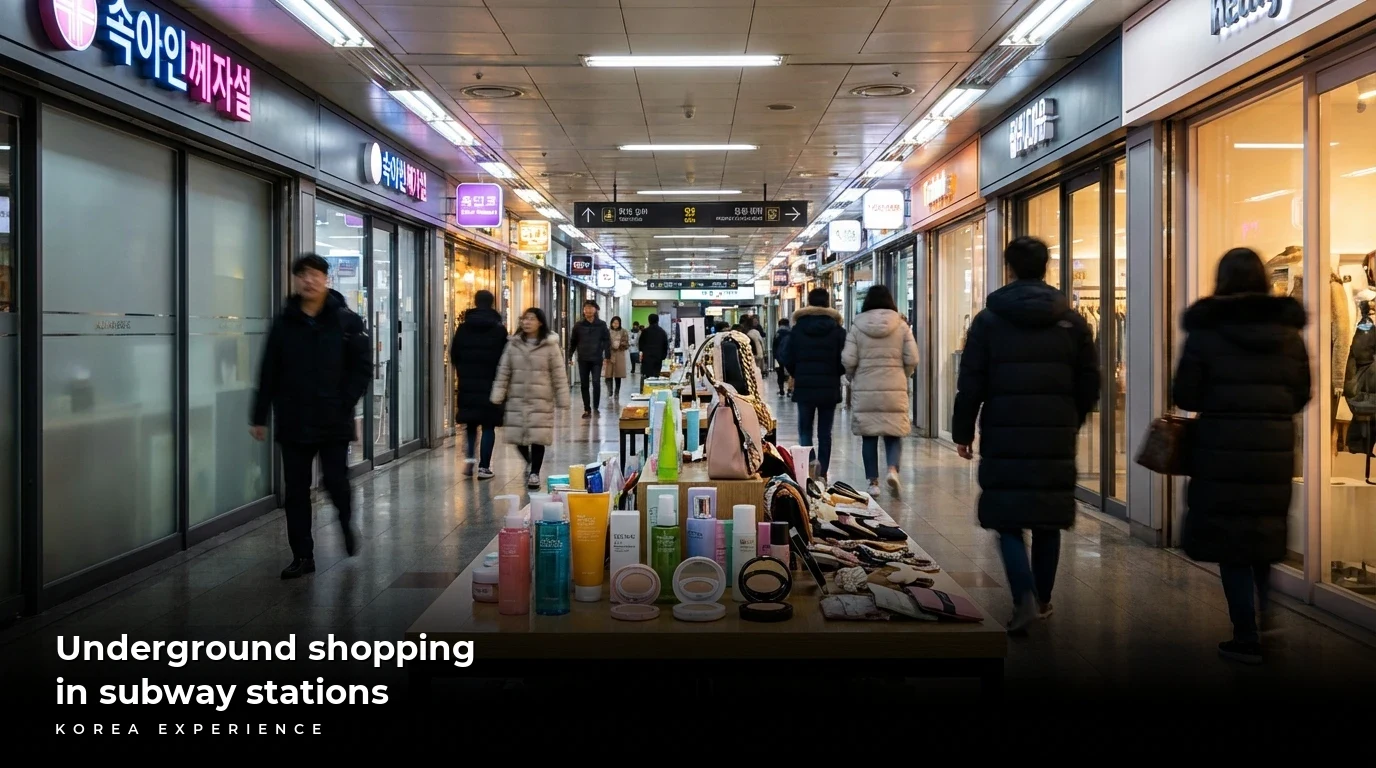
Discover Seoul's underground malls where trendy fashion costs just 10,000 KRW. Our 2026 guide covers 5 top locations, shopping hacks, and essential locker tips.
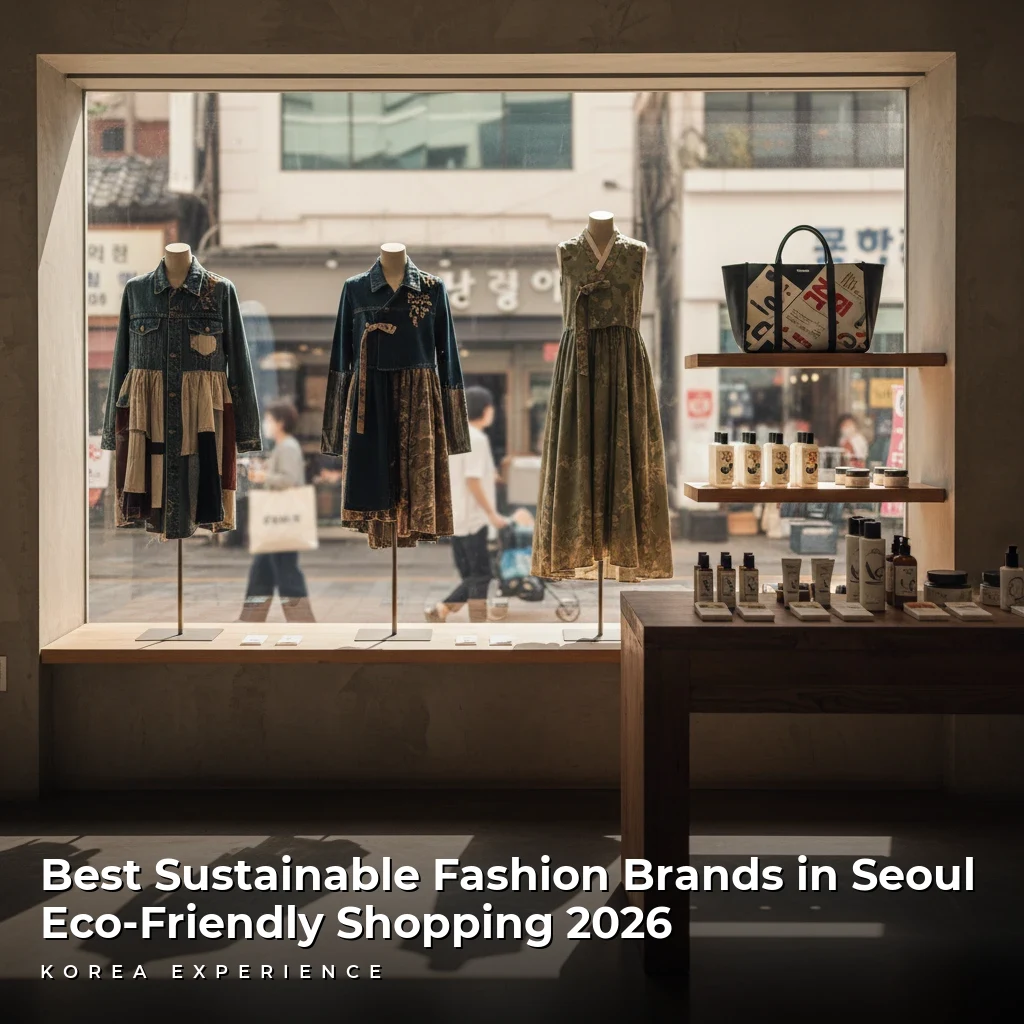
Discover Seoul's top eco-friendly brands for 2026. From upcycled streetwear to vegan leather, explore where to shop sustainably with prices and locations.
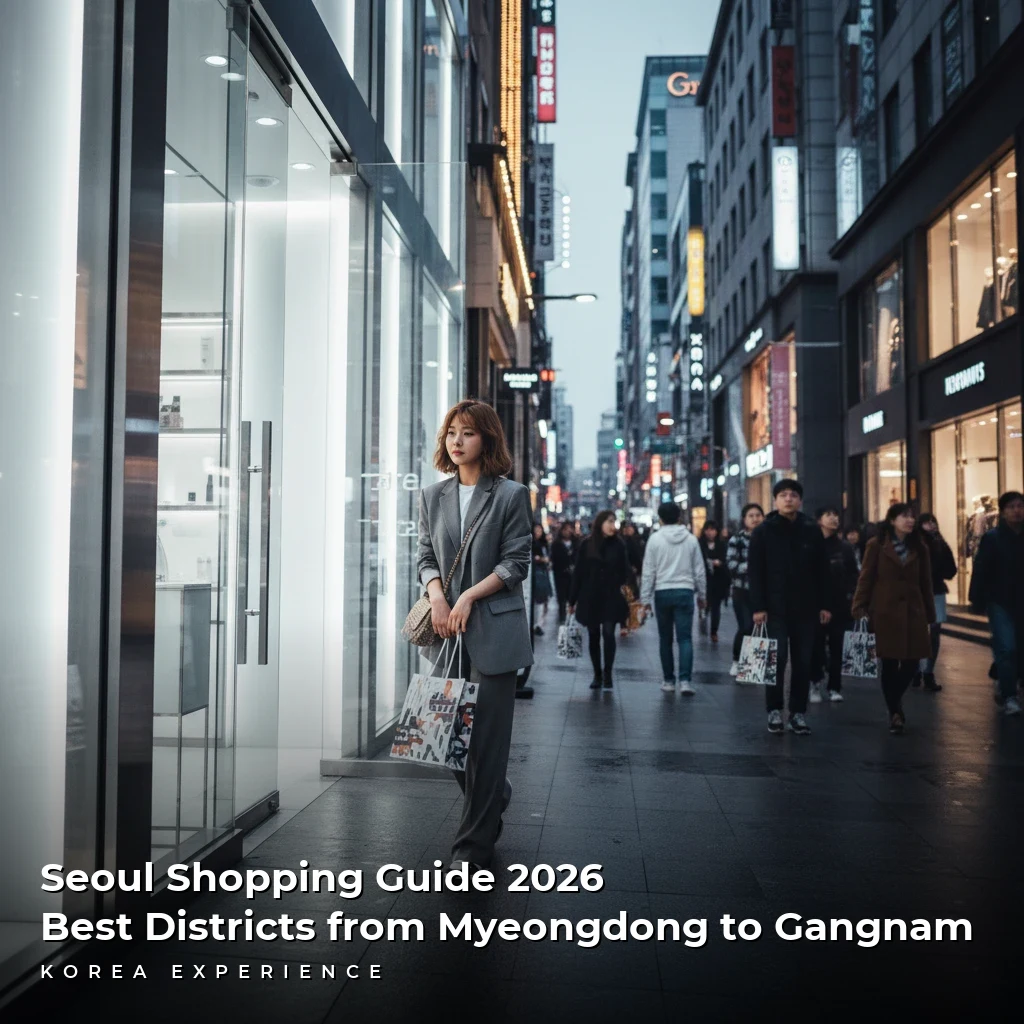
Discover Seoul's top 7 shopping districts for 2026. Compare Myeongdong beauty prices, Gangnam luxury, and Hongdae vintage fashion with tax refund tips.
Find the best medical compression garments in Seoul for post-surgery recovery. Detailed guide on locations, prices, and sizing in Gangnam and beyond.
Discover Korea's best markets beyond Seoul. Explore Busan, Jeju, and Daegu with specific food prices, transport tips, and 2026 travel data.
Discover the authentic charm of Korea's pojangmacha. A complete guide to tent bar locations, menu prices, etiquette, and tips for 2026.